


Tape vs. Hot Melt Glue Case Sealing: Which Fits Your Line?
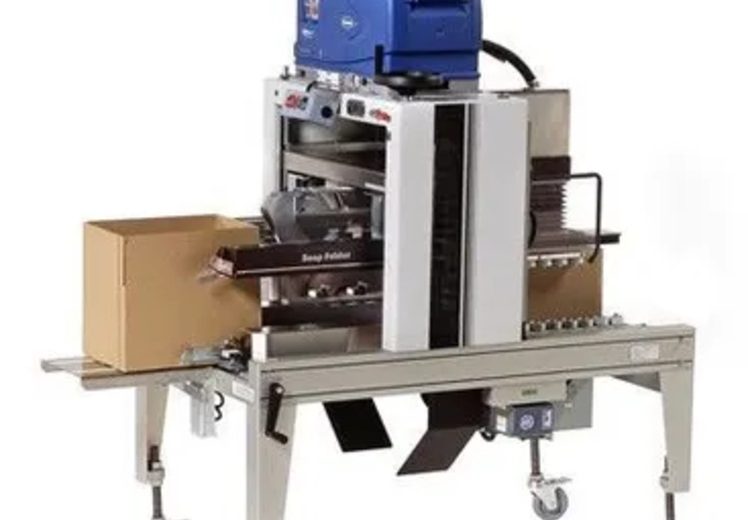
Tape and hot melt glue seal a case through two different mechanical actions: tape wraps a pressure-sensitive adhesive strip across the outside of the flaps, while hot melt glue bonds the flaps from the inside using molten adhesive that hardens as it cools. Both adhesives close a case-sealer job on the same machine family, but they fail for different reasons — tape peels when the roll runs dry or the strip misaligns, hot melt fails when the flap never receives enough back pressure to hold while the glue sets. A tape vs hot melt glue case sealing decision usually starts with cost and speed, because two independent equipment manufacturers report hot melt glue material costs 50-75% lower than packaging tape at volume. The comparison that decides whether hot melt glue works at all, though, is mechanical: does the case generate back pressure on its own, or does the case sealer need a compression section to supply it.
What Is the Difference Between Tape and Hot Melt Glue in Case Sealing?
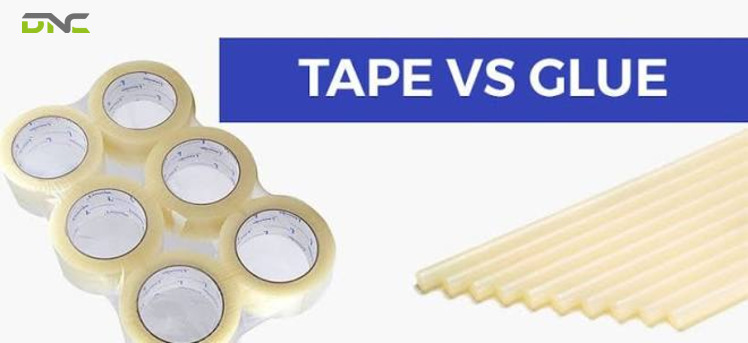
Tape and hot melt glue differ in where the bond forms and what holds it in place while it sets. Pressure-sensitive tape carries its adhesive on a plastic or nylon-reinforced film and is applied across the outside of the case flaps, closing the seam with pressure alone at room temperature. Hot melt glue is a synthetic resin — typically EVA or metallocene-based — that a fusing unit heats to a molten state, pumps to an applicator gun, and deposits directly on the inner flap surfaces, where it bonds the flaps together as it cools and re-solidifies.
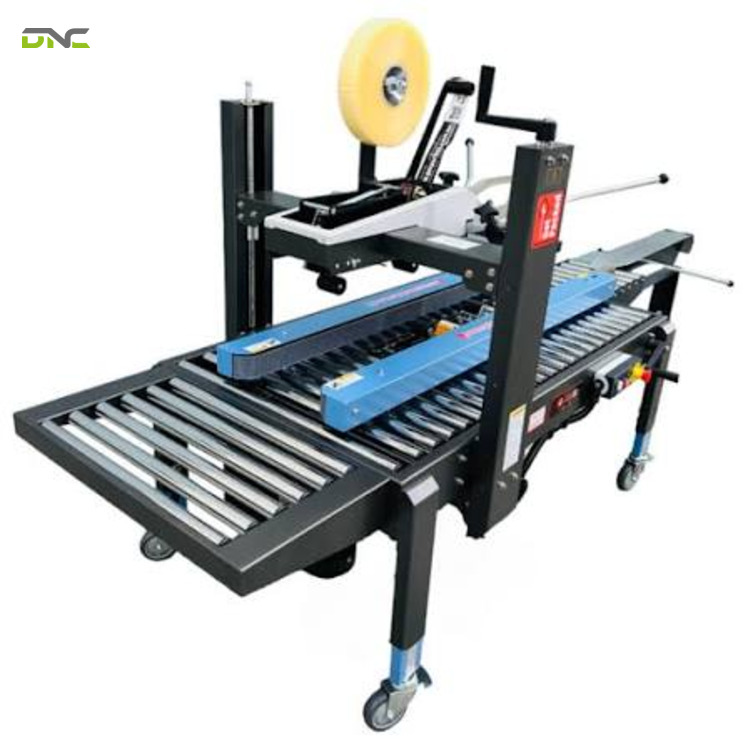
The practical split shows up in application method. Tape case sealing tools use a hand dispenser or a semi-automatic or automatic taping machine that stretches and seals a strip along the case edge. Hot melt glue case sealing tools use a manual glue gun, or an automatic case sealer with a fusing unit, hoses, and one or more spray or bead applicators under PLC control. Both application methods run on the same class of case-sealer frame, which is why the adhesive choice is usually made per product line rather than per machine. Manual hot melt glue guns typically load pre-formed adhesive sticks, while an automatic case sealer’s fusing unit feeds from bulk granules or flakes in an external reservoir — the same manual-versus-machine-fed split that separates a hand dispenser from an automatic tape head.
How Much Does Tape vs. Hot Melt Glue Cost Per Case?
Hot melt glue costs less per case than tape once a line runs consistent volume, and both application methods run on the same case-sealer frame, which is what pushes the real decision onto what each one costs to run and buy. Graco and Wayne Automation, two hot melt equipment manufacturers, independently report that hot melt glue material costs 50-75% less than packaging tape over comparable sealing volume — Graco’s own figure specifies 50-75% less, Wayne Automation’s figure specifies close to 75% less. Duetti Packaging frames the same gap from the material-unit side: hot melt glue typically costs one-half to one-third the price of an equivalent volume of packaging tape.
Equipment cost runs the opposite direction. Tape machines cost less to purchase and are simpler to maintain than a hot melt fusing system, because a taping head has no heating element, pump, or hose network to service. Hot melt systems need a higher upfront capital outlay for the melter, hoses, and application guns, plus recurring maintenance to prevent carbon buildup or nozzle clogging inside the fusing unit. The net cost comparison, then, splits into two separate lines: hot melt wins on consumable cost at volume, tape wins on equipment cost and servicing simplicity — a plant running low volume or highly variable box sizes can spend years recovering a hot melt system’s higher purchase price through consumable savings alone.
How Much Does Tape vs. Hot Melt Glue Cost Per Case?
Which Case Sealing Method Runs Faster on a High-Speed Line?
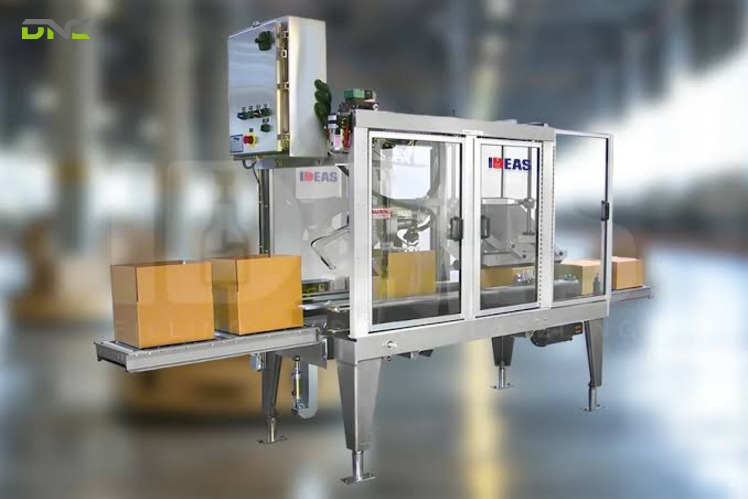
That equipment-versus-consumable cost split only matters at the volume a line actually runs, which is why speed is the next variable to check. Hot melt glue runs faster than tape on a high-speed case sealing line because its fusing unit refills externally without stopping production. Duetti Packaging notes the fusing unit sits outside the sealing machine with its own reservoir, so an operator can top up granules or flakes while the line keeps running. Tape systems interrupt the line to change rolls — Graco specifies a reload every 1,200-2,000 ft (366 m / 610 m) of tape consumed, and manual reloading at that interval accumulates as line speed and shift length increase.
Case volume and box uniformity change this calculus. Tape suits lower and intermittent speeds, and it adapts to a wider range of box sizes without a changeover, which is why John Maye Company positions tape for e-commerce and retail lines that run mixed carton sizes rather than one repeated SKU. Hot melt suits high-speed, high-volume lines running similar-sized boxes back to back, where the fusing unit’s continuous feed removes the periodic downtime a tape roll change would otherwise add. That speed advantage assumes an automatic fusing unit, not a hand-held glue gun — John Maye Company notes manual glue application runs slower than tape by itself, and it is the automated hot melt equipment, not the adhesive itself, that closes the speed gap on a high-volume line.
Which Case Sealing Method Runs Faster on a High-Speed Line?
Why Does a Case Need Back Pressure to Bond with Hot Melt Glue?
A hot melt bond only sets correctly if the flap stays under back pressure while the glue cools from its molten state to a solid — the mechanical condition the automated fusing unit’s speed advantage still depends on meeting every cycle. Endoline Automation documents this mechanism directly: hot melt glue “relies on back pressure (either from the product weight or a compression section) to set correctly.” In practice, that back pressure comes from one of two sources — the weight of the product pressing the flap closed from inside the case, or a compression section built into the case sealer that mechanically holds the flap shut for a fixed dwell time after the glue gun applies its bead.
This is the mechanical detail that six of the seven manufacturer articles covering this comparison skip entirely — they describe hot melt glue’s strength, speed, and cost advantages without stating what makes the bond form in the first place. A case sealer applying hot melt glue is not simply substituting one adhesive for another inside the same machine cycle; it is adding a dwell-time requirement that tape sealing never needed, because pressure-sensitive tape bonds on contact and does not need to cool. Endoline Automation frames the practical result the same way: hot melt is the preferred choice for high-volume, high-speed environments running heavy-weighted cases, precisely because a heavy case supplies enough of its own back pressure without added compression equipment.
When Does a Case Fail to Generate Enough Back Pressure for Hot Melt?
A case fails to generate adequate back pressure when it is light, under-filled, or shaped so the flap cannot press flat against the product underneath. A fully packed, rigid case — the scenario most manufacturer comparison articles implicitly assume — supplies its own back pressure through the product’s weight pressing outward against the closing flap. A partially filled case, a case holding soft or irregular product, or an empty case moving through a line for later fill leaves a gap between the flap and whatever is inside, and the flap has nothing to press against while the glue sets.
This is the mechanical prerequisite the cost-and-speed framing hides: switching to hot melt glue is a compression-section spec decision, not a purchasing decision. A case sealer without a compression section depends entirely on product weight for back pressure, which means hot melt glue only works reliably on the product mix that case sealer was built to run. Adding hot melt glue to a line carrying lighter or mixed-fill cases means specifying a compression section on the case sealer itself — a machine change, not just an adhesive change. Endoline Automation’s own sealing-specification process reflects this: it recommends each product be analysed individually before committing to glue, since compression adequacy varies by product weight and fill pattern rather than by case-sealer model alone.
When Does a Case Fail to Generate Enough Back Pressure for Hot Melt?
Summary: What Decides Between Tape and Hot Melt Glue So Far?
Hot melt glue costs less per case at volume — 50-75% less material cost, per two independent manufacturers — and sustains higher speeds through continuous fusing-unit refill, while tape costs less to buy and service and adapts more easily to mixed box sizes. The deciding mechanical factor sits underneath both trade-offs: hot melt glue only bonds when the flap holds under back pressure long enough to cool, whether that pressure comes from the product’s own weight or from a compression section on the case sealer.
Which Sealing Method Holds Up Better in Cold Storage or Export Shipping?
Pressure-sensitive tape holds up better than hot melt glue in cold storage, once the comparison shifts from the ambient conditions cost, speed, and back pressure all assume to actual storage and export shipping environment, resisting the temperature swings that standard hot melt formulations do not. Duetti Packaging identifies this as tape’s specific environmental advantage: adhesive tape is more immune to temperature changes and case handling than hot melt glue in its standard form. Hot melt manufacturers address the same gap with freezer-grade formulations built for refrigerated or frozen case sealing — a distinct hot melt product category rather than the standard EVA or metallocene grades used at room temperature, which confirms that standard hot melt glue is the formulation that struggles in cold storage, not hot melt glue as a category — the fix is a formulation change, not an adhesive-type change.
Export shipping favors hot melt glue for a different reason: bond location. Endoline Automation notes that hot melt bonds the inner and outer flaps together, giving superior stacking strength for heavy loads and long-haul export shipments, and that because the bond sits inside the case, any attempt to open it produces visible fiber tear — a tamper-evidence property tape does not replicate in the same way, since tape seals the flap from the outside and can be removed and reapplied without damaging the case itself.
How Does Seal Appearance Differ Between Tape and Hot Melt Glue?
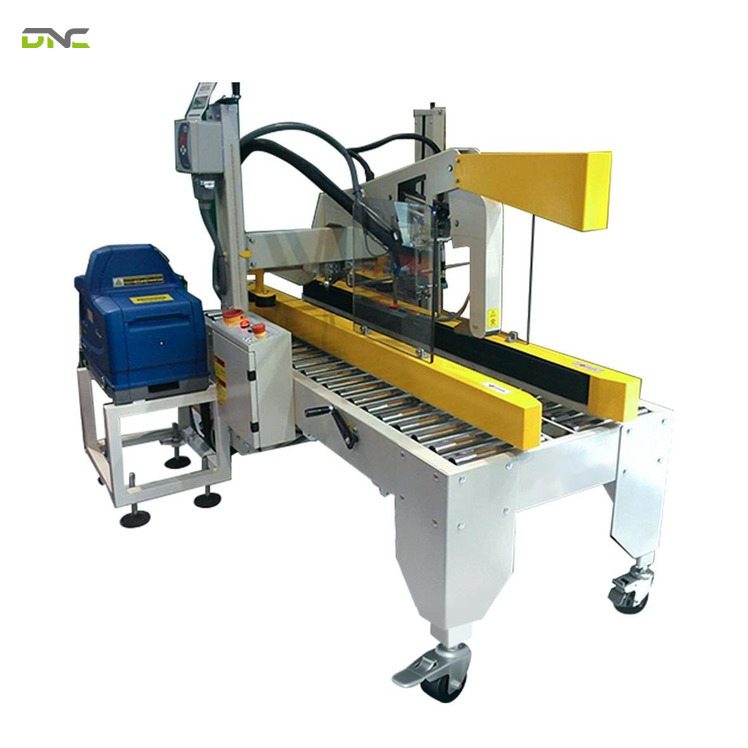
Hot melt glue produces a cleaner exterior than tape — the same inside-the-flap bond location that gives it the tamper-evident fiber tear also keeps the adhesive off the case’s outside surface because the bond sits underneath the flaps rather than across them. Wayne Automation and Duetti Packaging both describe the same visual outcome: a hot melt-sealed case shows no visible adhesive line, no wrinkling, and no interference with printed branding on the box exterior, because the glue never appears outside the flap seam. Tape-sealed cases carry the adhesive strip on the outer surface, where misapplication — wrinkles, misalignment, or tape “tails” — is visible on a case that otherwise looks identical from a distance.
Opening experience follows the same split. A hot melt-sealed case opens by pulling the flaps apart, since the bond releases at the flap edge without tools. A tape-sealed case generally needs a knife or blade to cut the strip before the flaps separate, which adds a small but measurable step to unpacking at the receiving end — a detail that matters more for direct-to-consumer shipments than for pallet-to-pallet industrial transfers, where the receiving side is trained staff rather than an end customer. The handling difference compounds at the line level, too: John Maye Company lists hot melt’s spill and residue risk as a maintenance consideration operators weigh against tape’s cleaner, residue-free handling during the sealing step itself.
How Does Seal Appearance Differ Between Tape and Hot Melt Glue?
How Does Case Sealing Method Choice Affect the Rest of Your End-of-Line?
None of these differences — cost, speed, bonding mechanism, environment, appearance — stay contained at the sealing station once the case moves on. Case sealing sits between case packing and everything downstream that depends on a consistent, correctly bonded case — conveyor transport, palletizing, and any in-line weight check. Choosing hot melt glue without verifying back pressure does not just risk a weak individual seal; it risks flaps that separate under the handling load further down the line, at a point where the fault is harder to trace back to the sealing station that caused it.
A carton sealing machine built for a specific product mix specifies its compression section, tape head configuration, or hybrid tooling around the case weight and fill level that line actually runs — a tape vs hot melt glue case sealing decision is one input into that machine specification, not a standalone purchase made after the machine is already selected.
Four factors recur across manufacturer guidance on this decision: carton specification (box size, weight, and material), storage and transport conditions (indoor, outdoor, refrigerated, or long-haul export), operational requirements (line speed and packing volume), and lifecycle cost (equipment purchase weighed against ongoing consumables). A case sealer’s compression section, tape head, or hybrid tooling gets specified against those same four factors, which is why the adhesive choice belongs inside the machine-spec conversation rather than after it.
What Equipment Do You Need to Switch Between Tape and Hot Melt Glue?
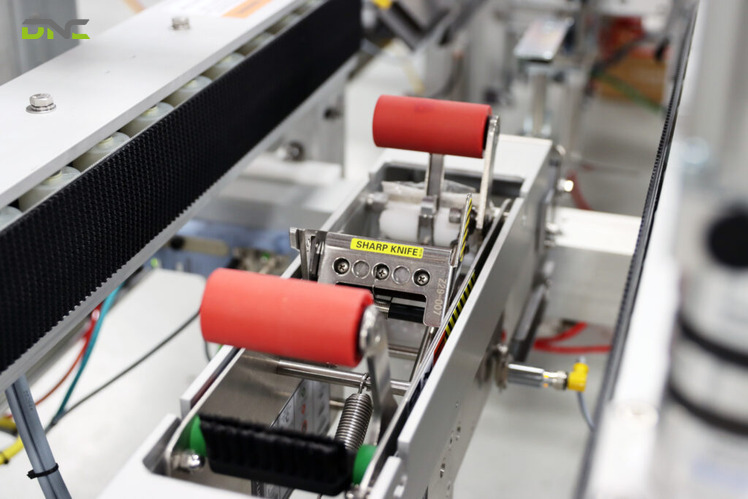
Switching from tape to hot melt glue on an existing case sealer generally means adding a fusing unit, hoses, one or more applicator guns, and — where the product mix includes lighter or partially filled cases — a compression section to supply the back pressure the product itself cannot. Switching from hot melt glue to tape means adding a tape head and dispenser assembly and removing the dependency on melt temperature control, since tape bonds on contact at ambient temperature. Many mid-volume operations run both: tape for mixed, lighter, or seasonal SKUs, hot melt glue for the standardized, high-volume run that justifies the fusing unit’s higher upfront cost. Wayne Automation makes the same point from the tape side: some product shapes or environments still call for tape even on a line built primarily around hot melt, which is why the two systems coexist on a shared frame rather than one displacing the other outright.
Neither adhesive changes the case sealer’s core frame, drive, or case-handling mechanics — the difference is confined to the sealing head and, for hot melt, the melt-and-dwell system feeding it. That confinement is what makes a hybrid or convertible case sealer a realistic option for a plant running more than one product line through the same sealing station, rather than committing the entire line to one adhesive type at the point of machine purchase.
What Equipment Do You Need to Switch Between Tape and Hot Melt Glue?
Frequently Asked Questions
These frequently asked questions cover tape vs hot melt glue case sealing decisions that don’t fit neatly into a cost-or-speed comparison — bonding on light cases, running temperature, low-volume economics, and mixed-adhesive lines.
Does hot melt glue work on empty or lightweight cases?
Hot melt glue bonds unreliably on empty or lightweight cases unless the case sealer has a compression section, because the flap needs back pressure — from product weight or mechanical compression — to hold shut while the glue cools. A case sealer relying on product weight alone for back pressure will produce inconsistent seals on any case that does not supply that weight.
What temperature does hot melt glue run at in a case sealer?
Hot melt glue systems process adhesive at 120-170°C (248°F / 338°F), according to Duetti Packaging’s technical comparison of the two sealing methods. That heat range is why hot melt case sealers carry a residual burn risk to operators even with guarding in place, while tape machines carry minimal thermal risk since tape bonds at ambient temperature.
Is tape or hot melt glue cheaper for a low-volume packing line?
Tape costs less overall for a low-volume packing line, because its equipment and maintenance cost stays lower and the line rarely runs long enough between changeovers to benefit from hot melt glue’s per-case material savings. Hot melt glue’s cost advantage only accumulates at the volume and speed where its continuous-feed fusing unit and lower per-case material cost offset its higher equipment and maintenance cost.
Can one case sealer run both tape and hot melt glue?
One case sealer runs both tape and hot melt glue when it is built or retrofitted with both a tape head assembly and a hot melt fusing system, letting a plant switch adhesive by product line without switching machines. Standard single-adhesive case sealers can add the second sealing method by fitting the missing head-and-applicator assembly, plus a compression section where the added adhesive is hot melt running on lighter product.
For sealing operations that also need in-line weight verification after the case leaves the sealer, see how a checkweigher works for the measurement window a poorly sealed case can disrupt. To specify a case sealer’s compression section and applicator configuration against your actual product mix, rather than against list pricing alone, speak with a DNC engineer.
- 8 views
- 0 Comment
Recent Comments