


Warehouse Automation Companies | DNC Automation Malaysia
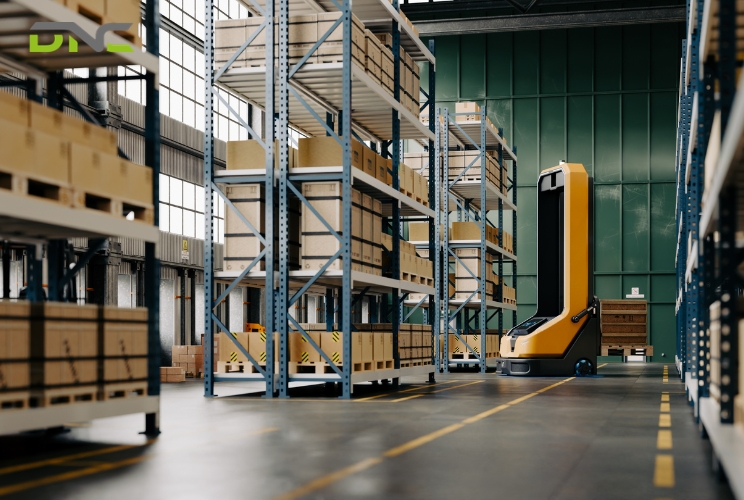
Warehouse automation companies design, supply, integrate, and maintain the systems — ASRS, conveyor, robotic picking, WMS — that transform manual warehouses into automated facilities. Selecting the right automation partner is as consequential as the technology selection itself: the best ASRS in the world delivers poor returns if the integration partner lacks the expertise to implement it correctly in your specific operational context.
This guide examines the types of warehouse automation companies, what distinguishes leading providers, the global leaders in each automation category, and how Malaysian manufacturers and distributors should evaluate automation partners for their projects.
Types of Warehouse Automation Companies
Equipment Manufacturers
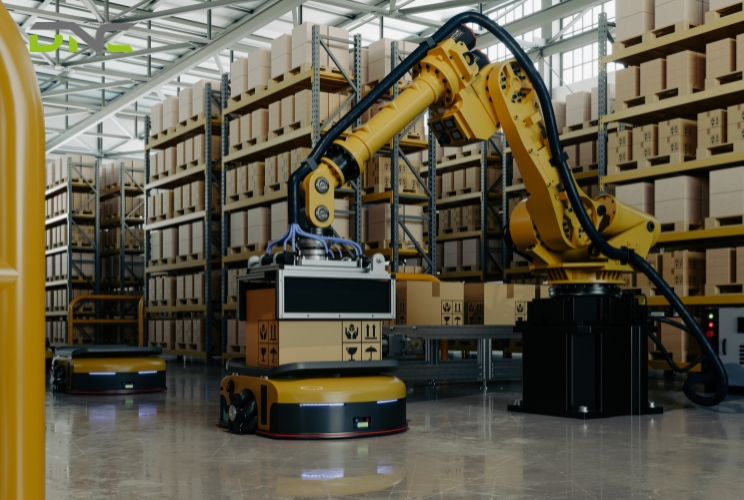
Equipment manufacturers design and build the physical automation hardware — ASRS cranes, shuttle systems, VLMs, conveyors, robotic picking cells. They are the source of the core technology.
Global equipment manufacturers active in Malaysia:
- Vanderlande (Netherlands): Conveyor, sortation, goods-to-person systems
- SSI Schäfer (Germany): ASRS cranes, shuttle systems, VLMs, conveyor
- Hänel (Germany): Vertical lift modules (Rotomat, Lean-Lift)
- Kardex (Switzerland): VLMs and horizontal carousels
- Daifuku (Japan): ASRS, conveyor, sortation, AGV/AMR
- Murata Machinery (Japan): ASRS stacker cranes, cleanroom automation
- Mecalux (Spain): Pallet racking, shuttle systems, compact ASRS
Equipment manufacturers typically do not implement directly — they sell through regional distributors or system integrators.
System Integrators
System integrators are the implementation partners who design the complete automation solution, procure equipment from one or more manufacturers, install and commission the system, and integrate it with WMS and ERP. They are the customer’s primary project partner.
A qualified system integrator:
- Has deep engineering expertise across multiple automation technologies
- Manages the full project — from concept design through commissioning
- Takes accountability for system performance (throughput, accuracy, availability)
- Provides post-commissioning maintenance and support
DNC Automation Malaysia is a system integrator, not an equipment manufacturer — we design solutions using best-fit equipment from multiple manufacturers and manage the full project for Malaysian customers.
WMS Software Vendors
WMS companies provide the software that controls inventory management and directs automation. They may be standalone WMS specialists (Manhattan Associates, Blue Yonder) or divisions of ERP vendors (SAP, Oracle, Microsoft).
WMS vendors typically partner with system integrators for automation projects — the WMS vendor handles software implementation, and the system integrator handles hardware and integration.
Turnkey Automation Providers
Some companies operate across multiple layers — designing, manufacturing, and integrating complete systems. Examples:
- Daifuku: Manufactures ASRS, conveyors, and sortation, and provides system integration
- Honeywell Intelligrated: Conveyor, sortation, and system integration, with WMS connectivity
- Knapp: ASRS, conveyor, WMS, and system integration as a complete package
Turnkey providers offer a single point of accountability but may be less flexible in equipment selection than independent integrators.
Top Warehouse Automation Companies in the World
1. Daifuku (Japan)
Revenue: USD 4.2B+ (FY2024)
Specialty: Full-spectrum warehouse automation — ASRS, conveyor, sortation, AGV/AMR, cleanroom systems
Key markets: Automotive, semiconductor, airport baggage, e-commerce
Presence in Malaysia: Regional office in Kuala Lumpur, projects in Penang semiconductor sector
2. Vanderlande (Netherlands, Toyota Industries Group)
Revenue: USD 2.5B+
Specialty: Parcel sorting, airport baggage, distribution centre conveyor and goods-to-person
Key markets: E-commerce fulfilment, postal/parcel, food distribution
Projects in Malaysia: Major 3PL and express courier distribution centres
3. SSI Schäfer (Germany)
Revenue: USD 3.5B+
Specialty: ASRS (all types), racking, conveyor, VLM, WMS (WAMAS)
Key markets: Food and beverage, retail, pharmaceutical, automotive
4. Knapp (Austria)
Revenue: USD 1.8B+
Specialty: Goods-to-person systems, pharmaceutical automation, complete system integration with proprietary WMS
Key markets: Pharmaceutical distribution, retail, e-commerce
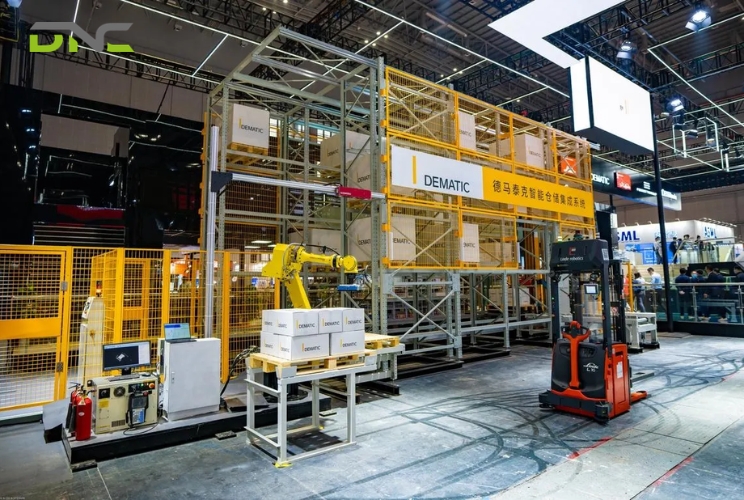
5. Dematic (KION Group, Germany)
Revenue: USD 2.0B+
Specialty: ASRS, conveyor, sortation, goods-to-person, WMS
Key markets: E-commerce, food distribution, retail
6. Mecalux (Spain)
Revenue: USD 800M+
Specialty: Pallet racking, shuttle systems, compact ASRS, WMS (Easy WMS)
Presence in Asia: Regional office and distribution network including Southeast Asia
7. Kardex (Switzerland)
Revenue: USD 450M+
Specialty: VLMs, horizontal carousels, goods-to-person small-parts storage
Key markets: Manufacturing spare parts, pharmaceutical, aerospace
8. Murata Machinery (Japan)
Revenue: USD 1.5B+ (group)
Specialty: ASRS stacker cranes, cleanroom automation, semiconductor logistics
How to Evaluate Warehouse Automation Companies
1. Relevant Experience
The most important evaluation criterion is direct, relevant experience — automation projects in your industry, at your scale, in your region. Request:
- Three reference projects comparable to your scope (similar industry, SKU profile, throughput, temperature environment)
- Site visit permission to an operating reference site
- Contact details for the project manager or operations manager at the reference site
A company with extensive automotive parts ASRS experience may not have the expertise to design a pharmaceutical cold chain VLM system — the reference criteria must match your project.
2. In-Country Support Capability
For Malaysian manufacturers, local support capability is critical. Evaluate:
- Does the company have a Malaysia office with resident engineers?
- What is the guaranteed response time for critical equipment faults?
- Are spare parts for the proposed equipment stocked locally?
- Can maintenance technicians reach your site within 4 hours for emergency response?
Global equipment manufacturers without local presence in Malaysia may offer excellent hardware but inadequate support for an operation that runs 24/7.
3. Integration Capability
A warehouse automation project involves multiple systems — ASRS hardware, WCS software, WMS, ERP, conveyor PLC — that must all communicate reliably. Evaluate:
- Has the integrator implemented the proposed WMS in conjunction with the proposed ASRS before?
- Does the integrator have certified developers for your ERP platform (SAP, Oracle, Dynamics)?
- Who is responsible for integration performance — the integrator or separate WMS and ASRS vendors?
Single-source integration accountability — one company responsible for the complete system working — is strongly preferable to a multi-vendor arrangement where each party blames others for interface issues.
4. Project Management Methodology
Large automation projects (RM 5M–50M+) are complex, multi-year endeavours. Evaluate:
- Does the company use a structured project management methodology (PRINCE2, PMI, or equivalent)?
- Who is the dedicated project manager, and what is their experience?
- How are design changes and scope variations managed?
- What are the acceptance test procedures (FAT, SAT) and who bears cost of failures?
5. Total Cost of Ownership
Evaluate automation companies not just on capital cost but on total cost of ownership over the system lifetime (typically 15–20 years):
- What is the annual maintenance cost as a percentage of CapEx?
- What is the spare parts availability and cost for components likely to fail in years 5–15?
- What are the software upgrade cost and compatibility path?
- What is the energy consumption per pallet move (variable cost over 15 years)?
A cheaper initial quote that uses components with poor spare parts availability or high maintenance cost may result in higher TCO than a more expensive but better-supported system.
6. Financial Stability
A RM 10M+ automation system must be supported by the supplier for 15–20 years. Evaluate the company’s financial stability — particularly for mid-sized regional integrators — to confirm they will still be in business to support your system in year 10.
DNC Automation Malaysia: Capabilities and Approach
DNC Automation Malaysia is a specialist warehouse automation system integrator serving Malaysian manufacturers and distributors:
Core competencies:
- ASRS design and integration: stacker cranes, shuttle systems, VLMs, mini-load
- Conveyor and sortation systems
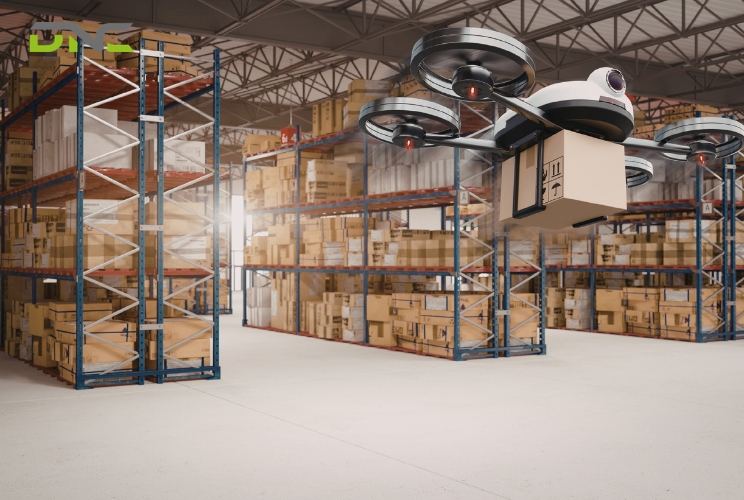
- Robotic solutions: AMR, palletising robots, cobots
- WMS integration: SAP EWM, Oracle WMS, Dynamics 365, standalone WMS
- Smart manufacturing: IoT, SCADA, predictive maintenance
- Cold storage automation
Malaysia-specific capabilities:
- MIDA Automation Capital Allowance application documentation
- DOSH machinery registration for all ASRS equipment
- JAKIM halal compliance for food cold store automation
- Malaysian building plan and Bomba permit coordination
- Bahasa Malaysia user documentation and training
Project delivery model:
DNC Automation manages all automation projects as a single point of accountability — from concept design through system acceptance. We do not sub-contract project management; DNC’s engineers and project managers are directly responsible for delivery.
Support model:
- 24/7 remote monitoring and support for critical equipment
- Emergency response SLA: 4-hour on-site response anywhere in Peninsular Malaysia
- Local spare parts inventory for all major equipment supplied
- Preventive maintenance contracts with monthly reporting
Malaysia’s Warehouse Automation Market
Malaysia’s warehouse automation market is growing at approximately 15–20% per year, driven by:
E-commerce growth: Shopee, Lazada, and regional e-commerce platforms have transformed Malaysian consumer expectations for fulfilment speed, driving investment in automated warehouse infrastructure by major 3PL and retail operators.
Manufacturing reshoring: Global supply chain restructuring has attracted new manufacturing investment to Malaysia, particularly in semiconductor, electronics, and pharmaceutical sectors — all high-automation-intensity industries.
Labour cost and availability: Annual minimum wage increases and foreign worker policy changes have made automation investment increasingly compelling for large warehouse operators.
MIDA incentives: The Automation Capital Allowance has directly accelerated automation investment by reducing effective capital cost for qualifying manufacturers.
Questions to Ask When Selecting a Warehouse Automation Company
- Can you provide three reference sites in Malaysia where I can speak with the operations manager and see the system running?
- What is your dedicated team size for this project, and where are they based?
- Who specifically is responsible for WMS-ASRS integration — your company, the WMS vendor, or a third party?
- What is your emergency response time commitment for critical equipment faults at our site?
- What spare parts will you stock locally, and what is your stock replenishment lead time from overseas?
- What is the warranty period and what does it cover?
- How have you handled major technical issues on past projects, and can you share an example?
- What MIDA documentation support do you provide?
Frequently Asked Questions
Should I buy directly from an equipment manufacturer or use a system integrator?
For simple, single-technology projects (one VLM unit, one conveyor line), buying directly from a manufacturer or their distributor may be efficient. For complex projects involving multiple technologies and WMS integration, a system integrator provides the design expertise and integration accountability that manufacturers typically do not offer.
How do I know if a warehouse automation company’s references are comparable to my project?
Ask specifically: What was the daily throughput? How many SKUs? What was the temperature environment? What WMS did you integrate with? How long has the system been running? A reference in automotive parts does not validate experience in pharmaceutical cold chain.
Is DNC Automation a manufacturer or integrator?
DNC Automation is a system integrator. We select and procure ASRS hardware, conveyors, and robotic systems from qualified manufacturers, and design and implement the complete solution — hardware, software, and integration — for our customers.
Conclusion
Selecting the right warehouse automation company is a high-stakes decision that directly determines whether your automation investment delivers its intended operational and financial returns. The technology must be appropriate, the implementation must be expertly managed, and the support must be reliable for the 15–20-year life of the system.
DNC Automation Malaysia combines local project management expertise, deep ASRS and WMS integration capability, and a proven track record with Malaysian manufacturers to deliver warehouse automation solutions that perform as designed.
Contact DNC Automation Malaysia to discuss your warehouse automation project and learn how DNC approaches system design, integration, and long-term support.
- 32 views
- 0 Comment
Recent Comments