


Conveyor Plus: Smart Conveyor Upgrades for Malaysian Factories
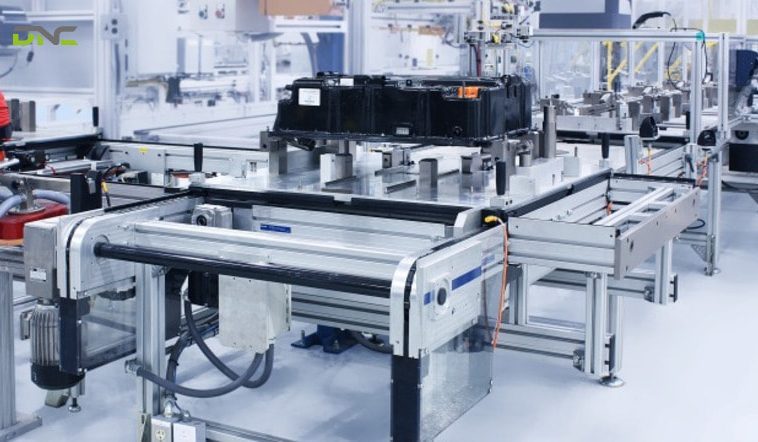
Conveyor Plus — Smarter Conveyor Systems for Malaysian Factory Operations
Conveyor plus systems are what transforms a basic material transport conveyor into an active production intelligence platform. The difference between a standard conveyor and a conveyor-plus system is the difference between a road and a smart highway — one simply carries traffic, the other monitors it, manages it, and optimises it in real time.
Malaysian manufacturers operating conveyors installed in the early 2000s face a critical decision: continue running aging, relay-controlled conveyors that break down unpredictably, offer no production data, and require constant manual oversight — or upgrade to a conveyor-plus system that integrates PLC control, IoT monitoring, weighing, robotic interfaces, and SCADA connectivity into the existing conveyor infrastructure at a fraction of the cost of full replacement.
Under NIMP 2030, the Malaysian government has committed RM 8.2 billion to help 3,000 factories achieve smart factory status by 2030. The Smart Automation Grant (SAG) — up to RM 1,000,000 at 70:30 matching from MIDA — is specifically designed to fund exactly this type of conveyor upgrade investment. DNC Automation’s 35+ engineers have delivered conveyor-plus upgrade projects across Selangor, Penang, and Johor, consistently achieving 12–18 month payback periods for Malaysian SME manufacturers.
What Is a Conveyor Plus System?
A conveyor-plus system is a factory conveyor that has been enhanced with one or more layers of smart technology — above and beyond the basic mechanical belt or chain transport function — to add control intelligence, measurement capability, data capture, and integration with upstream production systems.
Conveyor-plus upgrades convert a passive conveyor (moves material from A to B) into an active production asset that: controls material flow with PLC logic, identifies and tracks every product on the belt, weighs products in motion for quality control, monitors its own health via IoT sensors, routes material to correct destinations automatically, interfaces with robotic pick-and-place systems, and reports real-time production data to SCADA and ERP systems.
The term “conveyor plus” captures the core concept: a standard conveyor, plus the intelligence layer that makes it a smart manufacturing asset. In Malaysian manufacturing, conveyor-plus upgrades are the most cost-effective pathway to smart factory compliance under NIMP 2030 — delivering the benefits of new smart conveyor systems at 25–40% of the cost of full conveyor replacement.
How Does a Conveyor Plus System Work?
A conveyor-plus system operates in five integrated layers, each adding a dimension of capability above the mechanical conveyor baseline.
Step 1: Mechanical Transport Layer (Baseline Conveyor)
The conveyor-plus system foundation is the mechanical conveyor — belt, roller, or chain — performing its core transport function. This layer remains the same as the original conveyor or is upgraded minimally (new belt, new drive motor) to support the additional capability layers.
Step 2: Sensing Layer (IoT Instrumentation)
Sensors distributed along the conveyor capture real-time operational data: photoelectric/proximity sensors detect product presence and count throughput, load cells on weighing conveyors measure product weight in motion, motor current transducers detect overload and impending failure, vibration sensors on bearing housings identify bearing degradation, belt speed encoders confirm actual conveyor speed matches the setpoint.
Step 3: Control Intelligence Layer (PLC)
A Siemens SIMATIC S7 PLC (or Xinje PLC for SME-scale upgrades) replaces the existing relay panel as the conveyor control brain. The PLC executes control logic: starting and stopping conveyor zones in sequence, activating stoppers and diverters based on sensor inputs, adjusting speed via VFD, triggering alarms, and communicating with SCADA. In retrofit projects, the PLC connects to the existing conveyor’s motors and sensors through new field wiring — the conveyor mechanical structure is retained.
Step 4: Integration Layer (SCADA, MES, Weighing)
The Siemens WinCC SCADA system connects to the PLC via PROFINET, collecting all sensor data and presenting it on operator dashboards. MES (Manufacturing Execution System) connections enable the conveyor-plus system to receive production orders (what SKU to route where) and report production counts and quality data back to the factory ERP. Laumas weighing systems (DNC Automation’s certified weighing partner) integrate checkweigher data directly into the SCADA quality record.
Step 5: Action Layer (Robots, Diverters, Smart Stops)
The highest-value capability in a conveyor-plus system is the action layer: where the control intelligence from the PLC directs physical actions in response to sensor data. Comau or Doosan robots (DNC Automation’s robotic partners) pick from and place to the conveyor based on product identity data from barcode scanners. Pneumatic diverters route products to correct packaging lines based on weight or code data. Smart stops position products to within ±0.5mm for robot or camera inspection interfaces.
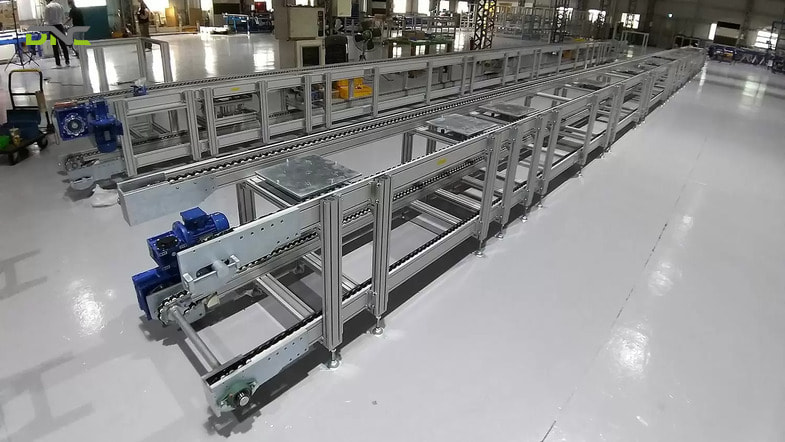
A conveyor-plus system operates in five integrated layers, each adding a dimension of capability above the mechanical conveyor baseline.
Types of Conveyor Plus Upgrades
Six primary conveyor-plus upgrade types serve Malaysian manufacturing operations, each delivering distinct ROI within different production contexts.
1. PLC Control Retrofit
What it is: Replace the existing relay-based or basic on/off conveyor control panel with a full Siemens SIMATIC S7 PLC + HMI touchscreen system.
What it delivers: Programmed start/stop sequences, automatic fault detection and alarm, VFD speed control for smooth acceleration, zone control for accumulation, remote monitoring capability, and a digital foundation for all subsequent upgrade layers.
ROI: PLC retrofit reduces unplanned conveyor downtime by 40–60% through automatic fault detection and alarm. OEE improvement from 65% to 78% (13-point gain) is typical in DNC Automation’s Malaysian PLC retrofit projects.
Cost range: RM 15,000–80,000 depending on conveyor complexity and number of zones.
2. IoT Monitoring and Predictive Maintenance
What it is: Add vibration sensors, temperature sensors, and current monitors to conveyor motors and bearings, feeding data to a cloud or on-premise SCADA dashboard.
What it delivers: Real-time visibility of every conveyor’s health status across the factory floor. Predictive maintenance algorithms identify bearing failure 2–4 weeks before occurrence, allowing planned replacement during scheduled maintenance windows.
ROI: Predictive maintenance reduces unplanned downtime by up to 70%. For a Malaysian factory where one production line generates RM 50,000–200,000/hour of output, eliminating even two unplanned stoppages per year delivers RM 1M+ in protected revenue.
Cost range: RM 20,000–100,000 for IoT sensor package + SCADA dashboard integration.
3. Weighing and Checkweigher Integration
What it is: Add a dynamic checkweigher conveyor (or in-motion belt scale) to an existing conveyor line to verify product weight at line speed.
What it delivers: 100% weight check of every product — detecting underfills, overfills, and missing components in real time. Automatic rejection of out-of-spec products. Digital weight records for HACCP, GMP, or halal certification traceability. Revenue protection from underfill giveaway.
DNC partnership: Laumas Italy (DNC Automation’s certified weighing systems representative) provides OIML-certified checkweigher systems integrated with Siemens PLC for Malaysian F&B, pharma, and palm oil operations.
ROI: For a Malaysian F&B factory producing 1,000 packs/hour at 500g each, 2% average overfill = 10kg/hour giveaway = RM 15,000–50,000/year waste depending on product value. Checkweigher integration pays back in 3–12 months.
4. Barcode and RFID Tracking Integration
What it is: Add barcode scanners or RFID readers at conveyor stations to identify every product or pallet on the conveyor and feed the data to MES/WMS systems.
What it delivers: Complete product traceability from receipt to despatch — every product’s identity, production batch, quality check result, and destination recorded in the MES database. Automatic routing of products to correct destinations based on product code. Elimination of manual paperwork and human routing errors.
ROI: Reducing routing errors from 2% to 0.1% on a 500-product/hour line saves 9.5 mis-routed products per hour — at RM 20–200 per mis-routed item (rework, customer complaint, return) this represents RM 190–1,900/hour in savings.
5. Robotic Pick-and-Place Integration at Conveyor
What it is: Install a Comau, Doosan, or Epson robot (DNC Automation’s robotic partners) at a conveyor station to automate picking from or placing to the conveyor — replacing a manual operator station.
What it delivers: 24/7 operation without fatigue; cycle times of 0.5–2 seconds per pick vs. 3–5 seconds for manual; zero product damage variation; direct integration with conveyor speed and product position data from the Siemens PLC.
ROI: Robot at conveyor station replaces 2–3 shift operators (RM 60,000–120,000/year labour) with a system CAPEX of RM 150,000–350,000. Payback 1.5–3 years — compressed to 0.5–1 year with SAG Grant funding.
6. Conveyor Layout Extension and Optimisation
What it is: Extend the existing conveyor system with new sections, add curves or elevation changes, integrate diverters and stops — expanding the conveyor’s capability without replacing the entire system.
What it delivers: New material flow routes that eliminate manual transport between production zones; sorting capability that routes products to the correct line automatically; accumulation zones that buffer production rate differences between upstream and downstream processes.
Cost range: RM 30,000–200,000 depending on extension scope.
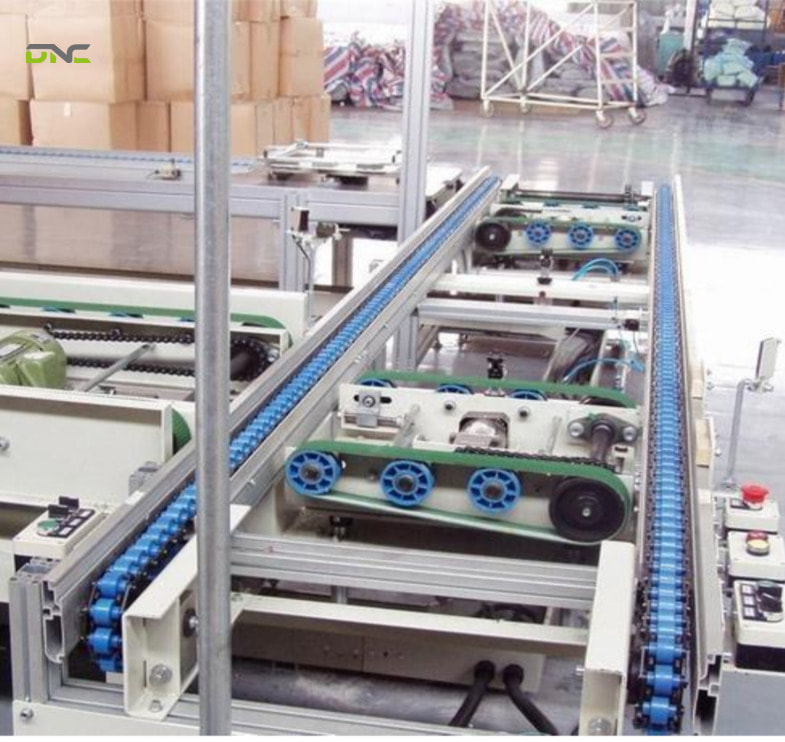
Conveyor Layout Extension and Optimisation
Key Components of a Conveyor Plus System
Siemens SIMATIC S7 PLC: The control brain. S7-1200 (single conveyor or small multi-zone) or S7-1500 (complex multi-conveyor systems) with PROFINET communication to all field devices and SCADA.
Siemens HMI touchscreen: TP700 to TP1200 panels for operator interface — conveyor status, speed setpoints, alarm history, production counters, maintenance logs.
VFD (Variable Frequency Drive): Siemens SINAMICS G120 drives control motor speed for soft-start, variable speed operation, and energy saving (up to 30% motor energy reduction at partial loads).
IoT sensor package: Siemens SIRIUS vibration sensors on bearing housings, IO-Link-connected temperature sensors on motors, current transducers on motor supply lines — all connected to S7-1500 via PROFINET.
Laumas weighing system: Load cells + junction box + Laumas weight transmitter connected to PLC for in-motion weighing integration. OIML R76 certified for legal-for-trade applications.
Siemens WinCC SCADA: Server-based or SCADA-as-a-service platform monitoring all conveyors, displaying real-time OEE, product counts, weight statistics, and maintenance alerts.
Applications: Conveyor Plus Upgrades Across Malaysian Manufacturing
Automotive — Selangor Assembly Lines
Malaysian automotive factories (Toyota, Inokom — DNC Automation clients) operating body and trim assembly lines have upgraded legacy relay-controlled conveyors to Siemens PLC systems with zone accumulation, stop-on-demand, and Comau robot interfaces. The conveyor-plus upgrade eliminated 3 manual operator stations per line while reducing cycle time variability from ±8 seconds to ±0.5 seconds per station.
Electronics — Penang EMS Post-SMT Lines
Penang EMS factories handling multiple PCB product families per week have implemented conveyor-plus barcode tracking upgrades that automatically route PCBs to the correct test station or inspection lane based on board barcode. The upgrade eliminated manual board-sorting labour (2 operators per shift) and reduced mis-routing errors from 1.5% to near zero.
Food and Beverage — Nationwide Checkweigher Integration
Malaysian F&B manufacturers exporting to international markets have implemented Laumas checkweigher conveyor integrations as part of HACCP and legal-for-trade compliance upgrades. Every pack weight is recorded digitally; out-of-spec packs are automatically rejected; batch weight statistics are reported to quality MES without manual data entry.
Palm Oil — SCADA Integration Upgrades
Palm oil mills in Pahang and Johor have upgraded legacy relay-controlled FFB scraper conveyor panels to Siemens S7 PLC systems with WinCC SCADA monitoring. Mill operators can now monitor motor current, chain speed, and bearing temperature from the control room — eliminating the need to physically inspect conveyors in hot, steam-filled environments.
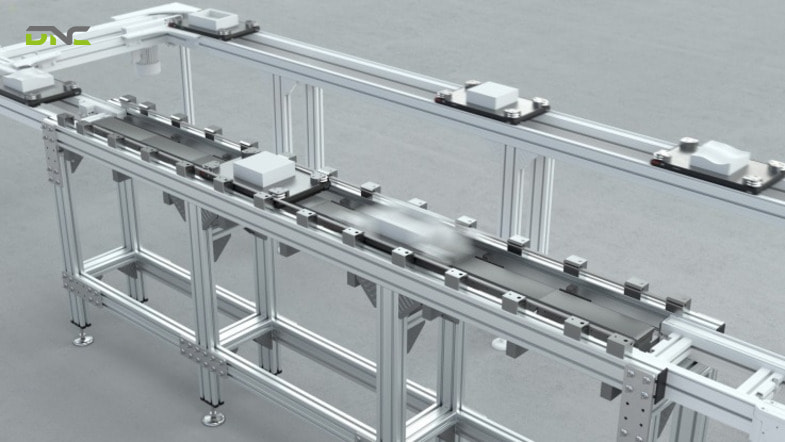
Conveyor Plus Upgrades Across Malaysian Manufacturing
Benefits of Conveyor Plus Systems for Malaysian Factories
OEE improvement: Malaysian factories implementing conveyor-plus PLC and IoT upgrades consistently achieve OEE improvements from 60–65% (pre-upgrade) to 80–85% (post-upgrade) — a 15–20 point gain that directly translates to 15–20% more production output from the same equipment.
Unplanned downtime reduction: Predictive maintenance via IoT monitoring reduces unplanned conveyor downtime by up to 70%. For a factory where unplanned downtime costs RM 100,000/hour, preventing two incidents per year delivers RM 200,000+ in protected revenue — often exceeding the entire upgrade investment.
Labor savings: PLC automation of manual sorting, routing, and counting operations eliminates 2–5 operator positions per production line — RM 120,000–300,000/year in recurring labour savings.
CAPEX efficiency: Conveyor-plus upgrade costs 25–40% of full conveyor replacement, while delivering 80–90% of the smart factory benefits. For Malaysian manufacturers working within tight CAPEX budgets, this ratio makes upgrade the preferred pathway to NIMP 2030 compliance.
SAG Grant leverage: The 70:30 SAG Grant matching means a RM 200,000 conveyor-plus upgrade project costs the manufacturer only RM 60,000 after grant. DNC Automation assists clients with SAG application preparation and project documentation.
Benefits of Conveyor Plus Systems for Malaysian Factories
How to Choose: Retrofit vs. Full Replacement
Choose conveyor-plus upgrade when: The mechanical structure (frame, rollers, pulleys) is in good condition. The belt or chain can continue for 3+ more years with routine maintenance. The conveyor layout remains appropriate for current production requirements. Budget favours phased investment over immediate full replacement.
Choose full replacement when: The mechanical structure has structural damage or advanced corrosion. The conveyor layout no longer fits current production flow. The conveyor capacity is insufficient for current throughput requirements. Total refurbishment cost approaches or exceeds 60% of new system cost.
DNC Automation free conveyor audit: DNC’s engineers visit your factory, assess every conveyor’s mechanical condition and control system status, and deliver a written recommendation — upgrade path, replacement path, or phased approach — with cost-benefit analysis and SAG Grant eligibility confirmation.
Frequently Asked Questions About Conveyor Plus Systems
What is the minimum upgrade that qualifies as a conveyor-plus system?
The minimum meaningful conveyor-plus upgrade is a PLC control retrofit — replacing relay or basic timer control with a Siemens SIMATIC S7 PLC and HMI. This alone delivers fault detection, alarm management, remote monitoring capability, and the control foundation for all subsequent upgrade layers. Even without IoT sensors or weighing, a PLC retrofit reduces unplanned downtime by 40–60%.
Can my existing conveyor be upgraded to a smart factory system?
In most cases, yes — if the mechanical structure is in reasonable condition. DNC Automation’s engineers assess the existing conveyor’s structural integrity, motor condition, belt/chain wear, and electrical system before recommending an upgrade path. Conveyors with sound mechanical structures but outdated controls are ideal candidates for PLC + IoT upgrade.
How long does a conveyor plus upgrade take to install?
A PLC control retrofit on a single conveyor takes 1–3 days of installation and commissioning. An IoT monitoring package adds 1–2 days. A checkweigher integration adds 1–2 days. A full conveyor-plus upgrade covering PLC, IoT, weighing, and SCADA integration for a 5-conveyor production line typically takes 5–10 days, with production interruption limited to 1–2 night-shift maintenance windows.
What is the typical ROI for a conveyor plus upgrade in Malaysia?
Typical Malaysian factory conveyor-plus upgrade ROI: PLC retrofit — 12–18 months payback from downtime reduction alone. IoT monitoring — 6–12 months payback from prevented unplanned failures. Checkweigher integration — 3–12 months from eliminated overfill giveaway. Robot at conveyor — 18–36 months from labour replacement. With SAG Grant (70% government-funded), all payback periods compress by approximately 70%.
Does DNC Automation handle the SAG Grant application for conveyor upgrades?
DNC Automation assists Malaysian manufacturers with SAG Grant project scoping, documentation preparation, and application submission to MIDA. DNC’s experience with multiple successful SAG-funded projects across Selangor, Penang, and Johor means clients benefit from a streamlined application process with a high approval rate.
Conclusion
Conveyor-plus systems represent the most practical and cost-effective pathway for Malaysian manufacturers to achieve NIMP 2030 smart factory goals using existing conveyor infrastructure. By layering PLC intelligence, IoT monitoring, weighing, tracking, and robotic integration onto proven conveyor systems, Malaysian factories gain smart factory capabilities at 25–40% of full replacement cost — with SAG Grant funding reducing the effective investment to as little as 10% of project value.
DNC Automation’s 35+ engineers have delivered conveyor-plus upgrade projects across Malaysia’s automotive, electronics, F&B, and palm oil sectors since 2005. Our Siemens-authorized expertise, Laumas weighing certification, Comau robotic integration capability, and 25,000 sq ft in-house fabrication facility make DNC the single-source partner for complete conveyor-plus upgrades.
Get a Free Consultation — contact DNC Automation for a free factory conveyor audit and conveyor-plus upgrade proposal tailored to your production requirements and SAG Grant eligibility.
Explore related: [PLC Conveyor Control](#), [Weighing Conveyor Systems](#), [Robotic Automation Solutions](#)
- 69 views
- 0 Comment
Recent Comments