


SFB Conveyor: Steel Flat Belt Guide for Malaysian Factories
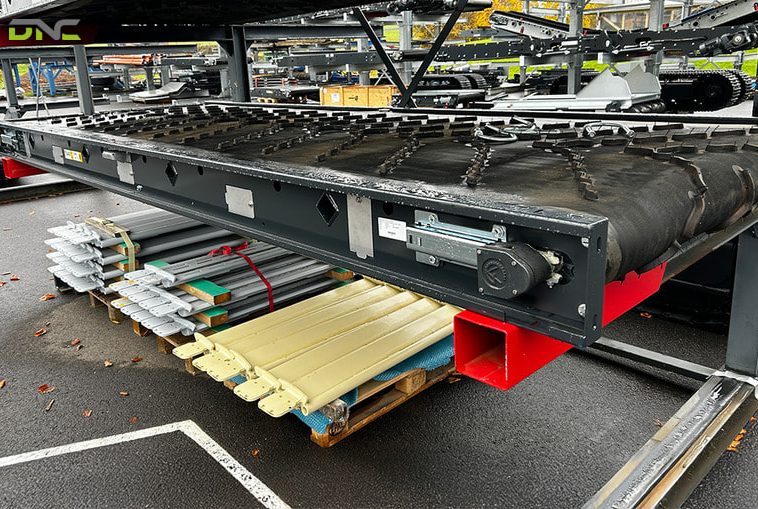
SFB Conveyor — Steel Flat Belt Systems for High-Temperature Malaysian Manufacturing
SFB conveyors — Steel Flat Belt conveyor systems — solve the material handling challenges that defeat rubber, PVC, plastic, and fabric belts: extreme heat, abrasive materials, precision tension requirements, and continuous high-load operation in harsh industrial environments. Where conventional belts degrade, crack, or melt, the steel flat belt continues operating reliably across temperature ranges from -200°C to +800°C.
Malaysian manufacturers face specific high-temperature conveying challenges: automotive paint and powder-coat ovens operating at 140–200°C, heat treatment furnaces reaching 400–800°C, glass tempering lines at 700°C+, biscuit and bread tunnel ovens at 180–280°C, and semiconductor processing requiring precision temperature-controlled transport in cleanroom environments. SFB conveyor systems address each of these applications with belt specifications — material grade, thickness, perforation, surface treatment — matched to the operating conditions.
DNC Automation has designed and fabricated SFB conveyor systems for Malaysian automotive, food processing, glass manufacturing, and semiconductor clients, integrating Siemens SINAMICS VFD speed control for precise belt velocity management in temperature-sensitive process applications.
What Is an SFB Conveyor?
An SFB conveyor (Steel Flat Belt conveyor) is a material transport system that uses a continuous loop of flat steel strip — cold-rolled or stainless steel, typically 0.3–2.0mm thick — as the conveying surface, in place of the rubber, PVC, polyurethane, or modular plastic belts used in conventional conveyor systems.
The steel flat belt is distinguished from other conveyor types by three core characteristics: its all-metal construction enabling extreme temperature range; its smooth, rigid surface providing consistent contact for products sensitive to belt deformation; and its high tension resistance enabling long conveyor spans without sag or belt stretch issues that affect fabric and rubber belts.
SFB conveyors are specified wherever conventional belt materials reach their functional limits — primarily in thermal processing, precision positioning, chemical exposure, and cleanroom environments. In Malaysian manufacturing, SFB conveyors are most commonly found in automotive finishing, food thermal processing, glass manufacturing, and semiconductor backend operations.
How Does an SFB Conveyor Work?
SFB conveyor operation follows the same fundamental principle as conventional belt conveyors — a continuous loop driven around two or more pulleys — but with specific design features that address the mechanical characteristics of steel flat belt.
Step 1: Belt Formation and Loop Configuration
Steel flat belt conveyors use a precision-formed steel strip, edge-welded into a continuous loop of the required circumference. The belt width ranges from 100mm (narrow precision conveyors) to 2,500mm (wide industrial thermal process conveyors). Belt thickness from 0.3mm (thin, flexible — for small pulleys) to 2.0mm (heavy-duty — for long spans and high loads).
Step 2: Drive Pulley Engagement
The drive pulley transmits motion to the steel flat belt through friction — similar to conventional belt conveyors, but with higher drive pulley crowning (convexity) to maintain belt tracking on the smooth steel surface. Some SFB systems use positive-drive edge rollers or serrated pulleys to prevent belt slip under high tension loads.
Step 3: Belt Tension Management
Steel flat belts require precise tension control — insufficient tension causes belt wander and drive slippage; excess tension increases bearing loads and reduces belt fatigue life. Pneumatic or spring-loaded take-up systems maintain constant, automatically adjustable tension across the operating temperature range — important because steel belt length changes with temperature (thermal expansion approximately 12 ppm/°C for carbon steel).
Step 4: Thermal Zone Traversal
In oven and furnace applications, the steel belt carries products through heating zones where temperatures range from 100°C to 800°C depending on the process. The belt enters the oven at ambient temperature, heats progressively through the process zone, then exits and cools before returning through the lower return run. Edge seals, thermal barriers, and roller cooling systems manage the thermal gradient across the belt width.
Step 5: Speed Control via VFD
Siemens SINAMICS G120 VFD provides precise speed control of the SFB conveyor drive motor — critical in thermal processing where product residence time in the oven is controlled by belt speed. Speed accuracy of ±0.1% is achievable with Siemens vector control VFD, ensuring consistent product temperature profiles across production batches.
Step 6: Discharge and Return
At the discharge end, products are removed from the belt surface — either manually, by scraper, or by robot. The empty belt returns along the lower run, often cooled by ambient air or active cooling fans before re-entering the loading zone.
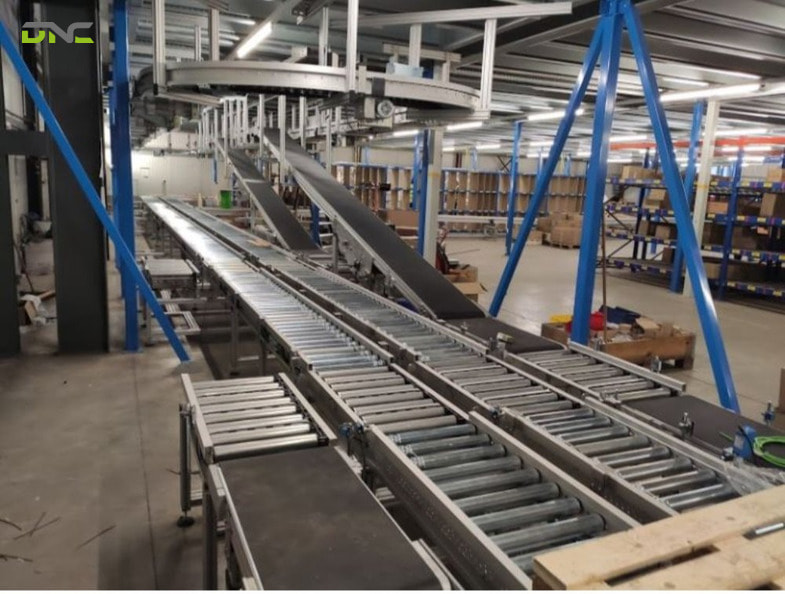
How Does an SFB Conveyor Work?
Types of SFB Conveyors
Steel flat belt conveyors come in five primary variants, each suited to specific temperature ranges, material characteristics, and hygiene requirements.
1. Solid Carbon Steel Flat Belt
The standard SFB conveyor — a continuous cold-rolled carbon steel strip, typically 0.5–1.5mm thick, in mild steel or low-carbon alloy. Carbon steel SFB conveyors handle temperatures up to 400°C (standard) and up to 600°C (with heat-resistant alloy grades).
Applications: heat treatment (annealing, normalising, stress relieving), powder-coat curing ovens (150–200°C), paint shop ovens, ceramics pre-firing stages. DNC Automation fabricates carbon steel SFB conveyors for Malaysian automotive paint lines (Toyota, Inokom clients) and heat treatment operations in Selangor’s precision engineering cluster.
| Parameter | Specification |
| Belt material | Low-carbon cold-rolled steel |
| Thickness | 0.5–1.5mm |
| Temperature range | -30°C to +600°C |
| Surface | Smooth (standard) or lightly textured |
| Typical width | 300–2,000mm |
2. Stainless Steel Flat Belt (SS304 / SS316)
Stainless steel SFB conveyors use SS304 (standard food/mild chemical) or SS316 (aggressive chemical, chloride environments) belt strip. SS SFB conveyors provide the thermal capability of carbon steel plus corrosion resistance, FDA food-grade compliance, and cleanability for food and pharmaceutical applications.
Applications: biscuit, bread, and cookie tunnel ovens (200–280°C); pharmaceutical tablet drying conveyors; shrink wrap heat tunnels (120–180°C); semiconductor wafer annealing transport. DNC Automation specifies SS304 SFB conveyors for Malaysian F&B thermal processing lines and Penang semiconductor backend operations.
3. Perforated Steel Flat Belt
Perforated SFB conveyors have regular arrays of holes (typically 6–25mm diameter, 30–50% open area) punched or laser-cut in the steel strip. Perforations enable: through-air product drying (hot or cold air flows through the belt), vacuum holding of products for precise positioning, and weight reduction for long conveyor spans.
Applications: through-air biscuit drying (forced-air cooling after baking), powder-coat curing with through-air airflow, vacuum conveyor positioning in semiconductor handling, air-floatation transport for fragile glass or ceramic tiles.
4. Hinged Steel Flat Belt (Flat-Top Steel Slat Belt)
While not a continuous strip, the hinged steel flat belt (steel slat chain) achieves a flat conveying surface through interlocked flat steel plates pivoting on hinge pins between links. Each “slat” presents a rigid flat surface, and the slat chain’s flexibility allows it to travel around drive and tail sprockets.
Hinged flat belts handle heavier loads and sharper, more abrasive materials than continuous strip SFB conveyors — including cast engine blocks, stone and ceramic tile, and raw castings. Temperature resistance to 600°C with appropriate alloy.
5. Stainless Steel Woven Wire Mesh Belt
SS woven mesh belts (technically a wire mesh, not a flat strip) provide an open, flexible conveying surface for applications requiring maximum airflow or drainage through the belt — such as high-temperature food baking, glass tempering, or ceramics firing. The woven SS wire construction tolerates 700–800°C continuous operation.
| Type | Max Temp | FDA | Load | Best For |
| Carbon steel solid | 600°C | No | High | Automotive, heat treatment |
| SS304 solid | 800°C | Yes | Medium | Food ovens, pharma drying |
| SS316 solid | 850°C | Yes | Medium | Chemical/chloride environments |
| Perforated SS | 800°C | Yes | Medium | Through-air drying, vacuum hold |
| Hinged steel slat | 600°C | No | Very high | Heavy parts, abrasive loads |
| SS wire mesh | 800°C | Yes | Low-medium | Baking, glass tempering |
Key Components of an SFB Conveyor System
Steel flat belt: The continuous steel strip, formed and welded into a loop. Belt specification — material grade, thickness, width, perforation pattern, edge treatment — is the primary engineering decision that determines suitability for the application.
Drive pulley: Crowned steel drum with textured surface (knurled or rubber coating for low-temp applications) to grip the smooth steel belt. Drive pulley diameter determined by belt thickness and minimum bend radius — thinner belts allow smaller diameter pulleys.
Tail/tension pulley: Spring or pneumatically loaded to maintain constant belt tension through thermal expansion cycles. Thermal expansion of 100m steel belt from 20°C to 200°C ≈ 216mm elongation — the tension system must accommodate this without losing belt tracking.
Idler rollers (support rollers): Closely spaced support rollers along the loaded span prevent belt sag under load. Roller spacing typically 500–1,500mm depending on belt width, thickness, and load.
Edge guides: Rail or roller guides along belt edges maintain lateral position (tracking). Steel flat belts have no inherent tracking mechanism (unlike crowned rubber belts) — edge guidance is mandatory.
Drive motor and Siemens VFD: Typically 1.5–22 kW (depending on span and load). Siemens SINAMICS G120 VFD provides precise speed control — critical in oven applications where belt speed = product residence time in the thermal zone.
Thermal management system: For oven applications: insulated entry/exit seals, roller cooling systems (water or air-cooled bearings), and belt edge cooling nozzles to protect bearings from excessive heat.
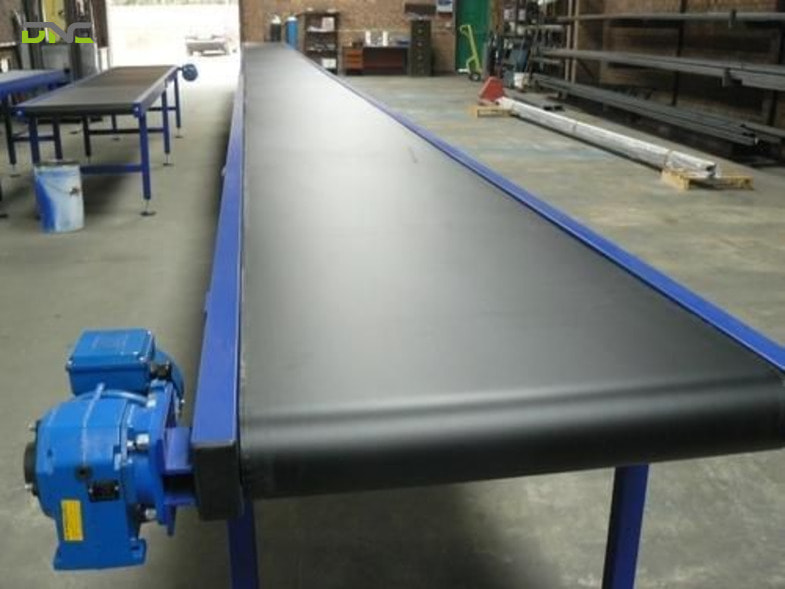
Key Components of an SFB Conveyor System
Applications: SFB Conveyors in Malaysian Manufacturing
Automotive Paint and Powder Coat Ovens — Selangor
Malaysian automotive manufacturing — Toyota (Shah Alam), Inokom (Kedah), and the extensive Proton/Perodua and MNC supplier base in Selangor — uses continuous paint curing and powder-coat curing ovens operating at 140–200°C. Carbon steel or SS304 SFB conveyors carry body panels, brackets, and structural components through curing zones at precisely controlled belt speeds.
DNC Automation’s SFB conveyor installations for Selangor automotive clients integrate Siemens SINAMICS VFD speed control with the paint line PLC, synchronising belt speed with oven temperature profile and curing time specifications.
Heat Treatment — Selangor Precision Engineering
Heat treatment operations (annealing, normalising, case-hardening, stress-relieving) at temperatures from 400°C to 800°C use carbon steel or heat-resistant alloy SFB conveyors to carry metal components through continuous atmosphere-controlled furnaces. Precision speed control is critical — product metallurgical properties depend on exact residence time at temperature.
Biscuit and Bakery Tunnel Ovens — F&B Nationwide
Malaysian biscuit manufacturers (Munchy’s, Hwa Tai, and others) and bread producers operating tunnel ovens at 200–280°C specify SS304 SFB conveyors or SS wire mesh belts for continuous baking. The steel belt’s dimensional stability at temperature ensures consistent product positioning through the oven’s multiple heating zones.
Glass Tempering Lines — Selangor/Johor
Float glass tempering requires heating glass to 620–680°C then rapid quenching with air jets. SFB conveyors — specifically SS wire mesh or ceramic roller conveyor hybrids — transport glass sheets through the tempering furnace at the precise speed required to achieve target glass tensile strength.
Semiconductor Backend — Penang
Penang’s semiconductor assembly and test cluster (Intel, AMD, Unisem, Inari) uses perforated SS SFB conveyors with vacuum holding capability for precise IC package positioning during thermal processing steps — die bonding, wire bonding, and moulding compound curing at 150–200°C.
Benefits of SFB Conveyors for Malaysian Factory Operations
Temperature capability that rubber and plastic cannot match: Carbon steel SFB handles to 600°C; SS304 to 800°C; SS mesh to 900°C. This makes SFB the only viable conveyor option in automotive paint ovens, heat treatment furnaces, and glass tempering lines.
Dimensional stability under load: Steel flat belts do not stretch under load the way rubber or fabric belts do. This makes SFB conveyors ideal for precision positioning applications where belt stretch would cause product misalignment.
Long service life in abrasive conditions: Hinged steel slat SFB conveyors outlast rubber belts by 5–10× in abrasive heavy-parts handling applications — engine blocks, castings, ceramic tiles. DNC Automation’s SFB conveyor builds in Selangor’s automotive supply chain have demonstrated service lives exceeding 10 years under continuous production conditions.
Cleanability and hygiene in food/pharma: SS304/316 SFB conveyors withstand CIP (clean-in-place) cleaning agents and high-pressure wash-down at full operating temperatures — essential for Malaysian F&B factories meeting HACCP MS 1480 standards.
Siemens VFD speed precision: Precise belt speed control (±0.1%) via Siemens SINAMICS VFD ensures consistent product thermal processing — critical for Malaysian automotive paint quality and semiconductor reliability.
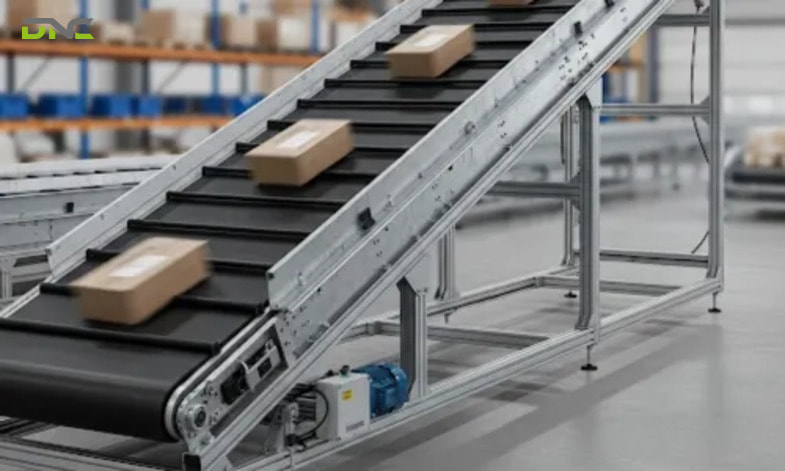
Benefits of SFB Conveyors for Malaysian Factory Operations
How to Choose the Right SFB Conveyor for Your Factory
Temperature determines material: Below 150°C → rubber, PVC, or PU belts may suffice. 150–300°C → SS304 SFB or PTFE belt. 300–600°C → carbon steel or heat-resistant alloy SFB. 600–900°C → SS316 or SS wire mesh SFB.
Load determines belt thickness and type: Light products (pastry, PCBs) → 0.3–0.5mm thin SS belt. Medium loads (automotive brackets, ceramic tiles) → 0.8–1.2mm carbon steel. Heavy abrasive loads (engine blocks, stone) → hinged steel slat belt.
Hygiene determines material grade: Food or pharma contact → SS304 minimum; SS316 for chloride/acidic cleaning agents. Non-food industrial → carbon steel.
Precision requirements determine drive specification: General industrial → standard induction motor. Thermal process with residence-time control → Siemens SINAMICS VFD with speed feedback encoder.
Contact DNC Automation for a free engineering consultation — our team will assess your temperature, load, hygiene, and speed requirements and specify the correct SFB conveyor system for your Malaysian manufacturing application.
──────────────────────────────────────────────────
Frequently Asked Questions About SFB Conveyors
What is the maximum temperature an SFB conveyor can handle?
Carbon steel SFB conveyors operate to 600°C continuously; SS304 and heat-resistant alloy to 800°C; SS wire mesh (woven wire belt) to 900°C. For applications above 600°C, specific heat-resistant alloy grades (310SS, Inconel) are specified for both the belt and structural components.
Can SFB conveyors be used in food production?
Yes — SS304 or SS316 SFB conveyors are FDA food-contact compliant and are used in Malaysian baking, drying, and thermal processing applications. The smooth SS belt surface is fully washdown-compatible with CIP cleaning systems. DNC Automation specifies SS304 SFB for F&B thermal process lines meeting HACCP MS 1480 requirements.
How is an SFB conveyor maintained?
Key SFB maintenance items: belt tension check and adjustment monthly; edge guide and tracking check weekly; drive pulley surface inspection for wear (quarterly); belt surface inspection for cracks or edge damage (quarterly); bearing condition monitoring via Siemens IoT vibration sensors (continuous). Belt replacement life depends on application — 3–7 years for standard thermal process applications.
How does SFB conveyor speed affect product quality in oven applications?
In tunnel oven applications, belt speed directly controls product residence time in each thermal zone. At constant oven temperature, increasing belt speed reduces baking/curing time; reducing speed increases it. Siemens SINAMICS VFD speed accuracy of ±0.1% ensures that residence time variations between batches are negligible — essential for consistent product quality in Malaysian food manufacturing and automotive finishing.
Does DNC Automation fabricate SFB conveyors in Malaysia?
Yes. DNC Automation’s 25,000 sq ft Selangor fabrication facility designs and builds SFB conveyor systems to customer specifications — custom belt widths, lengths, temperature ratings, and control systems. As a Siemens-authorized partner, DNC integrates full Siemens PLC and VFD control into every SFB conveyor system, with 24/7 local engineering support.
Conclusion
SFB conveyors deliver the steel-belt conveying capability that Malaysian automotive, food, glass, and semiconductor manufacturers require when conventional belt materials reach their operational limits. From Selangor’s automotive paint ovens to Penang’s semiconductor thermal processing to F&B tunnel baking lines nationwide, steel flat belt conveyors handle the temperature ranges, abrasion levels, and precision speed requirements that no rubber, PVC, or plastic belt can match.
DNC Automation designs, fabricates, and commissions SFB conveyor systems across Malaysia — with Siemens SINAMICS VFD speed control, in-house 25,000 sq ft fabrication, and 24/7 local engineering support from our Selangor headquarters.
Talk to Our Engineers — contact DNC Automation for a free SFB conveyor consultation and system specification for your high-temperature or precision manufacturing application.
Explore related: [Conveyor Belt in a Factory](#), [PLC Conveyor Control](#), [Transfer Conveyor Systems](#)
- 74 views
- 0 Comment
Recent Comments