


Automatic Carton Box Sealing Machine | DNC Automation
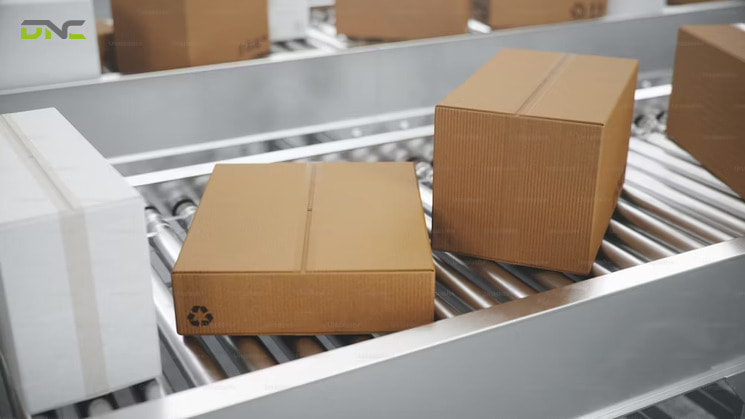
Automatic carton box sealing machines eliminate the operator bottleneck at the end of every production line. Where a manual or semi-automatic sealer demands one or two workers per shift to place, fold, and tape each carton, a fully automatic box sealing machine processes cartons continuously — receiving them from an upstream conveyor, applying tape or hot melt adhesive to top and bottom flaps, and discharging sealed cases to the next station without human intervention.
The selection decision is not simply “automatic vs. semi-automatic.” Within the automatic category, manufacturers choose between tape-based and hot melt glue systems, between uniform and random sizing modes, and between standalone machines and integrated conveyor line solutions. Each configuration suits a different production profile — and the wrong choice degrades line efficiency rather than improving it.
This guide covers automatic carton box sealing machine technology, the hot melt glue vs. tape decision, and the integration requirements that determine whether a new sealing machine delivers its projected ROI in Malaysian manufacturing conditions.
How an Automatic Carton Box Sealing Machine Works
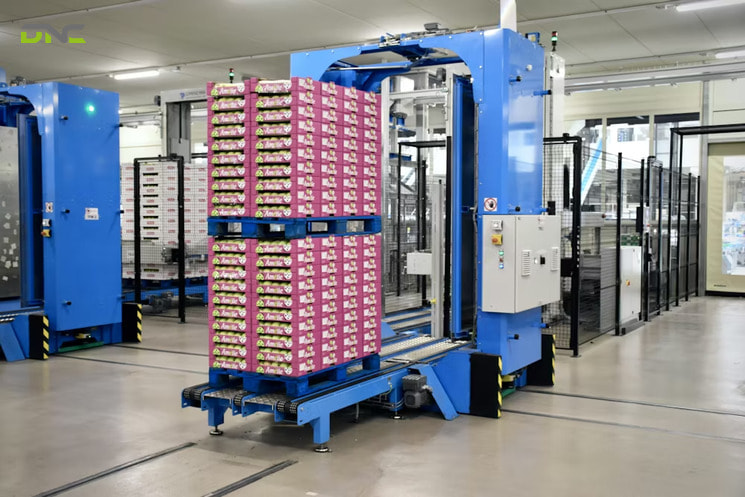
An automatic box sealing machine receives cartons from an upstream conveyor — typically from a case packer, a manual packing table with conveyor discharge, or a carton erector-filler combination. The carton enters the machine infeed guide, where side belts grip the box and drive it through the sealing zone.
Inside the machine, four stages occur in sequence:
- Flap Pre-Folding: Minor flaps on the carton sides are folded inward by fixed guide rails as the carton moves forward.
- Major Flap Folding: Top and bottom major flaps are folded by curved guide plates designed to the specific board grade and carton dimensions.
- Adhesive Application: Either a pressure-sensitive tape taping head applies tape across the flap seal line, or hot melt glue nozzles deposit adhesive beads onto the flap surfaces before a compression plate bonds the joint.
- Discharge: The sealed carton exits onto the downstream conveyor, maintaining orientation for labelling, palletizing, or direct shipment staging.
On a uniform automatic carton sealer, the machine is set once for a specific carton dimension. On a random automatic carton sealer, sensors — photocell or laser — measure each incoming carton and the sealing head adjusts automatically before the carton reaches the application zone.
How an Automatic Carton Box Sealing Machine Works
Tape vs. Hot Melt Glue: The Core Technology Decision
Every automatic carton box sealing machine uses one of two adhesive technologies. The choice between tape and hot melt glue determines sealing strength, operating cost, line speed compatibility, and export market acceptability.
Pressure-Sensitive Tape Systems
Pressure-sensitive tape — the standard technology in most Malaysian manufacturing environments — applies a strip of acrylic or solvent-based adhesive tape across the carton flap joint. The tape taping head consists of a tape roll, a tension guide, a tape knife, and a pressure roller that bonds the tape to the corrugated board surface.
Advantages:
- Lower machine acquisition cost (no glue tank or heating system)
- Visible seal — tape application quality is immediately visible to operators
- Bond can be opened without destroying the carton (suitable for retail or returns processing)
- Lower energy consumption (no glue heating required)
- Wide spare parts availability in Malaysia
Limitations:
- Tape adhesion degrades in high-humidity environments (>80% RH) without humidity-resistant tape grades
- Cold chain applications require specialised low-temperature tape
- Tape residue on carton exterior may be unacceptable for halal export markets
- Maximum achievable line speed is limited by tape application mechanics (typically 40–50 CPM practical maximum)
Tape width selection: Most automatic carton box sealing machines support 2-inch (48 mm) or 3-inch (72 mm) tape. Three-inch tape provides higher bond area per seal and is specified for heavier carton weights (above 15 kg gross) or corrugated board below 150 gsm facing weight.
Hot Melt Glue Carton Sealing Systems
Hot melt glue carton sealing machines heat thermoplastic adhesive to 150–185°C and deposit precise glue beads onto the carton flap surfaces via heated nozzles. When the major flap closes and contacts the glued minor flap surface, the adhesive bonds within 1–3 seconds as heat transfers to the corrugated board.
Advantages:
- Higher bond strength than tape — the glue penetrates board fibres at the application point
- Tamper-evident sealing — glue-bonded flaps cannot be reopened without visible damage
- No tape residue on carton exterior — preferred for halal and food export markets
- Higher achievable line speeds (hot melt application is faster than tape head mechanics)
- Bond integrity maintained in high-humidity environments where tape adhesion degrades
Limitations:
- Higher machine acquisition cost (glue tank, heated hoses, temperature-controlled nozzles add RM 15,000–40,000 to base machine cost)
- Glue material cost: hot melt adhesive (EVA or polyolefin-based) adds approximately RM 0.05–0.15 per carton in material cost vs. tape
- Nozzle maintenance: partial blockages from carbonised glue are the most common maintenance issue — require daily purging cycles
- Sealed cartons cannot be reopened non-destructively (impacts returns processing)
- Higher energy consumption: glue heating systems draw 2–4 kW continuously during production
Glue selection for Malaysian conditions: Standard EVA hot melt adhesive (softening point 80–95°C) is appropriate for ambient temperature Malaysian distribution. For cold chain applications, specify polyolefin-based adhesive with lower viscosity at cold temperatures. For export containers crossing the equatorial shipping lane (ambient >40°C), verify the adhesive’s heat resistance specification with your supplier.
Decision Framework
| Scenario | Recommended Technology |
| Standard domestic distribution | Pressure-sensitive tape |
| Halal export (Middle East) | Hot melt glue |
| Cold chain sealing | Specialised cold-temperature tape or polyolefin hot melt |
| High-speed line (>30 CPM) | Hot melt glue |
| Tamper-evident requirement | Hot melt glue |
| Food-grade, no residue | Hot melt glue |
| Mixed market (domestic + export) | Dual-system or separate lines |
Automatic Carton Box Sealing Machine Configurations
Uniform Automatic Sealer
The uniform automatic carton box sealing machine operates at a fixed mechanical setting for a single carton size. Changeover to a different carton dimension requires manual adjustment of the width guides, top head height, and conveyor guide rails — typically 15–30 minutes per changeover.
When to specify: Single-SKU production lines running dedicated carton sizes. Malaysian edible oil producers, glove manufacturers, and beverage companies with dedicated production lines for flagship products operate uniform automatic sealers for their efficiency at speed and low mechanical complexity.
Throughput: 20–60 CPM depending on box dimensions and adhesive type.
Random Automatic Sealer
Random automatic carton sealers use photocell or laser sensor arrays to measure each incoming carton’s height and width. A servo-driven or pneumatic adjustment mechanism repositions the top sealing head and side guide belts to match the measured dimensions — typically within 0.5 seconds. The carton enters, is measured, the machine adjusts, and sealing occurs — all in a single continuous motion.
When to specify: Operations handling multiple carton sizes per shift without dedicated line changeover time. E-commerce fulfilment operations in Selangor, contract packaging facilities, and distribution centres with mixed-SKU inbound flow.
Throughput: 15–40 CPM across mixed carton sizes (adjustment cycle time reduces maximum CPM vs. uniform).
Cost premium: Random sealers carry a 35–60% price premium over equivalent uniform models due to the sensing and adjustment mechanism. The premium justifies when changeover time savings exceed 45 minutes per shift at current labour rates.
Integration Requirements for Malaysian Production Lines
Automatic carton box sealing machines require integration with three systems: upstream product flow, conveyor infrastructure, and electrical/control systems.
Upstream Integration
The machine must receive cartons at the correct rate, orientation, and dimensional consistency from upstream equipment. Common upstream sources:
- Case packers: Discharge cartons already closed but unsealed at rated CPM. Verify the case packer discharge speed matches or slightly underruns the sealer’s rated CPM — never overfeed.
- Manual packing stations with conveyor: Variable operator packing rate creates surge flow. Buffer conveyor between the packing station and sealer infeed handles surge without creating machine stoppages.
- Carton erector-filler combinations: These integrated systems feed sealed cartons in precise orientation. The sealer infeed guide must match the erector-filler discharge height ±5 mm.
Conveyor Infrastructure
Standard conveyor heights in Malaysian factories: 750 mm, 800 mm, and 900 mm from floor level. Verify the sealer’s infeed and discharge conveyor heights match your existing line. Mismatches require custom conveyor risers or lowering frames — add RM 3,000–8,000 per connection point.
Belt vs. roller conveyor: Automatic carton sealers use internal belt drives to move cartons through the sealing zone. Upstream and downstream conveyors can be belt or powered roller type, but verify the surface friction is sufficient to engage cartons at the rated line speed without slipping.
Carton gap requirement: Automatic sealers require a minimum gap between consecutive cartons at the infeed — typically 150–300 mm depending on the sealer’s sensor system. Insufficient gap causes the machine to trigger on the trailing edge of the previous carton, causing mis-sealing. Control upstream conveyor speed to maintain this gap.
Electrical and Control System Integration
Malaysian industrial facilities operate on 3-phase 415V / 50 Hz supply. Verify the sealer’s electrical specification matches your facility supply and confirm the connected load against your panel capacity.
Control system integration options:
- Standalone operation: The sealer runs independently, triggered by its own infeed sensor. Simple to commission, but no upstream communication — line stoppages require manual sealer shutdown.
- PLC integration: The sealer interfaces with your production line PLC via digital I/O signals. The line PLC commands sealer start/stop, receives fault signals, and includes the sealer in the overall E-stop circuit.
- SCADA integration: For fully integrated Industry 4.0 lines, the sealer reports OEE data — uptime, cycle count, fault codes — to the facility SCADA system for production monitoring.
DNC Automation commissions all three integration levels. The choice depends on your existing line control architecture and your Industry 4.0 roadmap requirements.
Stainless Steel vs. Carbon Steel Frame
Automatic carton box sealing machines are available in carbon steel or stainless steel construction. The material choice affects hygiene compliance, maintenance frequency, and machine longevity in Malaysian environments.
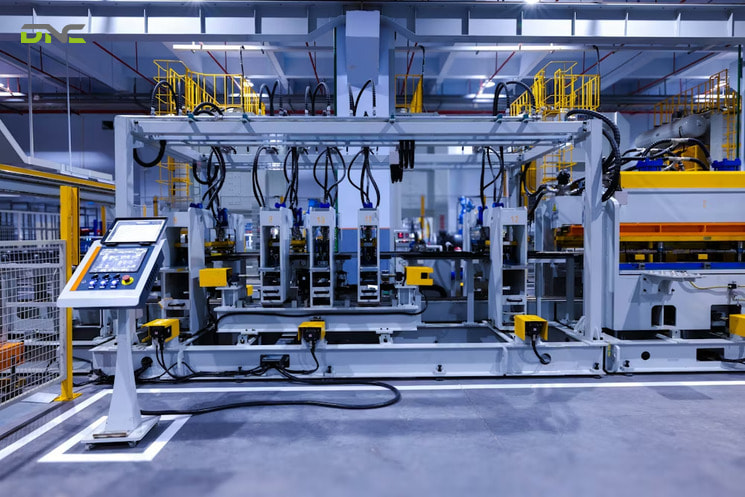
Carbon steel (painted or powder-coated): Standard construction for dry, ambient-temperature manufacturing environments. Adequate for most Malaysian general manufacturing applications. Requires inspection for corrosion at exposed weld points in high-humidity facilities; repaint or re-coat every 3–5 years in coastal Selangor/Penang locations.
Stainless steel (304 or 316 grade): Required for food and pharmaceutical applications where the machine is in a GMP production zone subject to regular cleaning or wash-down. Stainless steel construction adds 20–35% to machine cost but eliminates corrosion maintenance and meets hygiene standards for food contact environments.
For Malaysian F&B manufacturers — particularly those producing for export under HACCP or BRC certification — stainless steel frame construction is a certification requirement, not an option.
Stainless Steel vs. Carbon Steel Frame
Throughput Benchmarks: What Malaysian Manufacturers Actually Run
Based on DNC Automation project data across Malaysian manufacturing clients:
| Industry | Typical Automatic Sealer Speed | Configuration |
| Edible oil / oleochemicals | 25–35 CPM | Uniform automatic, tape |
| Glove manufacturing | 30–50 CPM | Uniform automatic, tape |
| Food & beverage (export) | 20–30 CPM | Uniform or random, hot melt |
| Pharmaceutical secondary | 15–25 CPM | Uniform automatic, hot melt |
| E-commerce fulfilment | 12–20 CPM | Random automatic, tape |
| Home appliances | 10–20 CPM | Uniform automatic, tape |
These figures represent actual running speeds under Malaysian production conditions — not OEM-rated maximums, which assume optimal carton dimensions and new machine condition.
Maintenance Schedule for Automatic Carton Box Sealing Machines
Tape System Maintenance
| Frequency | Task |
| Daily | Clean tape head, check tape roll tension, wipe photocell sensors |
| Weekly | Inspect belt tension and wear, lubricate drive chain/belt |
| Monthly | Check tape knife sharpness (dull knives cause tape tail adhesion failures), calibrate box height sensor |
| Quarterly | Full belt replacement inspection, electrical connection check |
| Annually | Replace worn conveyor belts, overhaul taping head, verify motor alignment |
Hot Melt Glue System Additional Maintenance
| Frequency | Task |
| Daily | Purge nozzles (remove carbonised glue), check glue tank level, verify temperature setpoint |
| Weekly | Inspect heated hose insulation, check nozzle tip condition |
| Monthly | Clean glue tank strainer, verify temperature controller accuracy |
| Quarterly | Replace nozzle tips, inspect heated hose for heat loss (infrared check) |
| Annually | Full glue system overhaul including pump inspection and temperature controller calibration |
Throughput Benchmarking: Tape vs Hot Melt at Production Scale
Malaysian manufacturers comparing tape and hot melt sealing systems often focus on capital cost differences while underestimating the throughput implications of each technology at sustained production speeds.
Tape system throughput limits: Pressure-sensitive tape application requires the taping head knife to cut the tape cleanly at each carton cycle. At speeds above 40–45 CPM, tape cut quality degrades — the knife does not complete a clean cut before the next carton enters the sealing zone, causing tape tail adhesion failures (the tape end sticks to the next carton’s leading edge). Standard tape systems are practically limited to 35–40 CPM reliable operation; exceeding this rate requires premium taping head specifications with higher-speed knife actuation.
Hot melt system throughput capability: Hot melt glue application is not mechanically limited by a cutting mechanism — the nozzle deposits glue beads continuously as the carton passes beneath it. Hot melt systems achieve reliable operation at 50–70 CPM without the tape tail failure mode. For high-speed Malaysian production lines — particularly glove manufacturing and F&B filling lines running above 40 CPM at the sealing station — hot melt is often the only practical sealing technology.
Real-world Malaysian throughput data: In DNC Automation’s Malaysian installation portfolio, automatic tape sealers run at an average sustained rate of 28 CPM; hot melt sealers run at an average of 42 CPM. The 50% throughput advantage of hot melt systems narrows the capital premium payback significantly when throughput increase value is included in the ROI calculation.
Carton Dimension Verification: The Pre-Purchase Engineering Step Most Manufacturers Skip
Automatic carton box sealing machines are calibrated — at the factory — for a specific carton dimension range. The machine manufacturer’s specification sheet lists minimum and maximum carton dimensions (length, width, height). What the specification sheet does not show is how much variance the machine tolerates in actual carton dimensions from your corrugated box supplier.
Malaysian corrugated board manufacturing tolerances are typically ±3–5 mm in carton dimensions. An automatic sealer calibrated for a 300 mm carton may misalign on a 294 mm carton from a low-tolerance supplier. The result: tape applied off-centre, flap fold incomplete, or worse — the carton jams at the flap folder and stops the line.
DNC Automation’s pre-purchase dimension verification process:
- Measure your actual carton samples (minimum 20 cartons per SKU, from at least 2 production batches)
- Calculate the actual dimension range (not the nominal dimension from your carton drawing)
- Verify the candidate machine’s mechanical adjustment range covers your actual worst-case dimensions with 10 mm additional margin on each side
- Confirm with your corrugated box supplier that their dimensional tolerance is within the verified range
This 30-minute process prevents the most common post-purchase commissioning problem in Malaysian carton sealer installations.
Energy Efficiency: Automatic Carton Box Sealing Machine Operating Costs in Malaysia
Energy cost is a frequently overlooked component of automatic carton sealing machine total cost of ownership. Malaysian industrial electricity (Tenaga Nasional Berhad tariff E1/E2) costs approximately RM 0.35–0.50/kWh for medium-voltage industrial consumers.
Tape system energy consumption: Drive motors, belt conveyors, and control systems on a standard automatic tape carton sealer draw 1.5–4 kW during operation. Annual energy cost on a two-shift operation: RM 4,000–10,000.
Hot melt system additional energy: The glue heating system adds 2–4 kW of continuous draw during production. However, modern hot melt systems use standby temperature reduction (reducing glue tank temperature during planned stoppages) and tank insulation to minimise thermal losses. Net additional energy cost vs. tape: RM 5,000–12,000 per year on a two-shift operation.
Energy efficiency specification points:
- Look for auto-standby mode — machine reduces belt and conveyor speed during upstream stoppages, reducing energy draw by 30–40%
- IE3 (premium efficiency) drive motors are now standard on European and Japanese OEM carton sealers; IE2 is still common on Chinese-manufactured units
- Hot melt tank insulation quality affects thermal loss rate — specify tank insulation thickness when comparing hot melt system quotations
Automatic Carton Box Sealing Machine Operating Costs in Malaysia
Cost Structure: Automatic Carton Box Sealing Machine in Malaysia
| Machine Type | Capital Cost (RM) | Annual Operating Cost (RM) |
| Uniform automatic (tape) | 45,000–120,000 | 8,000–18,000 |
| Random automatic (tape) | 80,000–200,000 | 10,000–22,000 |
| Uniform automatic (hot melt) | 65,000–160,000 | 14,000–28,000 |
| Random automatic (hot melt) | 100,000–250,000 | 16,000–35,000 |
Annual operating cost includes: tape or glue material, preventive maintenance labour, spare parts, and energy. Does not include operator cost (automatic systems typically require one monitoring operator per shift, not a dedicated sealing operator).
ROI calculation note: The primary ROI driver for automatic vs. semi-automatic sealing is labour elimination. At Malaysian manufacturing wages (RM 1,800–3,500/month per operator including statutory contributions), a two-operator reduction pays back an RM 80,000 automatic sealer in under 18 months on a two-shift operation.
Secondary ROI driver: throughput consistency. Semi-automatic sealers tied to operator speed create production variability. Automatic sealers run at consistent CPM regardless of operator fatigue or shift change timing — improving downstream scheduling accuracy.
Frequently Asked Questions
What is the difference between automatic and semi-automatic carton box sealing?
Semi-automatic sealers require an operator to manually place each carton into the machine infeed. Automatic sealers receive cartons directly from an upstream conveyor without operator intervention. The key difference is labour dependency: semi-automatic sealing speed is bounded by operator placement rate; automatic sealing speed is bounded only by the machine’s rated CPM and upstream feed rate.
Can an automatic carton box sealing machine handle corrugated and regular cardboard boxes?
Standard automatic carton sealers are designed for corrugated cardboard (single-wall, double-wall). They can handle non-corrugated cardboard with minor adjustment to the compression force settings, but the flap fold guides are sized for corrugated board thickness. Confirm your specific board grade with the machine supplier before purchase.
How long does installation take for an automatic carton box sealing machine?
Mechanical installation: 1–2 days. Electrical wiring and PLC integration: 1–3 days depending on control system complexity. Commissioning and line speed calibration: 1–2 days. Total: 3–7 working days for a standard installation. Complex integrations with existing SCADA systems may extend commissioning to 2 weeks.
What hot melt glue type is correct for Malaysian ambient temperatures?
For ambient-temperature Malaysian distribution (warehouse temperature 28–38°C), standard EVA-based hot melt adhesive with a softening point of 85–95°C is appropriate. For cold chain applications, specify a low-application-temperature polyolefin adhesive. For export cartons subject to high-temperature container shipping, verify the adhesive’s creep resistance specification.
Does DNC Automation supply automatic carton box sealing machines?
DNC Automation integrates automatic carton box sealing machines as part of end-of-line automation projects. Our engineering team specifies the correct machine type, commissions the conveyor integration, programs the PLC interface, and provides operator training — delivering the complete sealing line as a working system rather than individual equipment.
What warranty and after-sales support is available?
DNC Automation provides post-commissioning support including scheduled preventive maintenance visits, spare parts supply, and remote diagnostics for integrated control systems. Our service team is based in Selangor, with response time commitments for production-critical breakdowns.
Next Steps: Specifying Your Automatic Carton Box Sealing Machine
Automatic carton box sealing machine selection requires a line survey — not just a datasheet comparison. The correct machine depends on your production volume, carton size range, upstream equipment discharge specification, and export market requirements.
DNC Automation’s engineering team conducts line surveys at Malaysian manufacturing facilities in Selangor, Johor, Penang, and across the Klang Valley. We document your existing line parameters, identify the optimal sealing machine configuration, and deliver a turnkey integration proposal covering mechanical, electrical, and control system scope.
Get a Free Consultation — describe your production line and carton range. Our engineers respond within 3 working days with a configuration recommendation.
Request a Quote — for complete automatic carton box sealing line integration including machine supply, conveyor interface, PLC commissioning, and operator training.
*DNC Automation | Malaysia Top #1 Factory Automation Solution Company | ISO 9001:2015 Certified | 35+ Engineers | 25,000 sq ft Production Facility*
- 111 views
- 0 Comment
Recent Comments