


Accumulation Conveyor Working Principle: What the Zones Actually Do
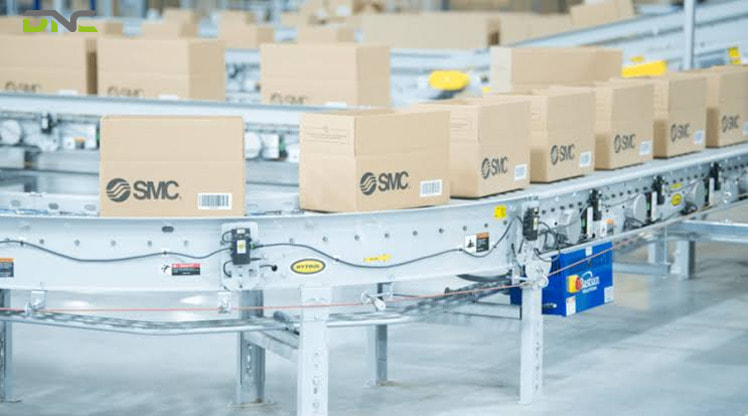
An accumulation conveyor holds product temporarily between two stations that are running at different paces, so a slower or stopped downstream machine does not force the upstream machine to stop with it. The working principle comes down to one mechanical idea: the conveyor is divided into zones, and each zone can start or stop on its own, controlled by a photoelectric sensor that detects whether product is sitting on it. When a downstream zone fills up, only that zone stops — the zones behind it keep running until they, too, fill and stop in sequence. Vendor pages describe this zone-by-zone logic in detail and compare zero-pressure, low-pressure, and mass accumulation as three ways to build it. What most of them skip is the question a Malaysian line actually has to answer when specifying one: how many zones does the buffer need, and how is that number tied to the length of stoppage the line is designed to absorb, not just to the size of the product moving through it.
Accumulation Conveyor: Definition and Function
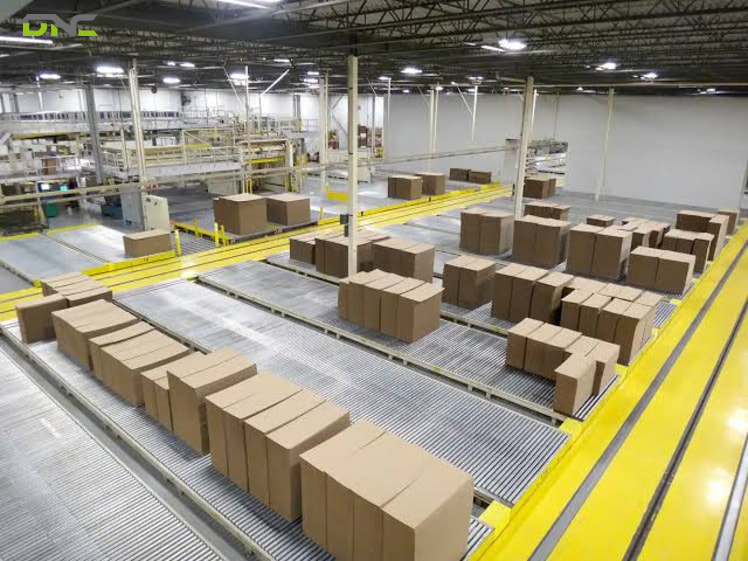
An accumulation conveyor is a conveyor section built to hold product in place — briefly or for an extended period — rather than move it continuously from one end to the other. It sits between two points in a line where the pace of work differs: a filling or forming machine on one side, a packing, sealing, or palletizing station on the other. Its job is not to transport product faster or slower than the rest of the line; it is to store product on the belt or rollers themselves, so a pause at one end does not immediately become a pause at the other.
This distinguishes it from a standard conveyor, which is built to move product at a constant pace and has no mechanism for holding it in place without jamming. Run product into a stopped standard conveyor and it piles up uncontrolled, pushing against whatever stopped it with the full weight of everything behind it. That is exactly what an accumulation conveyor is built to prevent. It happens in a controlled, low-force way instead, depending on which pressure class it uses.
Accumulation Conveyor: Definition and Function
How an Accumulation Conveyor Works
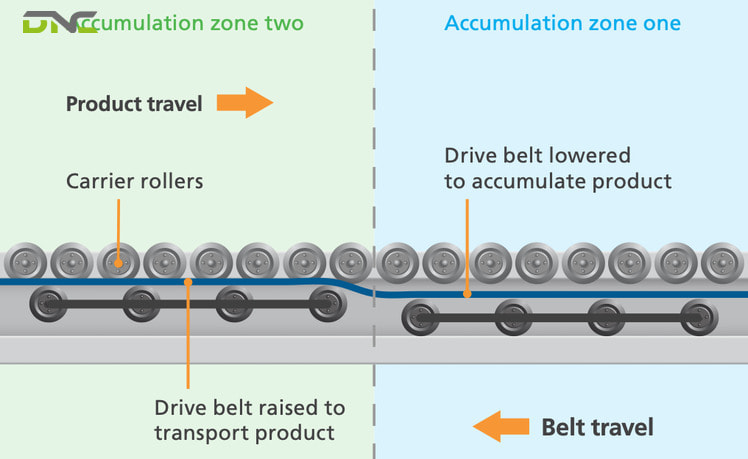
The accumulation conveyor working principle is a zone-control problem, not a speed-control problem. The conveyor is broken into a series of shorter sections — zones — and each zone has its own drive, independent of the zones next to it. A photoelectric sensor, sometimes called a photo-eye, sits at the discharge end of each zone and detects when product has arrived and has nowhere further to go, either because the next zone is already occupied or because a downstream machine has signaled it is not ready to receive.
When that sensor trips, the zone’s own drive stops or slows. It does not touch any other zone’s drive. Product entering from the zone behind it keeps arriving normally until that zone also fills and its own sensor trips its own drive. The result is a line of product building up zone by zone, back toward the upstream machine, while the upstream machine itself keeps running until the very last zone in the buffer is full. Only then does the buffer stop giving the upstream machine anywhere to put its output, and only then does the upstream machine actually have to pause.
Releasing the buffer runs the same logic in reverse: once the downstream machine is ready again, the first zone releases its product, its sensor clears, the zone behind it releases into the space just opened, and the release propagates backward through the buffer one zone at a time until normal flow resumes.
How an Accumulation Conveyor Works
Why Zone Independence Is the Entire Mechanism
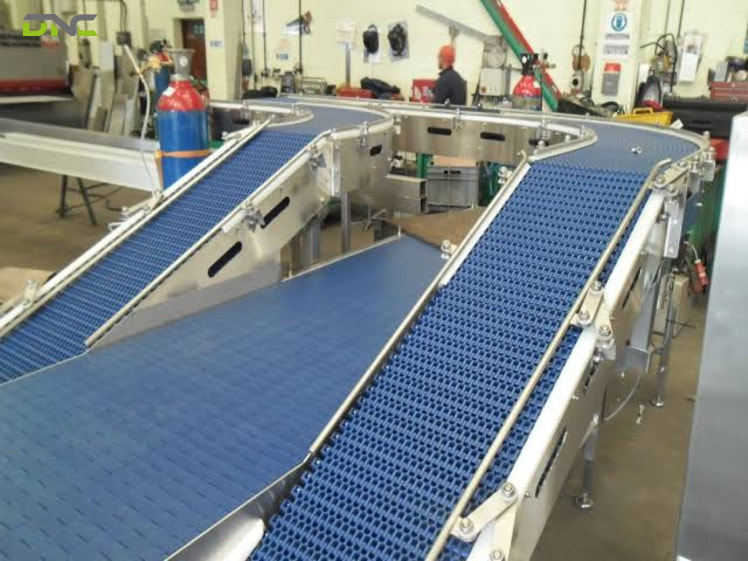
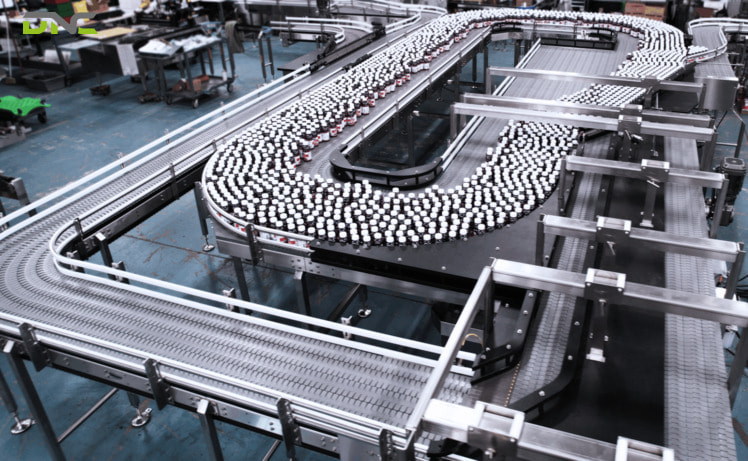
Zone independence is the entire mechanism because a conveyor without it cannot accumulate at all: independent zone drives are what make this work — a conveyor with a single motor running its full length cannot accumulate product this way, because stopping the motor stops the whole conveyor, upstream section included. That single fact is the reason zone count, not conveyor length alone, is what determines how much stoppage a buffer can actually absorb: a longer buffer built from fewer, longer zones holds the same total length of product but reacts to a stoppage in fewer, larger steps, while more zones of shorter length let the buffer fill more gradually and keep more of the upstream line running for longer before the very first zone finally stops it.
Why Zone Independence Is the Entire Mechanism
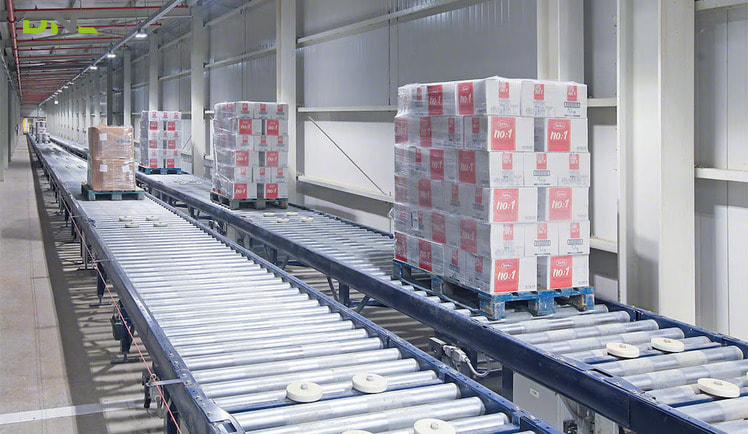
Zero-Pressure, Low-Pressure, and Mass Accumulation
The pressure class is what actually changes between accumulation conveyor types. The mechanism above stays the same for zero-pressure and low-pressure designs. Mass accumulation dispenses with it entirely.
| Type | Drive behavior | Contact force on product | Typical fit |
| Zero-pressure | Each zone’s drive fully disengages when its sensor trips | None — product rests with no push from the zone behind it | Fragile, lightweight, or easily marked product (cartons, retail-ready packs) |
| Low/minimum-pressure | Zone drive stays engaged but slips under load once product is held | Light — product touches but is not driven forward with force | Product that tolerates light contact but not full accumulation pressure |
| Mass accumulation | Conveyor runs continuously; product queues and pushes against whatever stopped ahead of it | Full — the entire queued weight presses forward | Robust product (drums, crates, some palletized loads) where contact force is not a damage risk |
Zero-Pressure, Low-Pressure, and Mass Accumulation
The Buffer Window Is a Stoppage-Duration Decision, Not an Idle-Capacity Number
The buffer window a set of zones creates is worth sizing as a stoppage-duration decision, not an idle-capacity guess. That framing starts from a sizing question every vendor page in this comparison answers the same way: a zone has to be built longer than the longest product that will sit on it, since a product spanning two zones confuses both zones’ sensors about what has actually stopped. That part is well covered. It is not in dispute.
Zone count is a different question, and it is the one the crawled competitor pages do not connect to anything concrete. Six vendor pages describe zones, sensors, and pressure classes in mechanical detail — how a zone starts and stops — without once tying the number of zones a buffer needs to how long a stoppage the buffer is meant to survive. A buffer built from three zones and a buffer built from twelve zones both “work” by the same mechanism described above; the difference between them is entirely in how many seconds or minutes of upstream output each one can absorb before the first zone runs out of room and the upstream machine has to stop. This is the same coupling logic DNC applies to conveyor sizing across a conveyor system between any two stations on a line — the buffer is not there to look tidy between two machines; it is there to convert a specific length of expected downtime into a length of conveyor.
The Buffer Window Is a Stoppage-Duration Decision
Summary So Far
The summary so far follows directly from that sizing gap: zone mechanics explain how a buffer holds product, but they do not explain how much buffer a line actually needs, and that number comes from the stoppage the buffer is built to absorb, not from the product it is built to hold. A changeover that takes two minutes, a minor jam that clears in twenty seconds, and an operator manually clearing a jam that takes ninety seconds each demand a different number of zones — the same zero-pressure mechanism, sized three different ways. Treating the buffer as extra conveyor rather than as purchased downtime is the specification mistake this comparison exists to prevent.
Sizing an Accumulation Zone for Your Line
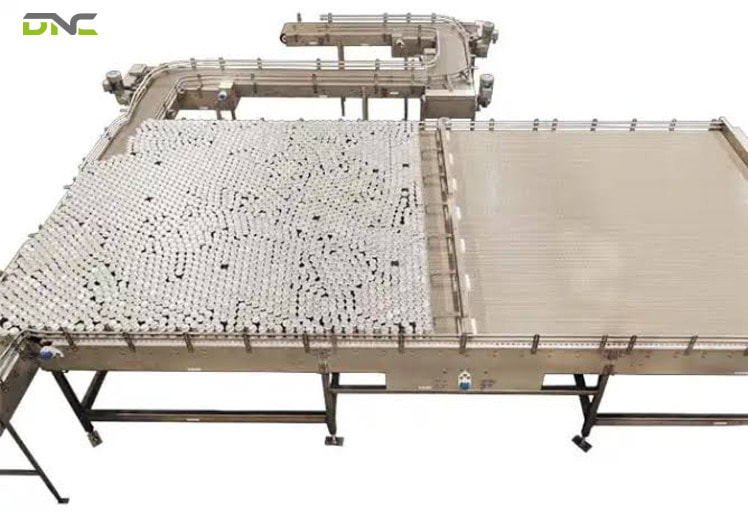
Sizing an accumulation zone starts from the stoppage the line needs to survive. Everything else — zone count, zone length — is worked backward from that number, not forward from a generic conveyor-length guess.
Product size sets the zone-length floor. A zone has to exceed the longest product moving through it — vendor documentation frames this with worked examples using a 24-inch zone paired with product under 24 inches, and notes that multiple products spanning one zone changes the sizing math. Get this wrong and the sensor logic itself breaks down, independent of how many zones are downstream of it.
Stoppage duration sets the zone-count floor. How long does the line need to keep running when the downstream station pauses — a routine changeover, a short jam, an operator intervention? That duration, converted into however many product units arrive from the upstream machine in that window, is the number of zones the buffer actually needs. A buffer sized only to “look long enough” on a layout drawing, without that calculation behind it, is a guess dressed up as a specification.
Product fragility sets the pressure class. Zero-pressure zones cost more to build than mass-accumulation sections because each zone needs its own drive and sensor; that cost is worth paying when the product cannot tolerate queuing force, and is not worth paying when it can.
Line position sets how the buffer interacts with sensing. A single straight-line buffer between two stations only has to answer “full or not full.” A buffer feeding a merge point or a sortation system carries an additional signaling job — releasing product in a sequence the downstream system expects, not just releasing it when space opens. Vendor material covering merge and sortation applications treats this as an extension of the same zone logic, not a different mechanism.
DNC Automation’s engineers size accumulation sections the same way across F&B, cosmetics, and light-industrial lines in Malaysia: start from the stoppage the line has to absorb, then work backward to zone count and zone length — not the reverse.
Sizing an Accumulation Zone for Your Line
Frequently Asked Questions
The frequently asked questions below cover what buyers most often get wrong when specifying an accumulation conveyor.
What is the difference between zero-pressure and low-pressure accumulation?
Zero-pressure zones fully disengage their drive when product is held, so no force is applied to product waiting in the zone. Low-pressure zones stay engaged but slip under load, applying light contact force instead of none. Zero-pressure costs more to build and suits product that cannot tolerate any queuing pressure; low-pressure is a lower-cost option for product that tolerates light contact.
How long can an accumulation conveyor hold product?
This depends entirely on zone count and zone length, not on a fixed conveyor specification. A buffer built with more or longer zones holds product longer before the first zone runs out of room. Sizing this correctly means starting from how long the line needs to keep running during a stoppage, not from an arbitrary conveyor length.
Does an accumulation conveyor need a photoelectric sensor on every zone?
Yes, in a zero-pressure or low-pressure design — each zone’s sensor is what tells that specific zone’s drive whether to run or stop, independent of every other zone. A mass-accumulation section does not use zone sensors at all, since it does not divide the conveyor into independently controlled zones.
Can an accumulation conveyor feed a sortation or merge system?
Yes — the same zone-and-sensor mechanism extends to control release sequencing into a merge point, not just to hold product on a straight run. The buffer’s job shifts from “absorb a stoppage” to “release product on the timing the downstream system needs,” using the same independent-zone control.
How long can an accumulation conveyor hold product?
- 20 views
- 0 Comment
Recent Comments