


Top Load vs Side Load Case Packer: The Real Difference
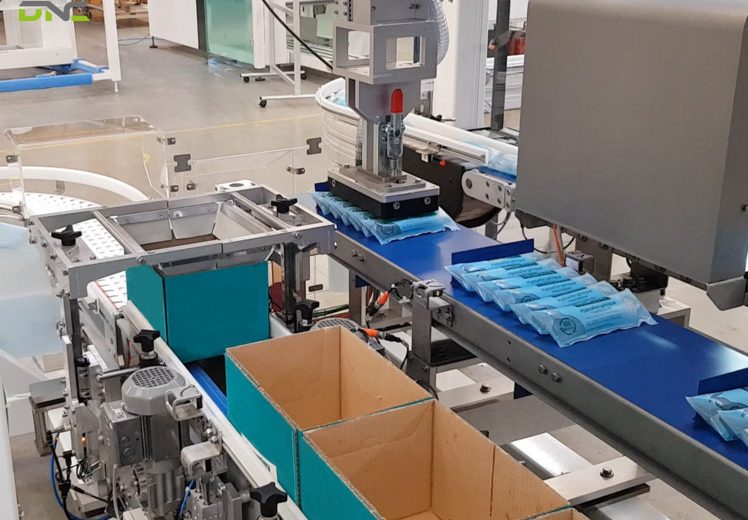
A top load case packer drops product vertically into a waiting case; a side load case packer pushes product horizontally through a side or end opening while the case stays on one plane. That loading axis — vertical drop versus horizontal push — drives every trade-off vendor pages list under “top load vs side load”: frame height, product handling risk, and footprint. What most vendor pages skip is a pattern in their own product descriptions that never gets named as a decision: loading axis also tends to decide whether case erecting and sealing come bundled inside the packer or stay as separate stations either side of it.
Top Load Case Packer: How It Works and When It Fits
A top load case packer works by presenting an erected, open case underneath a loading head, then lowering or dropping the product straight down into it — by gravity, by a vacuum head, or by a robotic pick-and-place arm that releases the product once it clears the case wall. Because the motion is vertical, the product keeps whatever orientation it arrived in from upstream stations. That single trait is the main reason top-load exists as a category: products that are difficult or expensive to collate and pack sideways — paint cans, bottles, pouches, jars, bags — stay upright the whole way from filler or capper to case, with no reorientation step and no extra mechanism to rotate or lay the product down before it enters the case.
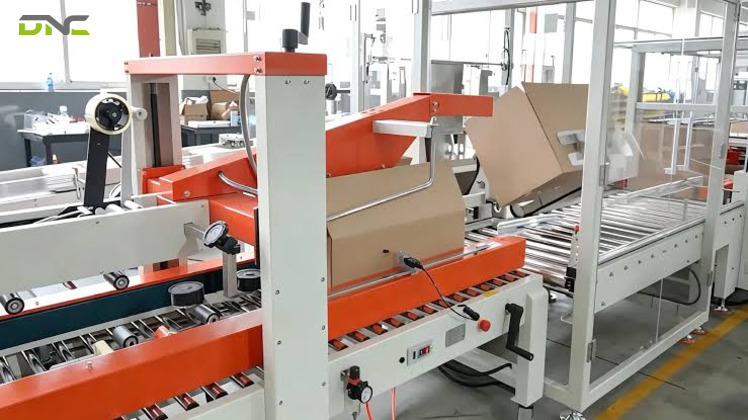
That same vertical path is also why top load carries the frame-height cost. The case has to sit under a loading station tall enough to drop product into it without damage, which is why top-load machines typically run a taller, larger frame than an end-load equivalent of the same output. Case erecting adds to that complexity: standing a case up so its opening faces upward is a more involved motion than opening a case on its side, and at high speed some vendors separate the erecting station from the main frame entirely rather than keep a single monobloc unit — which increases changeover time and floor footprint rather than reducing it. Multiple product SKUs compound the cost further, since each pack pattern and product shape typically needs its own end-of-arm tooling on the pick-and-place robot.
One frame-level fact rarely stated as a trade-off: top load case packers commonly avoid a downstream palletizing step that side-load lines still need. Because the product’s orientation coming out of a top-load packer matches its orientation going in, the case does not need to be rotated 90 degrees before palletizing — a step some end-load and side-load configurations still require, depending on which face of the case has to present outward on the pallet.
Top Load Case Packer: How It Works and When It Fits
Side Load Case Packer: How It Works and When It Fits
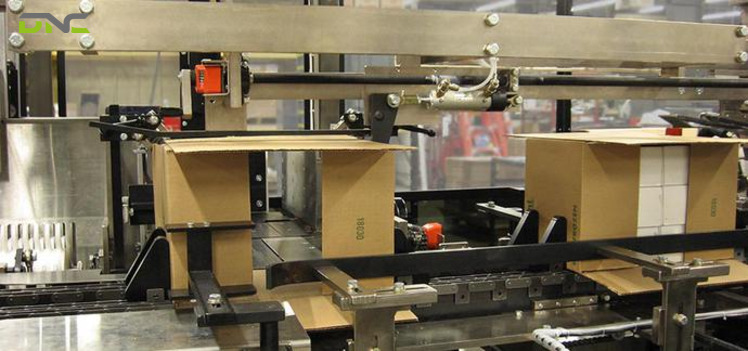
A side load case packer works by collating product into the required pack pattern, then pushing that group horizontally through an open side into a case that stays stationary on the same plane the whole time. Some vendors sell the same mechanism as an end-load case packer instead, depending on whether product enters from the long side or the short end of the case. The mechanism doing the pushing is usually a servo-driven cross-push cylinder, a gantry, or a robotic loader, and because the motion is horizontal rather than a drop, there is no point in the cycle where the product loses contact with a controlled surface. That is the core selling point competitor pages return to: side loading avoids the impact forces a vertical drop can put on fragile or irregularly shaped product, at the cost of needing more collating mechanism upstream to get loose or oddly shaped items into a stable group before the push.
Footprint is where side load wins back what top load spends on frame height. Because there is no vertical drop, a side-load packer does not need the overhead clearance a top-load frame does, which keeps its footprint low-profile and easier to fit into a packing hall with limited ceiling height. One vendor’s side-load line lists a magazine height of roughly 900 mm from the floor as part of that ergonomic design — full-height access doors on each side, an HMI that repositions to the operator, and format changeovers with no tools required. Rate is another variable worth naming without treating it as a hard ceiling for the category: nameplate figures for the side-load and side-infeed lines reviewed here run from roughly 20 to 26 cases per minute, figures that describe specific vendor models, not a universal limit either loading axis is stuck at.
Side load’s other structural trait, less often stated directly, is what happens once the case is closed. A side-load or end-load frame typically routes the loaded case straight into a closing and sealing station as part of the same continuous sequence, flaps folded and taped or glued without turning the case over. That single detail — case orientation never changes between load and seal — is the thread that connects loading axis to the erect/seal architecture question below.
Side Load Case Packer: How It Works and When It Fits
Where the Loading Axis Decision Actually Sits
The loading axis decision actually sits one layer below “top load vs side load case packer” as a feature-by-feature comparison: whether the packer is expected to also erect and seal the case, or whether those two jobs stay separate. Top load and side load both start from the same input — a flat case blank — and both end at the same output — a closed, transit-ready case. What differs is how much of that sequence sits inside one frame.
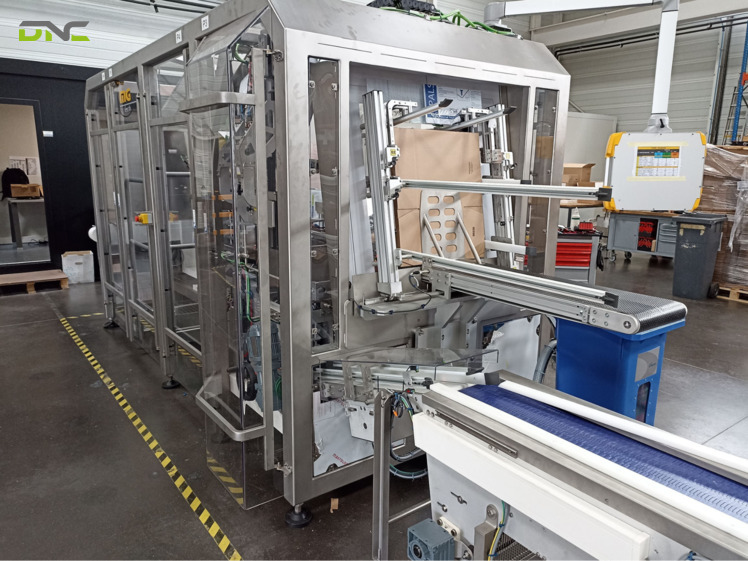
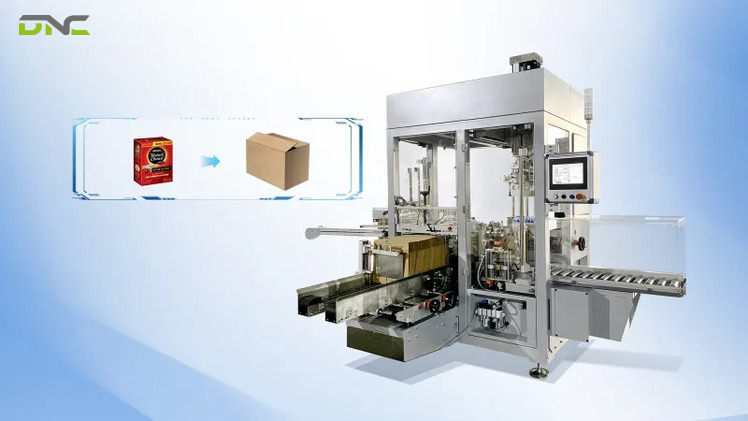
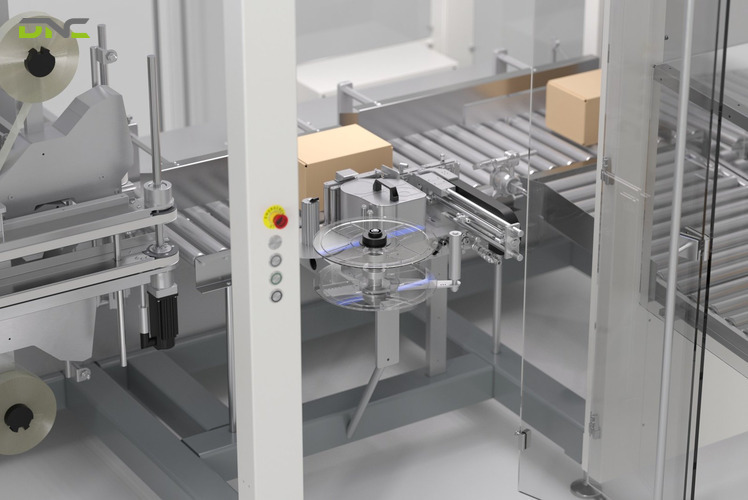
One vendor’s own product pages make the pattern explicit without naming it as a decision framework: its top-load model is described as needing an external case erector and case sealer bolted around it, while its side-infeed model — different product line, same manufacturer — erects, fills, and seals cases within a single machine. A second vendor states the same pattern from the top-load side: erecting, loading, and sealing “can be condensed into one machine if the speeds are limited,” which is a way of saying bundling is conditional for top-load, not the default architecture. On the side/end-load side, two separate manufacturers describe their machines the same way — erect, load, then advance directly into a closing and sealing station, all inside one page for one frame.
None of the eight competitor pages reviewed for this comparison turn that pattern into a question a buyer should ask before choosing between top-load and side-load. Every one of them lists it as a spec bullet on its own machine’s page — never as a comparison point against the other loading style, and never against what a line might already own. That gap matters for a plant that already runs a standalone case erector and carton sealing machine: adding a case packer that assumes it needs to do erecting and sealing itself duplicates a station the line already has, while a line with no erecting or sealing station in place needs a packer built to cover that gap, whichever loading axis fits the product.
Summary So Far
The summary so far: the loading axis — vertical drop for top load, horizontal push for side load — decides product handling risk, frame height, and footprint, and it correlates with a second pattern none of the eight competitor pages name directly: top-load packers more often need a standalone erector and sealer around them, side and end-load packers more often fold erecting and sealing into the same frame as loading. Neither pattern is an absolute rule — one vendor’s top-load line bundles all three functions “if the speeds are limited” — but it is consistent enough across the sources reviewed here to be worth checking before a line assumes either architecture by default.
Top Load vs Side Load Case Packer: Side-by-Side
The table below condenses the two loading axes just covered into a single row-by-row comparison, from loading motion down to the erect/seal architecture pattern each one tends to carry.
| Top Load Case Packer | Side/End Load Case Packer | |
| Loading motion | Vertical drop or lower into an open top | Horizontal push through a side or end opening |
| Product orientation | Unchanged from upstream filler/capper | May need collating into a new pack pattern |
| Impact risk on product | Present — drop or lower into the case | Minimal — product stays on a controlled horizontal plane |
| Frame footprint | Taller, requires overhead clearance | Low-profile, no overhead clearance requirement |
| Case erecting complexity | Higher — case must stand with opening facing up | Lower — case opens on its side |
| Erect/seal architecture pattern | Frequently paired with a separate external erector and sealer | Frequently integrates erect, load, and seal in one frame |
| Rotation before palletizing | Often not needed — orientation carries through | Sometimes needed, depending on case face presented to the pallet |
| Best-fit products | Upright, awkward-to-collate items: bottles, jars, cans, pouches, bags | Rigid or fragile flat-surfaced items: cartons, trays, books, bottles needing gentle handling |
Reading the table by row rather than by column is the point: each row is a consequence of the loading axis in the first row, not an independent spec choice.
Top Load vs Side Load Case Packer: Side-by-Side
Deciding Between Top Load and Side Load for Your Line
Deciding between the two starts with the product, not the machine catalog. If the product is upright, awkward to collate on its side, or arrives from a filler or capper already in the orientation the case needs, top load removes a reorientation step the alternative would add. If the product is fragile, irregularly shaped, or the packing hall runs a low ceiling, side or end load avoids the drop and the overhead clearance top load requires.
The second question — and the one vendor pages leave a buyer to work out alone — is what the line already has installed. A facility running a standalone case erector and a standalone carton sealing machine does not need a packer that duplicates either function; the loading-axis choice can be made purely on product-handling grounds, since erecting and sealing are already solved elsewhere on the line. A facility with no erecting or sealing station in place should specify the packer’s erect/seal scope explicitly rather than assume it based on loading axis — the pattern in this comparison is a tendency, not a fixed rule, and at least one vendor bundles all three functions into a top-load frame when line speed allows it.
Rate and footprint close the decision. Vendor nameplate rates in the 20-26 cases-per-minute range, seen here on side-load and side-infeed lines, describe specific models rather than a ceiling either loading axis is bound to — a plant should confirm the rate against its own case-per-minute target rather than assume one loading style outruns the other by default. Floor footprint and ceiling height are the more reliable filter: a low-ceiling packing hall rules out a tall top-load frame before product handling even enters the conversation.
DNC’s engineers specify this the same way across food & beverage, glove-manufacturing, and home appliance lines in Malaysia: start from the product and the ceiling height, confirm what erecting and sealing already exist on the line, then match loading axis to what remains unsolved — not the other way around. A case packer chosen on loading axis alone, without checking what it does or doesn’t erect and seal, is a specification gap that shows up as a duplicated or missing station once the machine is on the floor.
Deciding Between Top Load and Side Load for Your Line
Frequently Asked Questions
The frequently asked questions below cover the questions that come up most often when a Malaysian line is choosing between a top load and a side load case packer.
Is a side load case packer always faster than a top load case packer?
No. The rates cited by vendors reviewed for this comparison — roughly 20 to 26 cases per minute — belong to specific side-load and side-infeed models, not to the loading axis as a category. Top-load lines are described elsewhere as running at higher speeds for certain product types, since the vertical drop removes the extra collating mechanism side loading needs. Rate depends on the specific machine and product, not on top load versus side load as a general rule.
Does a case packer always include case erecting and sealing?
No, and this is the gap vendor pages leave unanswered. Some top-load and side/end-load machines fold erecting, loading, and sealing into one frame; others — commonly some top-load lines — are built to receive an already-erected case and discharge a filled but unsealed one, relying on a separate case erector and carton sealing machine elsewhere on the line. Confirm this scope before comparing loading axis, since it changes what else the line needs to buy.
Do I need to rotate the case before palletizing if I choose top load?
Often not, since a top-load packer preserves the product’s incoming orientation, which frequently means the case orientation reaching the palletizer matches what the pallet pattern needs without a 90-degree turn. Whether that holds for a specific case style and pallet pattern is worth confirming with whoever specifies the palletizing stage of the line, since the pattern is not universal across every case style.
Which loading axis handles fragile products better?
Side and end loading, based on the mechanism itself: pushing product horizontally through an opening keeps it on a controlled surface for the entire loading cycle, while top loading involves a drop or lower motion that a fragile or irregularly shaped product is more likely to shift or shock-load during.
Does a case packer always include case erecting and sealing?
Specifying the Loading Axis, Not Just the Machine Type
Specifying the loading axis, not just picking a machine type off a spec sheet, is what actually resolves a top load vs side load case packer decision. Vertical drop versus horizontal push decides product handling risk, frame height, and footprint on its own — but it also correlates with whether the packer needs to erect and seal the case itself or whether those stations already exist on the line, a pattern every vendor page in this comparison shows in its own spec bullets without ever naming it as a question to check first. Confirming what a line already has before matching loading axis to the product closes that gap.
A short specification checklist follows from the two comparisons above: confirm ceiling height against the taller top-load frame before product handling rules top-load out on its own; confirm whether an existing case erector and sealer are already installed, since that answer changes whether the new packer needs to bundle those functions or simply feed them; and confirm case orientation against the palletizer’s pallet pattern, since that is what decides whether a 90-degree rotation step gets added downstream regardless of which loading axis is chosen. None of these three checks appear together on a single vendor spec sheet in the sources reviewed for this comparison — each vendor page answers one of them, not all three. For a Malaysian packing hall weighing this decision, the next step is to talk to our engineers about where a case packer fits against the erecting and sealing stations already on your line.
- 3 views
- 0 Comment
Recent Comments