


Turnkey Automation Project Stages: What Happens at Each Step

A turnkey automation project moves through the same handful of stages regardless of which vendor runs it: assessment, design, build, installation, commissioning, and handover. What separates a turnkey delivery from a multi-vendor one is not the stage list — it is who owns the work at each stage and who is accountable when two stages don’t line up cleanly. Vendor pages describe these stages well individually: facility assessment, system design, fabrication, on-site installation, FAT/SAT testing, operator training. What none of the pages reviewed for this comparison state directly is which stage actually locks in the tolerance and timing values that let one station hand off cleanly to the next — and why catching a mismatch later, during commissioning, is a very different (and more expensive) event than specifying it correctly during design.
What “Turnkey” Actually Commits To
What turnkey actually commits to is broader than a delivery date: it means one provider carries the project from initial assessment through to a working, handed-over line — design, fabrication or sourcing, on-site installation, commissioning, and operator training, under a single scope of responsibility. The alternative is a facility buying pieces separately: one company supplies the conveyor, another the robotic cell, another the controls, and the facility’s own team — or whoever gets asked — is left to make sure all three actually work together on the same line. Turnkey does not remove that integration work; it moves it inside one provider’s scope instead of leaving it as a gap between vendors.
This distinction matters most at the exact moment two pieces of equipment from different sources have to interact — a conveyor discharging into a robotic cell, a filler handing a case to a sealer, a sealer handing a case to a checkweigher. In a multi-vendor purchase, no single supplier is responsible for whether those two machines’ tolerances and timing actually match. In a turnkey scope, one team specifies both sides of that handoff, which is the practical reason “single point of accountability” shows up as the headline benefit across nearly every source reviewed for this topic.
The Stages a Turnkey Automation Project Moves Through
The stages a turnkey automation project moves through are described with different step counts from vendor to vendor — as few as four, as many as eight — but they converge on the same six checkpoints once the naming differences are set aside.
- Assessment and scope definition.Engineers review the existing production flow, labor allocation, downtime causes, and any equipment already on the line that the new system has to work around. This stage sets what the project is actually solving for, before any equipment gets specified.
- Design and engineering.The team lays out station positions, control architecture, and — critically — the physical and data interfaces between stations: what tolerance one station’s output needs to meet for the next station’s mechanism to work as designed. Several sources reviewed here name this stage explicitly as where “technical interfaces” and “system architecture” get planned, though none extend that into a tolerance-handoff discussion between physical stations.
- Machines are fabricated or sourced to the design, control panels are built, and software is developed against the same design.
- Mechanical and electrical work happens on-site, coordinated to minimize disruption to whatever production is still running around it.
- Commissioning and testing.The system runs under real or simulated production conditions. Two acronyms recur across the sources reviewed here — FAT (factory acceptance test, usually run before the equipment ships) and SAT (site acceptance test, run after installation) — as the formal checkpoints where deviations from spec get identified and corrected.
- Training and handover.Operators are trained on the finished system, documentation is delivered, and the provider’s ongoing support relationship begins.
None of this sequence is unique to any one vendor — it is close to the standard project-delivery pattern across the sources crawled for this comparison. The gap is not in the stage list. It is in what gets decided, and what can no longer be cheaply changed, as the project moves from one stage to the next.

The Stages a Turnkey Automation Project Moves Through
Where Interface Tolerance Actually Gets Locked In
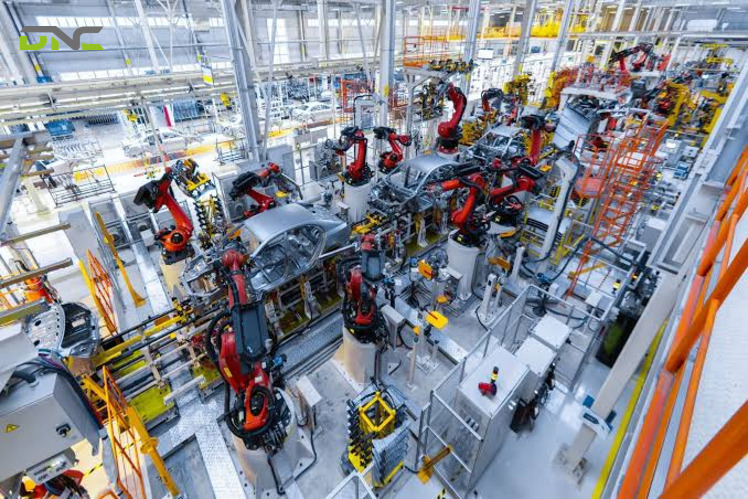
The design stage is where a turnkey provider commits to more than a layout — it is where the tolerance and timing values that let one station hand its output to the next actually get specified, whether anyone names that decision explicitly or not. An erector’s squareness tolerance has to match what a downstream sealer’s folding mechanism can accept. A filler’s fill-weight variance has to sit inside what a downstream checkweigher is set to pass. A conveyor’s buffer capacity has to match the stoppage duration the line is designed to absorb. Every one of these is a design-stage decision, made — correctly or not — before a single machine is built.
Commissioning cannot fix a design-stage mistake; it can only find one. By the time FAT or SAT testing runs, the machines are already built to whatever tolerance the design specified. A tolerance mismatch discovered at that point means rework — adjusting a mechanism, re-machining a part, or in the worst case sending equipment back to the fabrication stage — not a settings change. This is the sequencing fact that separates “we found a problem during testing” from “we specified the problem out of the project before anything was built,” and it is also the sequencing fact that makes single-point accountability worth more than a coordination convenience: the same team that owns the design-stage interface decision is the team that has to answer for it at commissioning, rather than two separate vendors each pointing at the other’s equipment.
None of the eight sources crawled for this comparison connect a specific project stage to this interface-tolerance decision. Several describe “interfaces” as a design-stage deliverable — one names “panel layouts, interfaces, and documentation standards” as part of engineering and design — but in the software and controls sense (I/O mapping, HMI, SCADA), not as a physical tolerance handoff between two mechanical stations. None state that a tolerance mismatch caught at FAT/SAT is a rework event rather than a settings adjustment.
Where Interface Tolerance Actually Gets Locked In
Turnkey Automation Project Stages: Reference Table
The turnkey automation project stages below are read most usefully as a table of what closes at each checkpoint, not just a list of names:
| Stage | What gets decided | What is locked in once this stage closes |
| Assessment | Production flow, constraints, existing equipment to work around | The problem the project is solving for |
| Design and engineering | Station layout, control architecture, interface tolerance between stations | The tolerance and timing values every downstream machine is built against |
| Build | Machines fabricated or sourced, panels built, software developed | Physical dimensions and mechanisms baked into hardware |
| Installation | Mechanical and electrical setup on-site | Line layout and physical footprint |
| Commissioning (FAT/SAT) | Deviations from spec identified and corrected | Whether the design-stage tolerance decision was correct — this stage only reveals it |
| Training and handover | Operator competence, documentation, support relationship | — |
Summary So Far
The summary so far follows directly from that reference table: a turnkey automation project moves through assessment, design, build, installation, commissioning, and handover, and the stage names are close to identical across vendors. What matters is that the design stage is where interface tolerance between stations gets specified — correctly or not — and commissioning is where that decision surfaces, not where it gets made. A single provider owning both stages is what actually delivers on the “one point of accountability” claim every source reviewed here makes; a provider who owns only design, or only commissioning, cannot close that loop by itself.
Single-Provider Scope vs. Multi-Vendor Coordination
The turnkey-versus-multi-vendor comparison every source reviewed here makes is mostly about coordination overhead: fewer handoff meetings, one contract, one point of contact when something goes wrong. That framing is accurate as far as it goes, but it describes a convenience, not the mechanism that actually produces the outcome. The mechanism is that the same engineering team that specifies station A’s output tolerance also specifies station B’s input tolerance, in the same design pass, against the same drawing. A multi-vendor purchase can still produce a working line — but only if someone on the buyer’s side does the cross-vendor tolerance-matching work that a turnkey provider would otherwise have already done as part of a single design stage.
This is also why turnkey scope tends to cost more upfront than buying machines separately: the provider is pricing in the interface-engineering work, not just the equipment. Facilities that already run a competent in-house engineering team sometimes absorb that cross-vendor coordination work themselves and buy machines separately at a lower headline price. Facilities without that in-house capacity are the ones for whom the turnkey premium buys something concrete — not just fewer meetings, but one accountable team behind the tolerance decision at the one stage where it actually gets made. DNC Automation scopes turnkey projects around exactly that commitment; our engineering team owns the interface specification through to commissioning, not just the equipment list.

Single-Provider Scope vs. Multi-Vendor Coordination
Deciding Whether a Project Needs Turnkey Scope
Deciding whether a project needs turnkey scope starts from how many stations on the line actually have to hand off a tolerance, weight, or timing value to each other. A single standalone machine — one conveyor replacing a manual transfer, one checkweigher added to an existing line — rarely needs turnkey scope, since there is no second station’s design the new equipment has to be specified against. A multi-station line — an erector feeding a sealer feeding a checkweigher feeding a palletizer — has three separate handoff points, each one a place where a design-stage tolerance decision either was or was not made correctly.
The second question is in-house engineering capacity: does the facility have a team that can specify and verify tolerance compatibility across machines bought from separate vendors, or would that work otherwise fall to whichever vendor happens to be on-site during commissioning, after the equipment is already built. The third is risk tolerance for the commissioning stage itself — a facility that can absorb schedule slip while a tolerance mismatch gets diagnosed and reworked has more room to buy separately; a facility running close to a fixed launch date usually cannot.
For a Malaysian manufacturing line adding or replacing multiple stations at once — filling, sealing, weighing, or palletizing in some combination — the number of interface points, not the number of machines, is the number worth counting before deciding how the project should be scoped.
Frequently Asked Questions
The frequently asked questions below cover the sequencing questions that come up most often once a facility starts scoping a turnkey automation project.
How many stages does a turnkey automation project have?
Most descriptions converge on six functional stages — assessment, design, build, installation, commissioning, and handover — though vendors split or merge these differently depending on how finely they separate design from engineering, or testing from commissioning. The stage count varies by naming convention more than by what actually happens.
What is the difference between FAT and SAT?
A factory acceptance test (FAT) runs before equipment ships, typically at the fabricator’s own facility, checking that the machine performs to spec in isolation. A site acceptance test (SAT) runs after installation, checking the same machine — and its interfaces with the rest of the line — under real facility conditions. A machine can pass FAT and still reveal a mismatch at SAT if the interface issue only shows up once it is connected to the equipment on either side of it.
Can interface problems be fixed during commissioning?
Some can — a timing adjustment or a sensor recalibration is a settings change. A tolerance mismatch baked into a machine’s physical build — a squareness spec, a fixed dimension, a mechanism sized for the wrong input range — usually cannot be fixed at commissioning without rework: adjusting or re-machining a part, or sending equipment back to fabrication. This is why the design stage, not commissioning, is where that risk actually needs to be closed.
Does turnkey scope always cost more than buying machines separately?
Usually more upfront, since the provider is pricing in the cross-machine interface-engineering work as part of the scope, not just the equipment itself. Whether that premium is worth it depends on whether the facility’s own team could otherwise do that interface-matching work — or would be doing it, unplanned, during commissioning instead.

How many stages does a turnkey automation project have?
Specifying the Sequence, Not Just the Stages
Specifying a turnkey automation project by its stage names alone — assessment, design, build, installation, commissioning, handover — describes the sequence without describing what actually has to happen inside it. The stage that matters most is design, because that is where the tolerance and timing values connecting one station to the next get committed, and commissioning is where any error in that decision becomes visible, not where it gets corrected for free. A provider who owns the whole sequence is positioned to catch that class of problem before a single machine is built; a provider who owns only part of it can only inherit whatever the previous stage got wrong. For a Malaysian facility scoping a multi-station automation project, the next step is to contact our engineers about specifying the interface tolerances between stations at the design stage — before build, not after.
- 9 views
- 0 Comment
Recent Comments