


Volumetric vs Gravimetric Filling | DNC Automation Malaysia
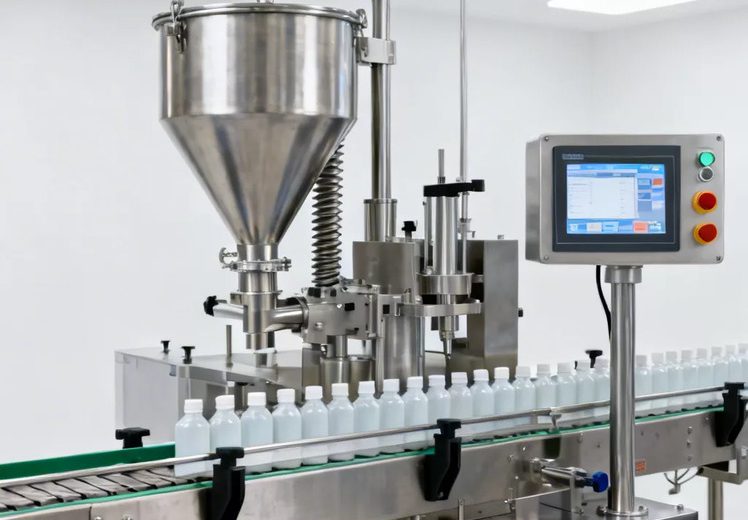
Volumetric filling meters the space a dose occupies. Gravimetric filling meters its mass, read as force through a load cell. That one difference in measurand decides everything the two methods are usually compared on — throughput, changeover time, giveaway, and whether a delivered quantity can be verified at all. A volumetric filler converts volume into weight through bulk density, and it holds its accuracy only while that density stays where the calibration left it. A gravimetric filler reads mass directly, so moisture, aeration and particle size stop affecting the result. One international standard, OIML R 61-1:2017, governs automatic gravimetric filling instruments by name and fixes their deviation limits, accuracy classes and minimum fill. The volumetric side reaches the same compliance somewhere else on the conveyor.
Volumetric Filling Meters Space, Gravimetric Filling Meters Mass
From a metering standpoint, volumetric filling and gravimetric filling differ on the quantity the instrument physically measures, and on nothing else at the level of principle. Dosing systems manufacturer Motan states the division plainly: a volumetric system doses material according to the space it occupies, while a gravimetric system determines the amount to be dosed by weight. Packaging line integrator D&R Packaging draws the same line for liquids, separating a filler that dispenses a specific volume from one that dispenses a specific weight.
Both descriptions sound like two settings on one machine. They are two different instruments with two different failure modes, and the device families do not overlap anywhere.
Volumetric filling covers every device that meters by displacement, listed below with the mechanism each one uses.
- Cup filler— precision cups of fixed volume fill and discharge by gravity or mechanical assistance.
- Auger filler— a rotating screw conveys product, and the dose is set by the number of revolutions.
- Piston filler— a piston stroke draws product into a cylinder and pushes it into the container, which suits viscous product and product carrying particulates.
- Gravity filler— head pressure fills to a fixed level, the configuration food filling supplier Multi-Fill groups with pump and piston as the three volumetric types.
- Volumetric pump— gear, lobe or peristaltic pumps meter liquid by displacement per revolution.
Gravimetric filling covers every device that puts a load cell somewhere in the product path, and the position of that load cell defines the sub-type.
- Multihead weigher— parallel buckets weigh in combination and select the set that lands nearest target.
- Linear weigher— sequential weigh heads at moderate rate.
- Net weigh filler— product is weighed in the pack or on a platform. D&R Packaging notes that fill verification here sits isolated from any wetted product contact part.
- Loss-in-weight feeder— the hopper itself is weighed continuously as material discharges.
- Balance driving a pump— filling machine supplier Spanpak describes a balance controlling a peristaltic pump, with all fluid contained inside the tubing.
Four different trade names for the weight-based method appear across the nine pages returned on this search, which is a fair share of why buyers find the comparison hard to pin down.
| Name used on this search | Used by | What it measures | Instrument category |
| Gravimetric filling | SHK, Spanpak | Mass, via load cell | Automatic gravimetric filling instrument |
| Net weight filling | D&R Packaging | Mass, via scale under the pack | Automatic gravimetric filling instrument |
| Gravimetric dosing | Motan | Mass, via integrated weigh cells | Automatic gravimetric filling instrument |
| Gravimetric blending | TSM Control Systems | Mass, per component of a blend | Automatic gravimetric filling instrument |
One measurand, four labels, and no page on the search reconciles them. What separates the machines behind those labels is the sub-type — cumulative, selective combination, or subtractive — and that vocabulary comes from the standard rather than from any supplier catalogue.
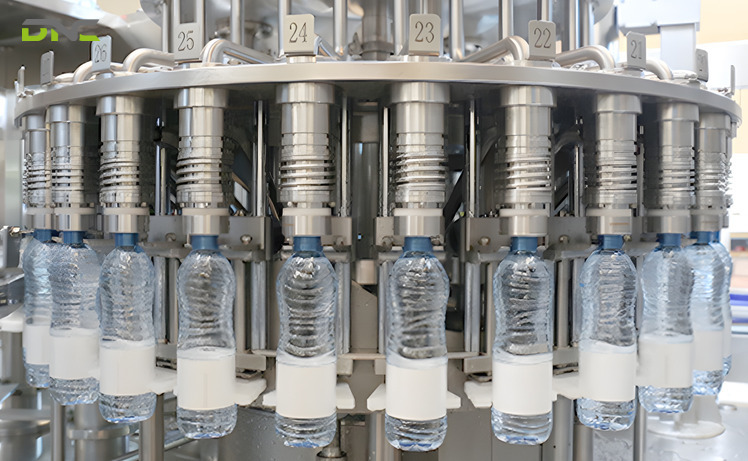
Piston and pump metering is what most liquid lines run, and an automated bottle filling line is the station where that metering decision gets made. The volumetric side carries no naming problem of its own, because it carries something harder: a conversion step.
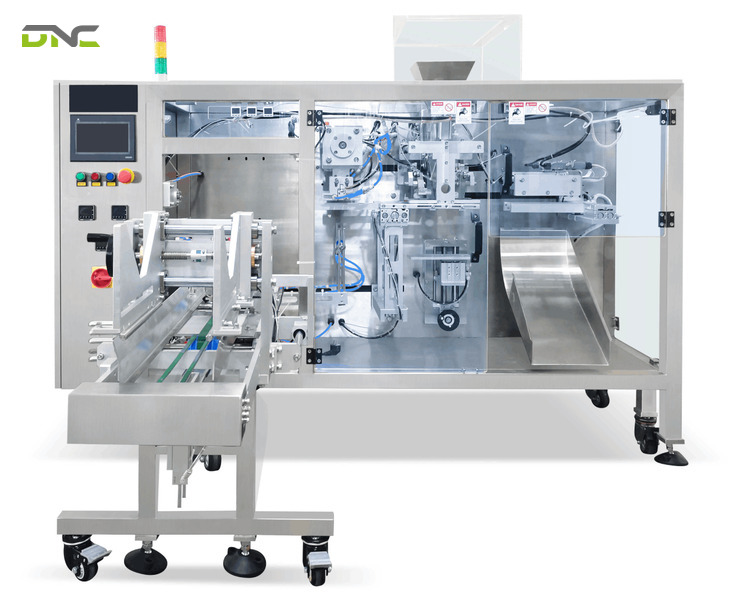
Volumetric Filling Meters Space, Gravimetric Filling Meters Mass
Volumetric Accuracy Is a Density Assumption Written into the Machine
In specification terms, volumetric accuracy rests on bulk density holding constant between calibration and the fill. A volumetric filler measures a chamber, a stroke or a count of screw revolutions, then arrives at delivered weight through one multiplication. Packaging machinery manufacturer SHK writes the relationship out as weight equals volume times bulk density, and works the arithmetic: at a bulk density of 0.5 g/mL (500 kg/m³ / 31.2 lb/ft³), dispensing 200 mL (6.76 US fl oz) delivers 100 g (3.53 oz / 0.22 lb) — for exactly as long as the density term holds.
Bulk density is therefore not a property of the product in this context. It is a calibration constant the machine assumes, and the assumption is unmonitored.
Motan supplies the demonstration that makes the gap visible outside a factory. 250 mL of liquid cream becomes around 1,000 mL when whipped, while its mass stays at 250 g. Volume rises roughly fourfold — 8.5 US fl oz to about 33.8 US fl oz — and mass moves not at all. A chamber filled to the same graduation before and after aeration has delivered two different products by weight, and reported neither.
What Moves Bulk Density on a Running Line
Bulk density on a production line moves with the product and with the room around it. SHK lists particle size distribution, moisture content and compaction as product-side influences, and temperature, humidity and aeration as environmental ones. Motan adds the ambient conditions of the plant to the same list of dosing influences.
Every one of those varies across a Malaysian production year. Ambient humidity in Selangor, Johor and Penang shifts across the monsoon months, and hygroscopic powders take up moisture from the air they sit in. A hopper filled at the start of a shift is more aerated than the same hopper an hour later, once the column has settled under its own weight.
The specification consequence is a maintenance obligation rather than a one-time setting. Motan states it directly: a volumetric device must be recalibrated every time a new material or batch is introduced. SHK reports the same requirement as a limitation, and contrasts it with gravimetric equipment that handles diverse materials without recalibration.
Recalibration at every batch change is the visible cost. The invisible one is what a volumetric line does between recalibrations, which is a question about how the competing method decides when to stop.
A Gravimetric Fill Runs in Three Phases, and the Third Is Material Already in the Air
A gravimetric fill runs, timed at the instrument, through high-speed dosing, low-speed dosing at a tenth of that rate, then a fall tail of material released before cut-off and still travelling. Process equipment manufacturer Palamatic Process publishes this three-phase cycle for both screw and vibrating feeders, and puts the low-speed phase at 10% of the high-speed rate.
The low-speed phase has one job. It shrinks the fall tail by reducing how much material is in flight at the moment the feeder closes, and it buys that reduction with time.
OIML R 61-1:2017 treats the same problem as an instrument requirement rather than a tuning preference. The standard names the parts of a gravimetric filler in §3.3.1 — load receptor, feeding device, and a control device made up of feed control device, fill setting device, final feed cut-off device and correction device. §5.5 permits that final feed cut-off device to carry a correction for residual feed after cut-off, which is the fall tail described in metrological language.
A volumetric filler runs no equivalent phase, because it never faces the decision. The chamber, the stroke or the revolution count settles the dose by geometry, and there is nothing to predict and nothing to correct.
That structural difference is the origin of the throughput gap every supplier on this search reports as a bare fact — along with four other differences that get discussed as though they were independent.
Speed, Changeover and Giveaway Follow from the Measurand a Filling Machine Uses
Speed, changeover and giveaway separate a volumetric filling machine from a gravimetric one, and all three descend from the measurand rather than from build quality. The table below sets each attribute against the method that produces it, with the source that reports it.
| Attribute | Volumetric | Gravimetric | Reported by |
| What is measured | Volume, converted to mass by density | Mass, measured directly | Motan, D&R, TSM |
| Throughput | Higher — no weighment inside the cycle | Lower per head, recovered by running heads in parallel | SHK, Multi-Fill, D&R |
| Changeover | Recalibration at every material or batch change | No recalibration for a density change | Motan, SHK, TSM |
| Product variability | Suits stable density and viscosity | Absorbs varying moisture, aeration and particle size | D&R, Motan, SHK |
| Giveaway | Overfill margin carried on every pack | Target-seeking, so the margin shrinks to the deviation limit | SHK, D&R, Spanpak, TSM |
| Capital and upkeep | Lower, because no scale is fitted | Higher, and load cells need periodic calibration | Seiwag, TSM, SHK, Multi-Fill |
| Environmental sensitivity | Ambient effect on bulk density | Vibration, air currents and temperature at the load cell | Motan, SHK |
Screw feeder manufacturer Seiwag states the capital half of that table as cause and effect: the volumetric type does not involve a scale, so costs are reduced, and because it does not use a scale its accuracy is inferior to the weighing method. Seiwag then recommends volumetric metering for transferring approximate quantities — an unusually direct piece of scoping from a manufacturer describing its own product.
One further difference belongs to volumetric filling alone and never appears in an accuracy figure. D&R Packaging observes that constant volume plus varying container dimensions produces uneven fill lines on the shelf, so a dose that is metrologically correct can still look wrong to a retail buyer.
Of the seven, giveaway is the one that moves money every shift, and it is also the one described least accurately across this search.
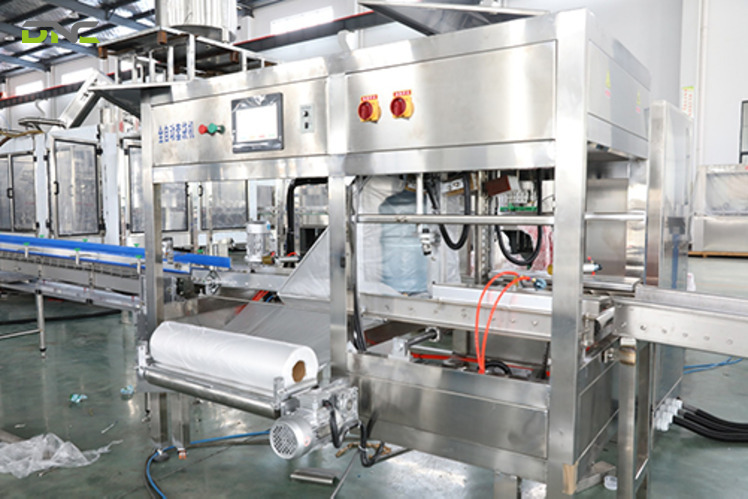
Speed, Changeover and Giveaway Follow from the Measurand a Filling Machine Uses
The Overfill on a Volumetric Line Is Deliberate
The overfill on a volumetric line is a decision, not a defect. Motan states the mechanism without hedging: volumetric systems cannot automatically adjust for fluctuations in properties such as input material bulk density, and to play it safe, manufacturers deliberately set the system to dispense a larger amount than is actually necessary.
Read that as a purchasing decision and it changes shape. The overfill is insurance against the density term drifting, bought pack by pack, for the life of the line. SHK reaches the same place from the compliance side, listing overfilling to ensure minimum weight compliance as a volumetric limitation. Spanpak describes the gravimetric alternative as a state where every drop is tracked and the container is never overfilled.
Where that insurance premium lands depends on what the pack is worth. A high-value product carries the whole difference in the giveaway; a low-value one carries it mostly in reputational exposure to an underweight pack. Malaysian food, edible oil and glove exporters carry both, because weight declarations travel with the shipment into the destination market’s documentation chain.
Motan names the counterpart benefit that rarely appears in a supplier comparison at all: with a gravimetric system you can say with certainty how much total material by weight has been used, which matters when the process has to be documented for quality management. A volumetric line generates no such record, since it never measured mass in the first place.
Five sections in, the comparison has produced a set of facts that do not sit in the order the search results present them.
Summary: What Separates Volumetric Filling from Gravimetric Filling So Far
What separates volumetric filling from gravimetric filling so far reduces to four points, and all four resolve ahead of any machine question.
- Measurand— volumetric filling meters space and converts to mass through bulk density; gravimetric filling meters mass directly and skips the conversion.
- Validity condition— the volumetric conversion holds only while bulk density holds, and nothing in a volumetric filler monitors that term.
- Cycle— a gravimetric fill spends its extra time on a low-speed phase and a fall-tail correction; a volumetric fill has no cut-off decision to make.
- Giveaway— the overfill margin on a volumetric line is set deliberately, as cover for the density drift the machine cannot see.
What none of the nine ranked pages supplies is the part a buyer signs against: the accuracy figure itself, expressed in terms that two quotations can be compared on.
What Separates Volumetric Filling from Gravimetric Filling So Far
OIML R 61-1:2017 Names Only One of These Two Methods
OIML R 61-1 Edition 2017 (E) is titled Automatic gravimetric filling instruments, and the title carries the finding. The recommendation governs the weight-based method as a named instrument category, and divides it into three sub-types — cumulative, selective combination, and subtractive, the last being the loss-in-weight configuration.
Not one of the nine pages returned on this search cites a clause, a class or a limit from it. SHK comes closest and stops at acronyms, listing FDA, USDA, NIST Handbook 133 and the EU Weights and Measures Directive with no figure attached to any of them. The other eight name no regulation at all.
The gap matters because a volumetric filler and a gravimetric filler are not quoted against the same kind of number, and a buyer comparing “±0.5%” on one datasheet with “±2 g” on another is comparing two measurands. DNC’s engineering practice on weighing projects is to specify against the regime the instrument will actually be verified to, which is also the position taken in the deeper treatment of the batching and dosing weighing system specification.
The Deviation Limit Is a Staircase, Not a Percentage
The maximum permissible deviation under §4.3.1 Table 2 alternates between percentage bands and fixed-mass bands across nine fill ranges. For class X(1) at initial verification, the limits run as follows.
| Fill mass F | Maximum permissible deviation, class X(1) |
| F ≤ 50 g (1.76 oz) | 7.2% of F |
| 50–100 g | 3.6 g (0.127 oz) |
| 100–200 g | 3.6% of F |
| 200–300 g | 7.2 g (0.254 oz) |
| 300–500 g | 2.4% of F |
| 500–1,000 g | 12 g (0.42 oz) |
| 1–10 kg (2.2–22 lb) | 1.2% of F |
| 10–15 kg (22–33 lb) | 120 g (4.23 oz) |
| F > 15 kg | 0.8% of F |
In-service limits sit at exactly 1.25 times the initial-verification limits in every band. A second multiplier sits on top: the class designation factor x, which takes values up to 2 in the form 1×10^k, 2×10^k or 5×10^k, and multiplies the whole staircase. Two physically identical machines marked X(0.2) and X(2) therefore promise deviation limits a full order of magnitude apart.
A single percentage cannot describe that staircase at any point, which is the reason a bare accuracy figure on a datasheet answers nothing.
Below the Rated Minimum Fill, the Accuracy Claim Lapses
Every accuracy claim under this standard stops applying below the rated minimum fill, the Minfill value set by §4.7 Table 3 from the scale interval d and the accuracy class. At d = 1 g the floor runs 111 g for X(0.2), 22 g for X(0.5), 11 g for X(1) and 6 g for X(2). At d = 50 g the same four classes floor at 25,000 g, 6,650 g, 3,350 g (3.35 kg / 7.39 lb) and 1,650 g. From d = 500 g upward the floors are expressed as multiples: 500d, 200d, 100d and 50d.
Minfill is set by influences a buyer rarely asks about — temperature effect on the no-load indication, zero-setting accuracy, disturbances, warm-up time, the product itself, and the scale interval. §4.3.2 and §4.3.3 then hold the influence-factor error and the preset value error to a quarter of the in-service deviation limit.
Against that framework, published vendor accuracy figures fall apart on inspection. Palamatic Process quotes volumetric dosing at 3–5% relative to setpoint, gravimetric continuous operation at under 2% variability, and gravimetric batch operation at 3 g absolute — three measurands in one comparison table, none convertible into the others without knowing the fill mass.
“What is the rated minimum fill?” is a question this search has no answer to anywhere on it, and it decides whether a quoted accuracy applies to your pack size at all. The same question also exposes a machine that changes method mid-cycle.
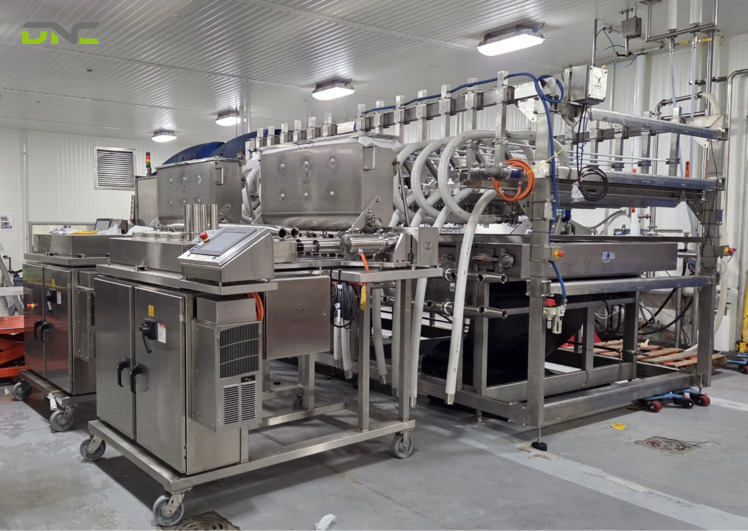
Below the Rated Minimum Fill, the Accuracy Claim Lapses
A Loss-in-Weight Feeder Runs Volumetric Every Time It Refills
A loss-in-weight feeder stops weighing its own discharge during refill and runs open loop, which makes it a gravimetric instrument with a volumetric window built into normal operation. Palamatic Process publishes the re-feed time ratio at 1/10, so the window opens on roughly a tenth of running time and closes again once the hopper is charged and the weight signal means something.
Two deliberate hybrids exist alongside that accidental one. SHK describes dispensing 90–95% of target weight volumetrically and switching to gravimetric mode for the final dose, which takes the speed of one method and the finish of the other. The same supplier describes multi-lane installations that run both methods on one line for different pack formats.
The engineering point underneath all three is that “volumetric versus gravimetric” describes a metering principle, not a machine boundary. Plants that treat the two as mutually exclusive equipment categories miss the configuration that usually costs least: fast bulk dosing with verification applied where verification is cheapest.
Which raises the question of where a volumetric line does its verifying.
Volumetric Lines Reach Weight Compliance Through a Checkweigher
A volumetric line reaches weight compliance after the fill rather than during it. SHK states the arrangement for both methods: volumetric lines typically require checkweighers for compliance verification, while gravimetric systems provide built-in quality assurance and may still use a checkweigher for documentation.
That single sentence relocates the whole comparison. The question stops being which filler is more accurate and becomes where the mass measurement happens on the conveyor — inside the filler, or downstream of it.
Downstream measurement has a coverage advantage that a sampled manual check cannot match. A dynamic checkweigher inspects 100% of packs in motion, against a sampled static check that Mettler-Toledo Garvens’ Frank Borrmann has quantified at 15 packs in 6,000, or 0.25% coverage. It also weighs in fractions of a second, where a static load cell needs several seconds to stabilise because any motion oscillates the reading. The mechanism behind both figures — how the weighing window, the zones and the reject decision fit into one conveyor pitch — is set out in how a checkweigher works.
What a checkweigher does not do is dose. It removes underweight packs from a volumetric line and it leaves the overfill margin exactly where the filler set it, which is why verification is a complement to the method decision rather than a substitute for it. The instrument chain underneath every one of these mass readings — load cell and indicator — is common to the gravimetric filler and the checkweigher alike.
Four line facts settle which combination a given plant needs.
Volumetric Lines Reach Weight Compliance Through a Checkweigher
Four Line Facts Decide the Filling Method for a Malaysian Plant
The filling method for a given line resolves on four facts about that line, none of which is a product category. Supplier pages on this search organise their advice around product lists — coffee, nuts, spices, bottled water — and a product list cannot decide a specification, because two plants packing the same product under different declarations need different instruments.
- The declared quantity unit.A pack sold by weight needs mass measured somewhere. A pack sold by volume, which covers most bottled liquids, does not.
- Density stability across your actual batches.Measured across a monsoon season and across suppliers, not assumed from a datasheet.
- The rated minimum fill against your smallest pack.A sachet below the Minfill floor of the class quoted puts the pack outside the instrument’s stated performance.
- The verification regime the shipment will face.An export documentation chain sets what has to be recorded, and that determines whether verification belongs in the filler or in a checkweigher.
Malaysian conditions weight the second and fourth of those. Ambient humidity swings, and manufacturers exporting into markets with average-weight rules carry a documentation burden that a domestic-only line does not. Rising labour cost and the automation push under NIMP 2030 have pulled many mid-size plants toward higher line rates, and a faster line makes an unverified overfill more expensive per shift, not less.
DNC’s engineering approach on filling and weighing projects starts from those four facts before any machine class is proposed, because the weighing system integration work that follows — load cell selection, indicator configuration, reject confirmation, data capture — is specified against the regime rather than against a brochure figure. The same sequence applies whether the line ends in an automatic bottle filling station or an automatic drum filling station, since both face the identical question about where mass gets measured.
If your line packs a product whose density moves and whose weight declaration travels with the shipment, talk to our engineers about which measurand belongs at which station.

Four Line Facts Decide the Filling Method for a Malaysian Plant
Frequently Asked Questions About Volumetric and Gravimetric Filling
Five questions about volumetric and gravimetric filling recur on quotation calls, and each one turns on the measurand rather than on a machine brand. The answers below follow the same division used throughout this comparison: what the instrument measures, and where on the conveyor it measures it.
Is gravimetric filling more accurate than volumetric filling?
Gravimetric filling is more accurate on any product whose bulk density varies, because it measures mass directly instead of inferring mass from volume. On a product with genuinely stable density, a volumetric filler reaches the same delivered weight and reaches it faster. Accuracy here is a property of the match between method and product, not a ranking between two machine classes.
Which method suits liquids?
The method that suits liquids follows their density: stable-density liquids suit volumetric metering by piston or pump, and foaming or particulate liquids suit net weight filling. D&R Packaging notes that a net weight filler handles varying densities, viscosities and foamy characteristics with minimal changeover, because the scale ignores entrained air that a volume-based chamber counts as product.
Can a volumetric filler meet net weight regulations?
A volumetric filler meets a weight declaration through verification after the fill rather than during it. In practice that means a checkweigher downstream and an overfill margin at the filler, which SHK describes as the more economical route than a full gravimetric installation. The trade is a recurring giveaway cost against a lower capital cost.
What is the difference between net weight filling and gravimetric filling?
Net weight filling and gravimetric filling name the same measurand — mass on a load cell. OIML R 61-1:2017 covers both under one instrument category, the automatic gravimetric filling instrument, and distinguishes machines by sub-type — cumulative, selective combination and subtractive — rather than by trade name.
Does a checkweigher replace a gravimetric filler?
A checkweigher verifies and rejects, it does not dose. It removes underweight packs from a volumetric line and leaves the overfill exactly where the filler set it. A gravimetric filler attacks the overfill itself by seeking the target during the fill.
- 9 views
- 0 Comment
Recent Comments