


Roller Pallet Racking Systems: Gravity Roller Storage Guide for Warehouses
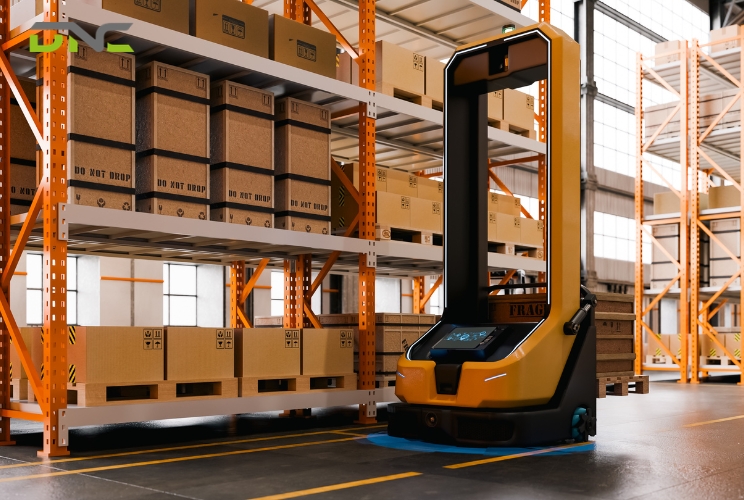
Roller pallet racking systems integrate gravity-driven roller conveyors directly into the racking structure — enabling pallets to flow along inclined lanes from the loading face to the picking face without forklift intervention. For Malaysian warehouses requiring high-density FIFO storage, separation of loading and picking traffic, and automated stock presentation at the pick point, roller-based racking delivers 75–85% floor utilisation with guaranteed first-in-first-out rotation. This guide covers roller racking engineering, specifications, lane design, maintenance requirements, and application data for Malaysian manufacturing and distribution operations. DNC Automation — with deep expertise in both conveyor systems and warehouse racking — engineers roller racking solutions that bridge material handling and storage into a unified system.
What Is a Roller Pallet Racking System?
Roller pallet racking is a dynamic storage system where free-spinning steel or polyurethane rollers are mounted on inclined lanes within a conventional racking structure. Pallets placed at the elevated rear of each lane roll forward by gravity to the lower front, where they queue for picking. When the front pallet is removed, the next pallet automatically rolls into position.
The system combines two engineering disciplines: structural racking (frames, beams, load paths) and conveyor mechanics (rollers, speed control, pallet separation). This dual-discipline design distinguishes roller racking from static systems (selective, drive-in) where pallets remain stationary, and from powered systems (shuttle racking) where motorised equipment moves pallets.
Roller pallet racking exists in two primary configurations:
Pallet flow racking — full roller lanes replacing standard beam levels. Each lane is a complete gravity conveyor, handling pallets from loading through buffer storage to picking. This is the most common roller racking application.
Roller deck racking — rollers added to individual beam levels within selective or push back racking. Rollers allow pallets to slide into position during loading and slide out during picking — reducing forklift positioning time by 5–10 seconds per pallet. Not a complete flow system but a productivity enhancement for standard racking.
In Malaysian warehouses, roller pallet racking serves food manufacturing, pharmaceutical distribution, cold chain operations, and high-throughput FMCG distribution — any environment where FIFO stock rotation, picking speed, or traffic separation justifies the roller system’s cost premium over static racking.
How Do Roller Pallet Racking Systems Work?
Gravity-Driven Pallet Movement
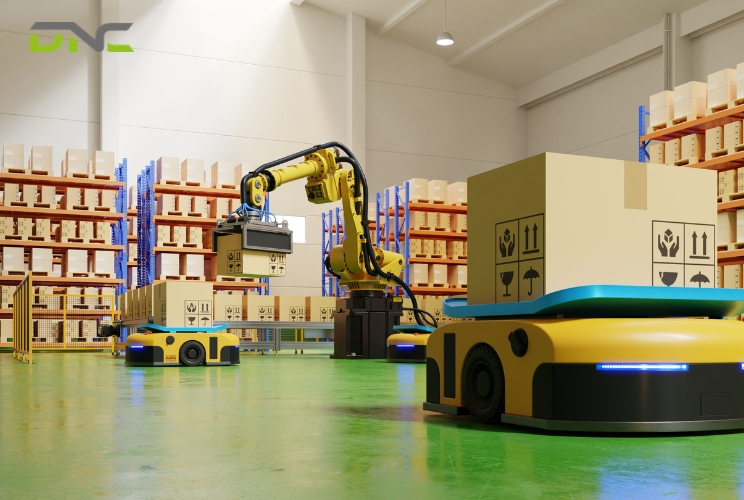
Roller racking operates on a simple physics principle: a pallet resting on free-spinning rollers at an incline will move downhill under gravitational force. The engineering complexity lies in controlling this movement to be consistent, safe, and reliable across the full range of pallet weights the system must handle.
Gravitational force calculation: F = m × g × sin(θ), where m = pallet mass (kg), g = 9.81 m/s², θ = lane angle (degrees). For a 1,000 kg pallet on a 3% gradient (1.72°): F = 1,000 × 9.81 × sin(1.72°) = 294 N. This force drives the pallet forward along the rollers.
Roller friction: Each roller has a rolling resistance coefficient (typically 0.01–0.03 for steel rollers with sealed bearings). The net driving force must exceed total roller friction for the pallet to flow. Heavier pallets flow more easily; lighter pallets may stall on lanes designed for heavy loads.
Speed Control Systems
Uncontrolled gravity flow accelerates pallets to dangerous speeds. A 1,000 kg pallet on a 3% grade reaches 2+ m/s within 5 metres — more than enough to damage product, the racking structure, and any operator at the picking face.
Centrifugal speed controllers install at 2–3 metre intervals along the lane. Rotating brake discs apply proportional braking force — faster rotation creates more braking, maintaining constant 0.2–0.3 m/s flow speed regardless of pallet weight. This speed regulation is the most critical safety feature in roller racking design.
Gravity brakes use mechanical mechanisms that engage under load, applying friction proportional to pallet weight. Self-adjusting for different pallet weights without external calibration.
Pallet Separation at Discharge
Without separation mechanisms, the accumulated weight of all pallets in a lane presses against the front pallet — creating forces of 2,000–15,000 N depending on lane depth and pallet weight. Pallet separators at the discharge end hold the second pallet while the front pallet is picked, then release it to roll forward into picking position.
Mechanical separators use spring-loaded latches that engage under pallet weight and release when the front position clears.
Pneumatic separators use air cylinders controlled by pallet presence sensors — offering faster actuation and higher holding forces for heavy pallets.
Lane Entry Guides
Tapered steel or UHMW plastic guides at the loading face funnel pallets onto the roller lane with correct alignment. Misaligned pallets cause roller jams, tipping, and lane blockages. Entry guide width narrows from 1,300 mm (tolerating forklift placement variation) to 1,200 mm (matching standard pallet width) over the first 500 mm.
Types of Roller Racking Configurations
Full Pallet Flow (Complete Gravity System)
Every lane is a complete gravity conveyor from loading face to picking face. Lane depth: 3–20 pallets. Two aisles required — one at each end. This configuration is the standard roller pallet racking implementation, combining maximum depth with guaranteed FIFO rotation.
Best for: Date-coded products, high-throughput picking, F&B and pharmaceutical applications.
Roller Deck on Selective Racking
Individual beam levels fitted with roller inserts. Pallets slide into position along the rollers during placement and slide out during retrieval. The racking remains selective (every position aisle-accessible); rollers add positioning efficiency.
Best for: High-velocity selective racking zones where 5–10 second placement time savings per pallet add up across thousands of daily movements.
Dual-Track Roller Flow
Two parallel roller tracks (instead of full-width roller beds) support the pallet on its two bottom runners. Reduces roller cost by 30–40% while maintaining flow reliability for pallets with consistent runner spacing.
Best for: Cost-optimised installations where pallet quality is controlled (standard pallets only, no damaged runners).
Multi-Level Roller Flow
Stacked roller flow levels (2–4 levels high) within the same racking structure. Each level operates independently — different lanes can hold different SKUs at different depth configurations. Forklift access at the loading and picking faces serves each level.
Best for: High-density FIFO storage for facilities with multiple date-coded SKUs requiring independent rotation per product.
Cold Room Roller Flow
Roller racking specified for cold room environments (–25°C to +5°C): hot-dip galvanised or stainless steel rollers with sealed bearings rated for sub-zero temperatures; galvanised frames; cold-rated speed controllers with freeze-resistant lubricants. Standard bearings and lubricants fail within 6–12 months in cold room conditions — specifying cold-rated components from the outset prevents costly retrofits.
Key Components of Roller Racking Systems
Rollers
Material: Zinc-plated steel (standard), stainless steel (food-grade/cold room), or polyurethane-coated (noise reduction and gentle handling).
Diameter: 50 mm (pallets up to 600 kg), 60 mm (600–1,000 kg), 80 mm (1,000–1,500 kg).
Pitch (centre-to-centre): 100 mm (heavy loads, maximum support points), 125 mm (standard), 150 mm (light loads).
Bearings: Sealed ball bearings rated for the lane’s maximum load and environmental conditions. Bearing life: 50,000–100,000 cycles under rated load.
Speed Controllers
Centrifugal type: Rotating brake mechanism activated by roller speed. Self-regulating — heavier pallets receive more braking. Installation spacing: every 2–3 metres along lane length. Braking capacity: typically rated by pallet weight (500 kg, 1,000 kg, 1,500 kg models).
Position: At lane entry (initial speed control), mid-lane (sustained control), and pre-discharge (final deceleration).
Pallet Separators
Mechanical: Spring-loaded ratchet separators engaging under pallet weight. Release force: adjustable for different pallet weights. Standard for lanes up to 10 pallets deep.
Pneumatic: Air cylinder actuated, sensor-controlled. Higher holding force and faster actuation for heavy pallets and deep lanes. Requires compressed air supply — additional infrastructure cost.
Structural Frame
Standard pallet racking frames (upright columns + bracing) sized for the total lane load. A 15-pallet-deep lane at 1,000 kg/pallet = 15,000 kg per lane. Frame gauge and bracing must handle this concentrated linear load, which is higher per unit length than distributed point loads in selective racking.
Lane Guides and End Stops
Galvanised steel guides along lane sides prevent pallet drift. End stops at the discharge face prevent pallets from overshooting the picking position. End stop rated for the kinetic energy of a full-weight pallet at controlled flow speed: KE = ½mv² = ½ × 1,000 × 0.3² = 45 J for a 1,000 kg pallet at 0.3 m/s.
Applications in Malaysian Industries
Food and Beverage Manufacturing
Malaysian F&B manufacturers operate under MeSTI, HACCP, and halal certification requirements mandating FIFO stock rotation. Roller pallet racking automates FIFO mechanically — eliminating manual date-checking labour and human error. Palm oil refineries, dairy processors (Dutch Lady, Farm Fresh), and F&B conglomerates (F&N, Ramly) use roller flow racking for packed products, ingredients, and date-coded finished goods.
Pharmaceutical Distribution
GDP compliance requires pharmaceutical warehouses to rotate stock by batch number and expiry date. Roller flow racking provides audit-compatible FIFO — the physical system guarantees the WMS record matches actual stock flow. Malaysian pharmaceutical distributors serving hospitals and pharmacy chains specify roller racking for temperature-controlled zones.
Cold Chain Operations
Cold room roller racking combines high density (75–85% utilisation) with guaranteed FIFO — addressing cold storage’s dual constraints of expensive floor space and mandatory date rotation. Hot-dip galvanised rollers and frames operate reliably at –25°C to +5°C.
High-Throughput Distribution
Distribution centres processing 500+ pallets daily benefit from roller racking’s separated loading and picking faces — eliminating forklift traffic conflicts that reduce throughput by 15–25% in selective racking layouts. DNC Automation integrates roller racking with conveyor systems and sortation equipment for end-to-end material flow optimisation.
Chemical Manufacturing
Chemical producers use roller flow racking for batch-coded products requiring FIFO rotation. Chemical-resistant roller coatings and sealed bearings prevent contamination. Separated loading and picking faces improve safety — reducing forklift traffic in chemical storage zones.
Benefits of Roller Pallet Racking
Guaranteed mechanical FIFO: The physical design ensures first-in-first-out rotation without software override or manual management — eliminating product expiry losses (2–5% of inventory value in F&B operations) and regulatory non-compliance risk.
75–85% floor utilisation: Storing 3–20 pallets deep per lane with only two aisles. A 10,000 m² warehouse with roller flow stores 63% more pallets than selective racking.
Separated traffic flows: Loading at the rear, picking at the front — zero forklift conflict. Doubles effective throughput in high-volume operations and improves workplace safety.
Automated stock presentation: The next pallet rolls to the pick face automatically when the front pallet is removed — reducing picker wait time to zero and maintaining continuous picking flow.
Reduced product damage: Controlled gravity flow at 0.2–0.3 m/s is gentler than forklift handling. Product damage rates drop 30–50% for fragile goods (glass, ceramics, electronics).
Lower picking labour: Automatic pallet presentation eliminates manual retrieval — 20–30% reduction in picking labour hours compared to selective racking.
Specification and Selection Guide
Lane Depth Calculation
Determine optimal lane depth based on inventory per SKU and replenishment cycle:
Formula: Lane depth = (Average inventory per SKU in pallets) × (1 + safety stock %)
Example: SKU with 12 pallets average inventory and 20% safety stock → 12 × 1.2 = 14.4 → specify 15-pallet-deep lanes.
Roller Specification
Match roller diameter and pitch to pallet weight:
- Up to 600 kg: 50 mm diameter, 150 mm pitch
- 600–1,000 kg: 60 mm diameter, 125 mm pitch
- 1,000–1,500 kg: 80 mm diameter, 100 mm pitch
Speed Controller Selection
Select based on maximum pallet weight and lane gradient. Over-specifying is safer than under-specifying — a speed controller rated for 1,500 kg pallets handles 800 kg pallets without issue; a 800 kg controller cannot safely regulate 1,500 kg pallets.
Pallet Quality Requirements
Roller racking demands consistent pallet quality: flat bottom boards with maximum 30 mm gap, no protruding nails or broken boards, minimum 80 mm runner width. Damaged pallets jam rollers, block lanes, and create maintenance burden. Implement pallet inspection at the loading face.
Integration with Conveyor Systems
Roller racking’s loading and picking faces connect naturally to conveyor systems — extending the gravity flow principle into full material handling automation. DNC Automation designs roller racking with conveyor integration at both faces: inbound conveyors feeding the loading face, outbound conveyors carrying picked pallets to staging or shipping.
FAQ — Roller Pallet Racking Systems
What is a roller pallet racking system?
A roller pallet racking system uses gravity-driven rollers mounted on inclined lanes within the racking structure to transport pallets from the loading face to the picking face without forklift intervention. The system guarantees FIFO stock rotation mechanically, achieves 75–85% floor utilisation, and separates loading from picking traffic. Standard roller diameters range from 50 to 80 mm; lane depths from 3 to 20 pallets.
How much does roller racking cost in Malaysia?
Roller pallet racking costs RM 800–1,500 per pallet position including rollers, speed controllers, separators, frame structure, and installation. A 1,000-position roller flow system costs RM 900,000–1,700,000 fully installed. Premium over selective racking (RM 350–600/position): 2–3× higher, justified by FIFO compliance, space savings, and labour reduction.
What maintenance does roller racking need?
Monthly: inspect for seized rollers (one seized roller blocks the entire lane), verify speed controller braking, check pallet separators for wear, clear debris from roller surfaces. Quarterly: lubricate speed controller mechanisms (if not sealed), test lane flow with loaded pallets, inspect lane guides for damage. Annually: replace worn bearings, recalibrate speed controllers. Well-maintained rollers last 50,000–100,000 cycles (5–10 years at standard throughput).
Can roller racking work in cold rooms?
Roller racking operates reliably in cold rooms (–25°C to +5°C) with proper specifications: hot-dip galvanised or stainless steel rollers, sealed bearings rated for sub-zero temperatures, cold-rated speed controllers, and galvanised rack frames. Standard bearings and lubricants fail within 6–12 months in cold conditions — always specify cold-rated components for cold room installations.
How does roller racking differ from shuttle racking?
Both achieve high-density deep storage. Roller racking uses gravity (no motors, no batteries, no electronics in the storage lanes) — lower maintenance, zero energy cost, guaranteed mechanical FIFO. Shuttle racking uses battery-powered carts — handles inconsistent pallet quality better, supports FIFO and LIFO, goes deeper (40 pallets vs. 20). Choose roller for consistent pallet quality with FIFO mandate; choose shuttle for mixed quality or when automation is planned.
What pallet types work with roller racking?
Standard wooden or plastic pallets with flat bottom boards and consistent runner spacing work best. Runner width minimum: 80 mm. Bottom board gap maximum: 30 mm. No protruding nails or broken boards — these catch on rollers and cause jams. Metal pallets, open-bottom pallets, and non-standard sizes require custom roller configurations. DNC Automation assesses pallet compatibility during the design phase.
Conclusion
Roller pallet racking systems solve the critical intersection of high-density storage and guaranteed FIFO rotation — delivering mechanical stock rotation at 75–85% floor utilisation without motors, batteries, or electronic controls in the storage lanes. For Malaysian F&B manufacturers, pharmaceutical distributors, and cold chain operators, roller racking’s combination of regulatory compliance, space efficiency, and operational simplicity makes it a proven investment.
DNC Automation bridges deep conveyor engineering expertise with warehouse racking design to deliver roller racking systems optimised for your specific pallet weights, lane depths, and throughput requirements. Our 20+ years of material handling experience ensures every roller specification, speed controller placement, and lane configuration performs reliably from commissioning through the system’s full operational life.
- 61 views
- 0 Comment
Recent Comments