


Motorized Roller Conveyor Explained: Drive, Zones, and Stops
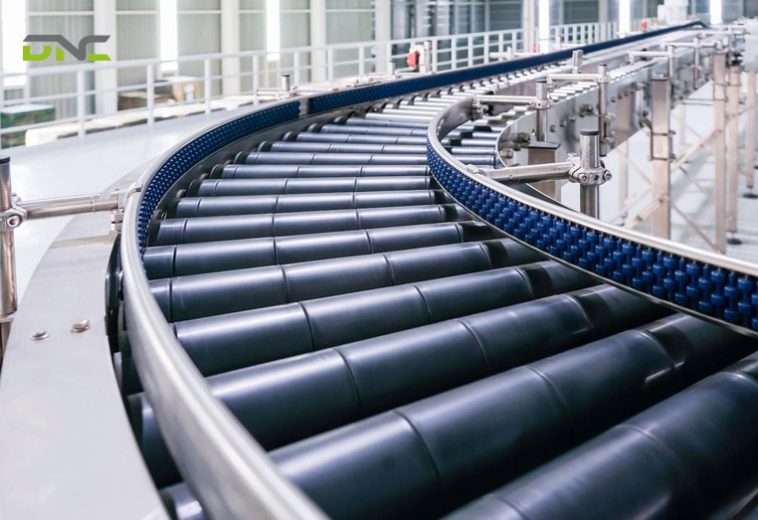
A motorized roller conveyor moves cartons, totes, and pallets by driving a series of rollers directly, rather than pulling them across a belt surface or letting gravity do the work on a decline. Two drive architectures cover the category: a centralized motor turns every roller through a shared chain or belt, or each roller carries its own independent 24V DC motor — the motor-driven roller (MDR) design — controlled zone by zone through photo-eye sensors. Itoh Denki, BIFA Conveyor, RS Online, Mecalux, Pieri, and SPG Conveyor Systems all document this drive split, but from the equipment-selection side: cost, structure, and application scenario. None of the seven manufacturer comparisons for this keyword states what a motorized roller conveyor’s zone control does for the stations sitting downstream of it — the checkweigher reading a moving carton, or the case sealer closing it — once a stop event happens somewhere upstream.
What Is a Motorized Roller Conveyor and How Does It Move a Load?
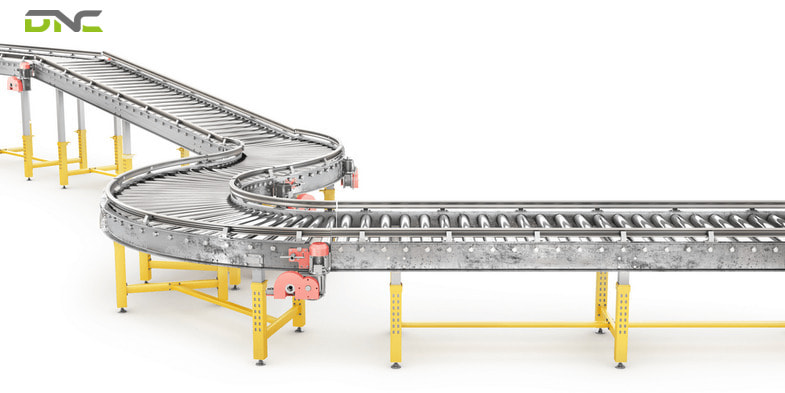
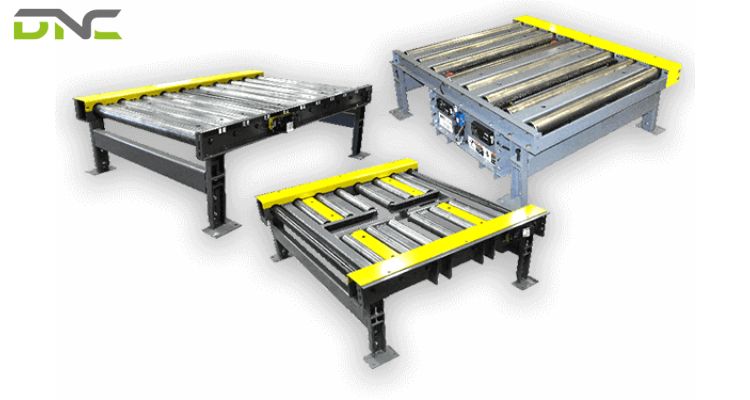
A motorized roller conveyor is a series of rollers mounted on a frame that a motor drives directly, propelling cartons, totes, or pallets along the line without a continuous belt surface underneath them. RS Online frames the base mechanism the same way any roller conveyor works: a series of rollers on axles mounted to a frame, a design factory automation has used since the first roller conveyor patent in 1908. What separates the motorized category from that general definition is the power source — a motor drives the rollers rather than gravity or a manual push, and that motor can sit in one of two places: outside the roller assembly, driving multiple rollers through a chain or belt, or built directly inside the roller tube itself.
Roller material and diameter follow the load, not the drive type. RS Online notes rollers come in plastic, steel, or stainless steel, with larger-diameter rollers suited to heavier items and rubber-covered rollers used where the assembly needs more traction between the roller and the goods riding on it — a detail that matters as much on a motorized line as on a gravity one, since the drive motor only turns the roller; grip against the load still depends on the roller surface.
What Is a Motorized Roller Conveyor and How Does It Move a Load?
How Do Motor-Driven Rollers Differ From a Chain- or Belt-Driven Powered Roller Conveyor?
Beyond roller material and traction, the larger design choice is how the motor itself is arranged, since motor-driven rollers (MDR) differ from a chain- or belt-driven powered roller conveyor in where the motor sits and how many rollers depend on it. BIFA Conveyor documents the centralized version first: a powered roller conveyor’s primary configuration runs on double sprocket rollers, chains, or multi-V belts, with one or a group of motors transmitting power through the chain or belt to a series of rollers that rotate in synchronization — a layout BIFA compares to a series circuit, where power flows through each component in sequence and every roller starts and stops together. Itoh Denki documents the distributed version: a motorized conveyor roller — also called a Power Moller or MDR — packs a 24V DC brushless motor inside the roller tube itself, with each roller receiving its own independent power rather than sharing one motor with the rest of the line.
BIFA frames that motor-placement difference as a parallel circuit: each motorized roller in an MDR line can start, stop, or adjust speed on its own, independent of the rollers around it. A centralized, chain-driven conveyor has no equivalent independence — the rollers are mechanically linked, so they move as one unit whether the application calls for that or not.
What Is Zero-Pressure Accumulation and How Does Zone Control Create It?
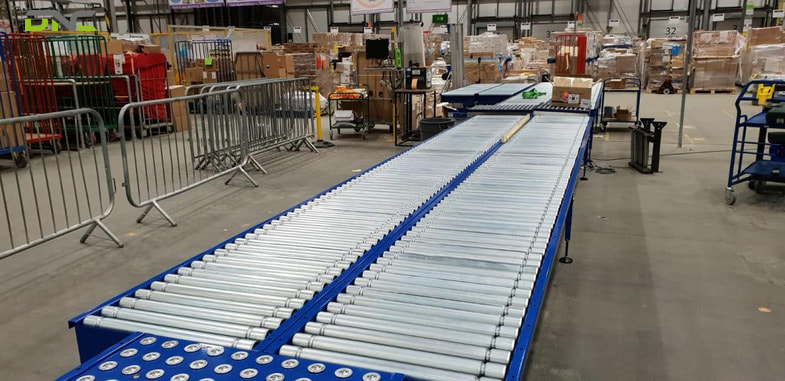
That independence in how each roller is powered is also what makes zero-pressure accumulation possible — items queuing up and touching on a motorized roller conveyor without the conveyor continuing to push them against each other. Zone control creates that behavior by grouping rollers into short, independently driven or independently sensed sections. Titan Conveyors names this directly as a core benefit of its motorized roller design: real zero-pressure accumulation, alongside variable speed and plug-and-play controls, on a system built for large zone-controlled installations in assembly lines and warehouses. SPG Conveyor Systems documents the same behavior from the equipment side, describing its 24V DC powered rollers and zoned driven roller conveyors as built to support smooth, reliable product flow specifically for accumulation applications, and its lineshaft driven rollers as suited to low-pressure accumulation for lighter loads.
The sensing layer behind zone control is a photo eye or photocell reading whether a zone is occupied. Itoh Denki’s “Run-on-Demand” design ties this directly to energy use: a roller only runs when a photo eye senses an item on it, rather than running continuously regardless of load. Mecalux documents the pallet-handling version of the same principle — an accumulation conveyor that lines pallets up with a small separation between them, controlled by photocells, so that once a pallet at the front moves forward, the roller behind it resumes and advances the next one into position. Both are the same mechanism at different scales: a sensor decides whether a zone needs to move, not a fixed conveyor speed.
What Is Zero-Pressure Accumulation and How Does Zone Control Create It?
What Happens When One Zone Stops on a Motorized Roller Conveyor?
One zone stopping on a motorized roller conveyor only affects that zone when the conveyor uses independent, motor-driven-roller control — the rest of the line keeps running because each zone’s motor and sensing are self-contained. BIFA Conveyor states this outcome directly for MDR systems: if a motorized roller in one section stops due to a fault, or stops to accumulate material on purpose, the other sections continue operating and the overall system keeps functioning. BIFA’s automotive assembly-line example makes the mechanism concrete — when one workstation needs extra time to install a large component, items accumulate temporarily on the conveyor in front of it without disrupting the rest of the production line, then continue once that station is ready.
A centralized, chain- or belt-driven powered roller conveyor cannot isolate a stop the same way. Because its rollers are mechanically linked through one shared chain or belt, BIFA notes that a single failed link — a stuck chain, a blocked roller — can stop the entire conveyor at once, since power flows through the assembly in sequence rather than in independent branches. The tradeoff BIFA also documents is control complexity: an MDR system needs sensors and controllers coordinating each zone’s accumulate/resume decision, while a centralized conveyor’s control system stays simple because it only starts and stops the whole line together.
How Much Load and Speed Can a Motorized Roller Conveyor Handle?
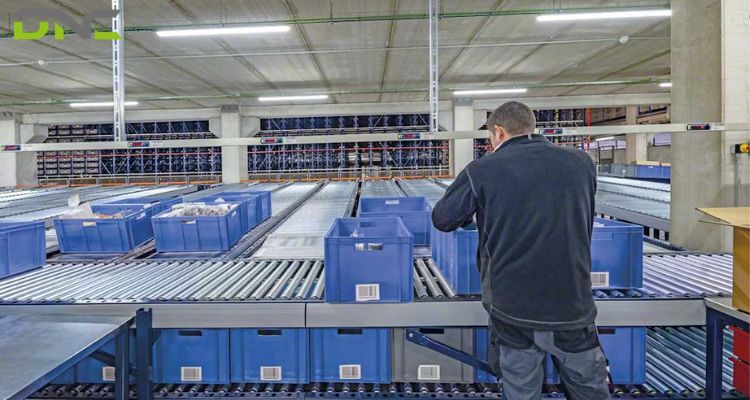
Fault isolation and zone control matter most once load and speed enter the picture, since a heavier or faster line has more to lose from a shared stop. A motorized roller conveyor’s load and speed depend on whether it is built for boxes or pallets, with published figures from two manufacturers marking the range. Titan Conveyors specifies its motorized roller systems for loads up to 3,900 lbs (1,769 kg), positioning them for pallets, totes, and cases across assembly-line and warehouse applications. Mecalux publishes the pallet-handling end of the range: motorised roller conveyors for pallets support unit loads up to 1.65 tons (1,650 kg / 3,638 lbs) on 48″ x 40″ pallets, or 32″ x 40″ and 48″ Euro pallet formats, at a travel speed of 35 to 65 ft per minute (10.7-19.8 m/min) on its standard roller-conveyor configuration.
Box-handling configurations trade raw capacity for path flexibility. Mecalux lists live/continuous roller conveyors for long distances and high flow (allowing boxes to accumulate and touch), curved accumulation roller conveyors for configurable-angle turns, and combined roller-and-belt conveyors for 90-degree direction changes with a hinged stop to keep boxes linear through crossings — variants that exist because a single straight-line roller path cannot cover every layout a warehouse or production floor needs.
How Much Load and Speed Can a Motorized Roller Conveyor Handle?
What Separates a Motorized Roller Conveyor From a Gravity Roller or Belt Conveyor?
Those capacity and configuration figures apply only to the motorized category — a gravity roller conveyor and a belt conveyor set different limits entirely. What separates a motorized roller conveyor from a gravity roller conveyor is what moves the load, and what separates it from a belt conveyor is what the load rests on. Pieri draws the gravity comparison on the mechanism itself: a gravity, or idle, roller conveyor needs no motor at all — a push or the pull of gravity on a sloped section is enough to move items along — and because idle rollers offer minimal friction, packages slide across them easily. That low-friction design is also the limit: Pieri notes idle roller conveyors suit only small and medium loads and never heavy ones, because a motorized roller conveyor depends on the opposite property — adherence between the package and the roller — to grip and safely move heavier or larger items.
RS Online’s broader guide places the belt distinction on structure rather than friction: a belt conveyor moves goods across one continuous surface, while a roller conveyor — motorized or gravity — moves them across a series of discrete rollers. RS Online also documents the chain-driven roller conveyor as the heavy-duty end of the motorized category specifically because sprockets lock tightly into the drive chain, providing the high traction needed for pallets, drums, tyres, and irregular shapes that a smooth belt surface or a low-friction idle roller would not hold as securely during acceleration or incline sections. RS Online lists a third centralized variant alongside chain-driven and belt-driven designs: the line shaft roller conveyor, powered by a single rotating shaft connected to the rollers through spools and belts rather than a chain.
What Separates a Motorized Roller Conveyor From a Gravity Roller or Belt Conveyor?
How Does Zone Accumulation Affect the Checkweigher and Case Sealer Downstream?
All of those category and capacity distinctions still leave one mechanical behavior unaddressed: what zone accumulation does to the stations sitting downstream of the conveyor. Zone accumulation on a motorized roller conveyor affects the checkweigher and case sealer downstream by determining whether a stop event upstream arrives at those stations as an isolated pause or as a shock that hits every carton on the line at once. None of the seven manufacturer sources for this keyword extends the zone-isolation benefit past the conveyor itself — BIFA’s automotive example stops at “the entire production line keeps functioning,” and Mecalux’s photocell-controlled accumulation stops at pallet spacing, without either connecting the isolated stop to what happens at the next reading or sealing station in the line.
That connection matters because both stations depend on a consistent, undisturbed arrival state. A checkweigher’s reading is only valid inside a fixed measurement window while the item moves at a steady speed; a full-line stop-and-restart on a centralized conveyor jolts every carton on the belt simultaneously, including whichever one happens to be entering that window, in a way an independently zoned MDR section — which only halts the zone actually holding the fault or accumulation — does not. A case sealer depends on the flap staying aligned as the carton enters the sealing head; a sudden full-line restart jostles a carton’s position on the rollers in exactly the moment the sealer’s tape head or fusing unit is set up to expect a settled, squared arrival. Independent zone control does not eliminate the need to check either station’s own tolerance — it simply keeps a fault or accumulation event from propagating as a shared disturbance to stations that were never part of the fault in the first place.
Summary: Centralized Drive vs Independent Zone Control, in One Line
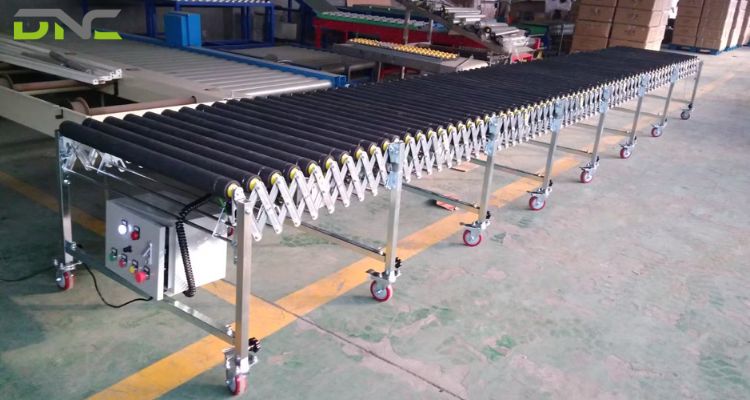
A centralized, chain- or belt-driven powered roller conveyor moves every roller together from one motor, costs less to buy and maintain, and suits continuous transport with no accumulation need. A motor-driven roller (MDR) conveyor gives every roller its own motor and photo-eye-controlled zone, costs more to build and control, and adds zero-pressure accumulation plus fault isolation that a centralized conveyor cannot replicate — including keeping a stop or accumulation event from reaching the checkweigher or case sealer sitting downstream as a shared disturbance.
Centralized Drive vs Independent Zone Control, in One Line
What Role Does a Motorized Roller Conveyor Play in an End-of-Line Layout?
That protective effect only matters in context: a motorized roller conveyor’s role in an end-of-line layout is the connective link between stations, not a standalone piece of equipment. Mecalux documents this role directly, describing motorised roller conveyor circuits as tasked with connecting different warehouse or production areas, eliminating operator travel between them, and speeding up internal transportation. In a packaging line specifically, that connective role puts the conveyor’s drive architecture and zone behavior directly upstream of every reading or sealing station it feeds — a conveyor system spec built around fixed-rate, continuous transport behaves differently at the checkweigher and case sealer than one built with independent zone control.
Mecalux’s dock-area example makes this concrete outside a factory floor as well: motorised roller conveyors used as preload channels classify pallets by route or destination, letting them accumulate while waiting for truck loading — the same zone-accumulation mechanism this article traces through to a checkweigher or case sealer, applied one step later at outbound dispatch. For the measurement side of that same line, how a checkweigher works covers the reading window a disturbed arrival throws off.
What Do You Need to Install or Retrofit a Motorized Roller Conveyor?
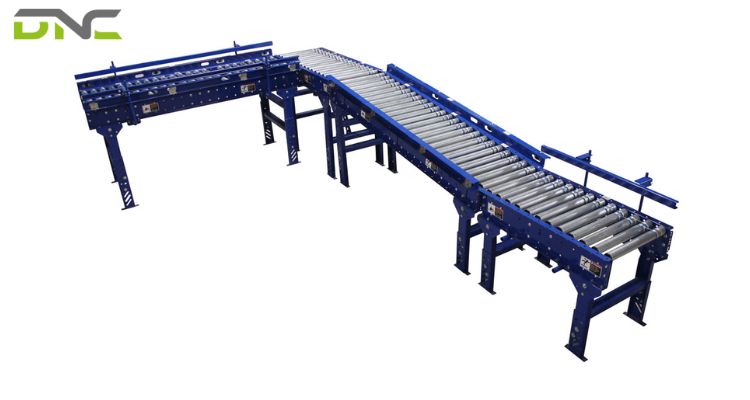
Fitting a motorized roller conveyor into that end-of-line layout starts before it ever moves a load. Installing or retrofitting a motorized roller conveyor generally means specifying the drive architecture first — centralized chain or belt, or independent MDR — since that choice determines the control hardware, sensors, and mounting method the rest of the installation depends on. Itoh Denki documents the retrofit path specifically for MDR: its motorized conveyor rollers are designed to install into existing conveyor frames, with spring-loaded shafts that make the swap into a frame built for older, non-motorized or centrally driven rollers straightforward rather than requiring a new frame.
A centralized, chain-driven conveyor adds different hardware at installation — the motor, chain or belt, and sprocketed rollers RS Online and BIFA both describe — plus tensioning and alignment work the chain or belt itself needs to keep every roller synchronized. An MDR retrofit swaps that hardware for photo-eye sensors and zone controllers per section, the same components BIFA identifies as what makes independent accumulation and fault isolation possible in the first place. Neither architecture changes the roller material or diameter decision from RS Online’s original guidance — that still follows the load being carried, motorized or not.
What Do You Need to Install or Retrofit a Motorized Roller Conveyor?
Frequently Asked Questions
These frequently asked questions cover motorized roller conveyor decisions that sit outside the drive-architecture comparison — retrofitting an existing line, minimum load for a motor to be worth it, and how zone count affects control complexity.
Can a motorized roller conveyor be added to an existing gravity roller line?
Motor-driven rollers (MDR) are the easiest way to add a motorized roller conveyor to an existing gravity roller line, because Itoh Denki’s spring-loaded shaft design retrofits directly into standard conveyor frames without requiring a new frame. Adding a centralized chain- or belt-driven motor to a gravity line instead usually means fitting drive sprockets or a shaft the original frame was not built to carry, which is a larger structural change than swapping in individually motorized rollers.
Is a motorized roller conveyor worth it for light, low-volume loads?
A motorized roller conveyor is usually not worth it for light, low-volume loads, because a gravity roller conveyor moves the same lightweight items on a decline at lower cost and with less maintenance, and BIFA notes a centralized powered roller conveyor’s own cost advantage over MDR already assumes continuous, higher-volume transport. Motorized drive earns its cost when the line needs to move loads horizontally or upward, needs zone-controlled accumulation, or handles items too heavy for gravity or manual push to move reliably.
How many zones does a motorized roller conveyor need?
The number of zones a motorized roller conveyor needs depends on how many independent accumulation or fault-isolation points the line requires, not on its total length — each zone is a photo-eye-sensed section that starts, stops, or holds product without affecting the zones around it. A line with one steady product flow and no buffering need runs effectively as a single zone or even a centralized chain-driven conveyor; a line feeding multiple stations at different cycle times, or one that needs to protect a checkweigher or case sealer from an upstream stop, needs a zone at each point that disturbance would otherwise reach the next station.
What is the difference between a powered roller conveyor and an MDR conveyor?
A powered roller conveyor and an MDR conveyor differ in drive architecture: a powered roller conveyor drives its rollers from one or a group of centralized motors through a shared chain or belt, while an MDR (motor-driven roller) conveyor gives each roller its own independent 24V DC motor. BIFA frames the practical result as a series-circuit versus parallel-circuit distinction — a powered roller conveyor’s rollers move and stop together, while an MDR conveyor’s rollers, and the zones they form, can move and stop independently of each other.
- 32 views
- 0 Comment
Recent Comments